Love this? Save it for later!
Share the inspiration with your friends
“I never thought a pavlova could smell like a garden in spring,” my friend Lila remarked, her voice soft with surprise as she took her first bite. I remember that afternoon vividly. It was a blustery Saturday in early April, and I’d invited a few friends over for tea. Somehow, my kitchen was a mess of flour dust, cracked eggshells, and a half-forgotten bottle of rose water that had been sitting in the back of my spice cabinet for years.
Honestly, I wasn’t planning anything fancy. I just wanted a light dessert that danced between sweet and floral, something that felt both delicate and indulgent. The idea came from a flicker of inspiration after reading about floral flavors in old cookbooks stored at my local library—an unexpected find hidden in a dusty shelf, no less. I got a little messy trying to whip the egg whites just right (you know that moment when you realize you forgot the cream of tartar?), but that’s part of the charm.
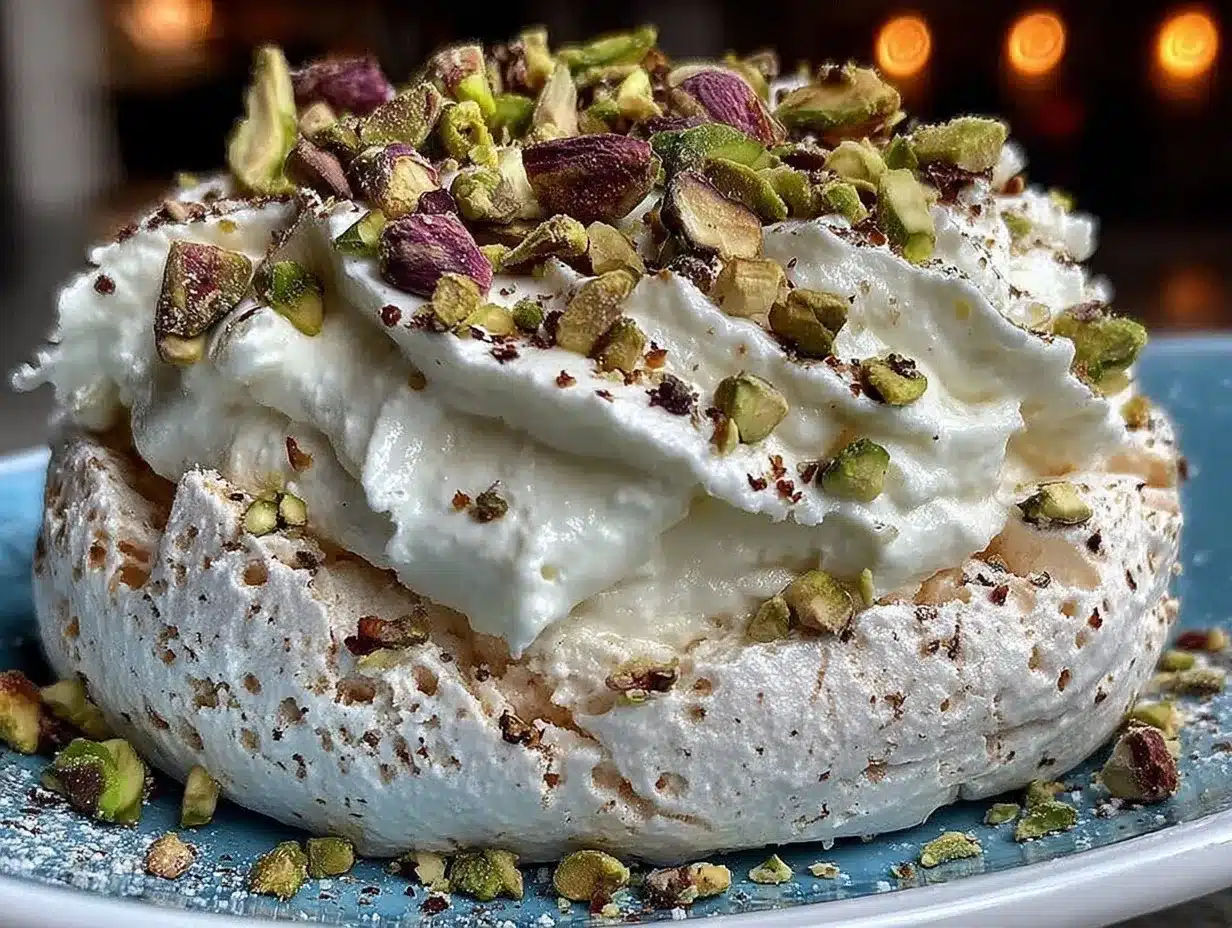
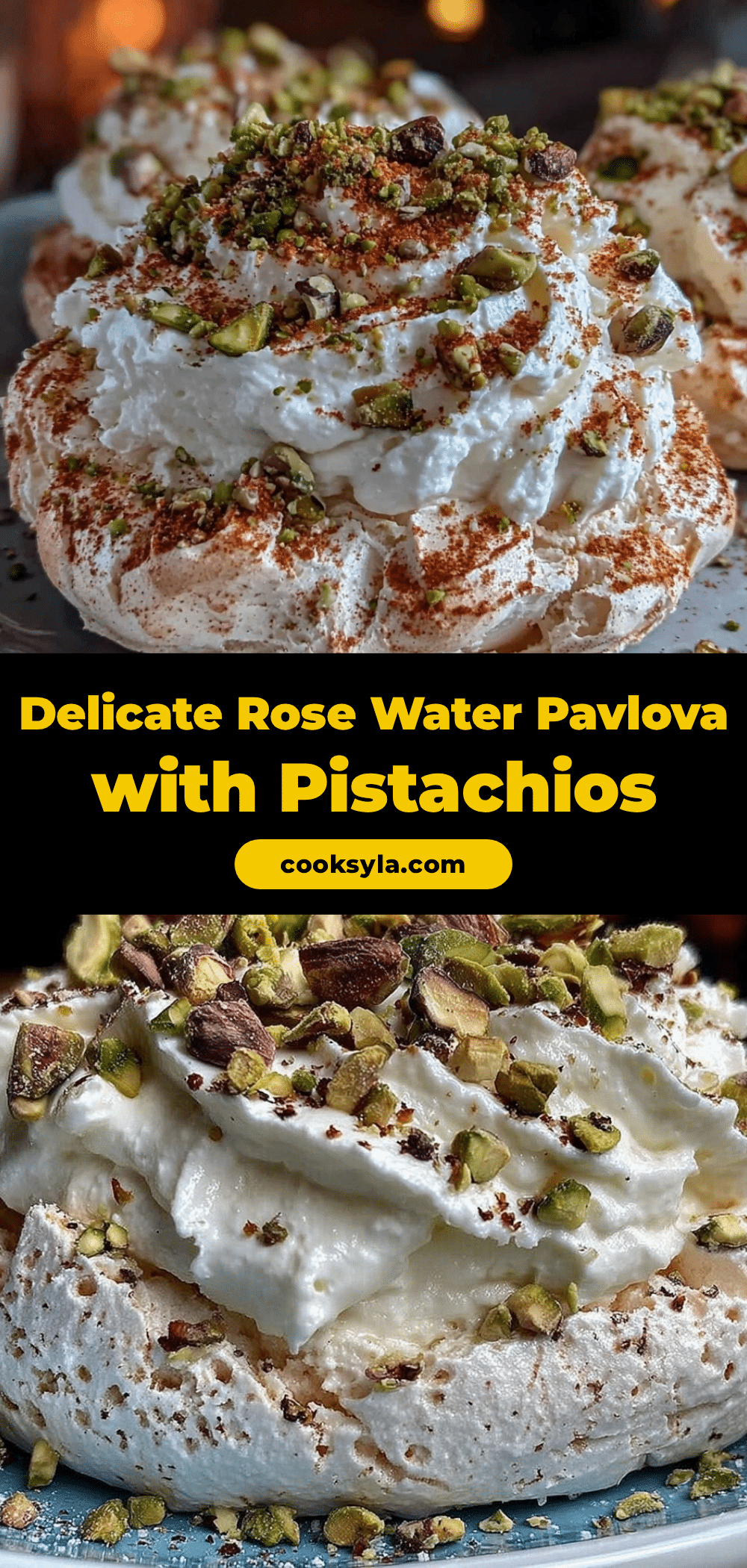
That pavlova, crowned with cloud-like whipped cream and toasted pistachios, quickly turned into a must-make whenever I want to impress, without spending hours in the kitchen. The subtle hint of rose water gives it a unique, elegant twist that’s both refreshing and comforting. Maybe you’ve been there—searching for a dessert that’s light yet special enough to make someone’s day. This recipe stays with you, not just because of how it tastes, but because of the little kitchen chaos that birthed it and the moments shared over its sweetness.
Why You’ll Love This Elegant Rose Water Pavlova Recipe
Let me tell you, this rose water pavlova is one of those recipes you want to have in your back pocket. I’ve tested it countless times—sometimes under pressure, sometimes lazy Sunday afternoons—and it never disappoints.
- Quick & Easy: Comes together in about 45 minutes, including baking and cooling time, perfect for a last-minute treat that looks like you spent hours.
- Simple Ingredients: All pantry staples with the exception of rose water and pistachios, which are easy to find and totally worth it.
- Perfect for Special Occasions: Whether it’s a bridal shower, holiday gathering, or a cozy dinner, this pavlova adds that little extra charm.
- Crowd-Pleaser: The light meringue, airy whipped cream, and crunchy pistachios get rave reviews from kids and adults alike.
- Unbelievably Delicious: The subtle floral notes from rose water elevate the sweetness without overpowering it—a rare balance.
What sets this recipe apart? The secret is in the technique—whipping the egg whites to just the right stiffness with a touch of vinegar and cornstarch for that perfect marshmallowy interior. And topping it off with freshly whipped cream that’s lightly sweetened and scattered with toasted pistachios adds texture and depth. Honestly, it’s a recipe that’s as much for the eyes as for the palate.
It’s not just dessert; it’s an experience that brings a touch of elegance to your table without fuss. If you’re curious about floral desserts or want something that feels fancy but is surprisingly straightforward, this might be your new favorite.
What Ingredients You Will Need
This recipe uses simple, wholesome ingredients that come together to create a pavlova bursting with delicate flavors and satisfying textures. Most are pantry staples, with a couple of special touches that make it stand out.
- For the Meringue Base:
- 4 large egg whites, at room temperature (for best volume)
- 1 cup (200 g) granulated sugar (I recommend C&H for consistent texture)
- 1 teaspoon white vinegar (helps stabilize the meringue)
- 1 tablespoon cornstarch (cornflour) (adds that signature marshmallowy center)
- 1/2 teaspoon rose water (adjust to taste, be careful—it’s potent!)
- For the Topping:
- 1 cup (240 ml) heavy whipping cream, chilled (use organic if possible for richer flavor)
- 2 tablespoons powdered sugar (adjust based on sweetness preference)
- 1/2 teaspoon vanilla extract (optional, but lovely)
- 1/3 cup (50 g) shelled pistachios, toasted and roughly chopped
- Optional Garnishes:
- Fresh edible rose petals (adds a romantic touch)
- Fresh berries like raspberries or strawberries (seasonal freshness)
If you can’t find rose water, try orange blossom water as a subtle alternative, though it will change the flavor slightly. For a nut-free option, swap pistachios with toasted coconut flakes or skip the nuts altogether.
Equipment Needed
- Electric mixer or stand mixer with a whisk attachment (a hand mixer works fine, but a stand mixer makes it easier to reach stiff peaks)
- Large mixing bowl, preferably glass or metal (plastic sometimes holds grease, which can ruin meringue)
- Baking sheet lined with parchment paper (for easy removal and clean-up)
- Spatula (silicone preferred for gentle folding)
- Measuring cups and spoons
- Small bowl for toasting pistachios
- Optional: Cooling rack (helps meringue cool evenly and prevents sogginess)
I’ve tried making meringue by hand—let me tell you, it’s a workout and rarely gets the volume you want! Also, making sure your bowl and whisk are spotless is key; even a tiny speck of fat can stop the egg whites from whipping properly. For toasting pistachios, a dry skillet on medium heat works like a charm and fills the kitchen with that irresistible nutty aroma.
Preparation Method
- Preheat Oven and Prepare Baking Sheet: Preheat your oven to 250°F (120°C). Line a baking sheet with parchment paper. Draw a 7-inch (18 cm) circle on the parchment as a guide, then flip the paper so the pencil side is down.
- Beat Egg Whites: In a clean, dry mixing bowl, start whipping the 4 egg whites on medium speed until soft peaks form—this takes about 3-4 minutes. The peaks should gently bend when you lift the whisk.
- Add Sugar Gradually: Increase the mixer to high speed and add sugar one tablespoon at a time, waiting a few seconds between additions. This slow incorporation is critical for a glossy, stable meringue. Continue beating until stiff, glossy peaks form (about 5-7 minutes). To test, rub a bit of meringue between your fingers—it should feel smooth, not grainy.
- Incorporate Cornstarch, Vinegar, and Rose Water: Gently fold in the cornstarch, vinegar, and rose water using a spatula. Be careful not to deflate the meringue; use slow, gentle folding motions.
- Shape the Pavlova: Spoon the meringue onto the circle on your parchment paper, shaping it into a disk with slightly raised edges to hold the cream topping later. Smooth the top and sides as best you can.
- Bake the Meringue: Place the baking sheet in the oven and bake for 1 hour and 15 minutes. The pavlova should be crisp on the outside but still soft inside. Turn off the oven and leave the pavlova inside with the door slightly ajar for another hour to cool slowly—this prevents cracking.
- Prepare the Whipped Cream: While the meringue cools, whip the chilled heavy cream with powdered sugar and vanilla extract until soft peaks form (about 3-4 minutes). Be careful not to overwhip; it should be light and fluffy.
- Toast the Pistachios: In a dry skillet over medium heat, toast the pistachios for 3-5 minutes until fragrant, stirring frequently to avoid burning. Let them cool.
- Assemble the Pavlova: Once the meringue is completely cool, transfer it to a serving plate. Dollop the whipped cream generously on top, then sprinkle with toasted pistachios. Add fresh berries or rose petals if desired.
- Serve Immediately: Pavlova is best served the day it’s made to enjoy the crisp shell and soft center. If you need to prepare ahead, keep the meringue base separate and assemble just before serving.
Cooking Tips & Techniques
Getting pavlova right can be a bit tricky, but a few tips from my kitchen experiments make all the difference.
- Room Temperature Egg Whites: They whip better and reach higher volume.
- Clean Equipment: Any fat or residue can prevent stiff peaks. I often wash my bowl with hot soapy water and dry it with a paper towel before starting.
- Adding Sugar Slowly: This is non-negotiable for a glossy, stable meringue. Rushing this step leads to grainy texture.
- Low and Slow Baking: Pavlova needs gentle heat to dry out, not cook. Cracking is often caused by oven temperature being too high or rapid cooling.
- Don’t Skip the Cooling Step: Leaving the pavlova in the oven to cool slowly helps maintain that tender marshmallow center and prevents cracks.
- Whip Cream Just Right: Soft peaks are your friend. Overwhipped cream can turn grainy and lose the light texture you want.
- Toast Nuts Carefully: Stir constantly and watch closely—nuts can go from toasted to burnt in seconds!
One time, I left the oven door closed during cooling and ended up with a cracked pavlova. I learned that tiny crack made all the difference in texture and presentation. So don’t rush it!
Variations & Adaptations
This rose water pavlova is wonderfully versatile, and I’ve played around with it in several ways.
- Flavor Variations: Swap rose water for lavender extract or vanilla bean paste for a different floral note. Lemon zest added to the whipped cream gives a bright, fresh twist.
- Dietary Tweaks: Use coconut cream instead of heavy cream for a dairy-free version. For a nut-free topping, replace pistachios with toasted pumpkin seeds or omit nuts entirely.
- Seasonal Adaptations: In summer, load your pavlova with fresh stone fruits like peaches or nectarines. In winter, pomegranate seeds and a drizzle of dark chocolate add warmth and color.
- Cooking Method Adjustments: If you prefer, bake the meringue at 225°F (110°C) for 1 hour and 30 minutes for an even crisper shell, but watch closely to avoid over-drying.
- Personal Twist: I once added a thin layer of homemade rose petal jam between the meringue and cream for an extra burst of floral flavor—it was heavenly!
Serving & Storage Suggestions
Serve your elegant rose water pavlova chilled or at room temperature. Plating it on a simple white cake stand really sets off the delicate colors and textures. Pair it with a fragrant tea like jasmine or a crisp glass of sparkling wine to complement the floral notes.
If you’ve made the pavlova ahead, store the meringue base in an airtight container at room temperature for up to 2 days. Keep the whipped cream refrigerated separately and assemble just before serving to avoid sogginess.
Leftovers (if you’re lucky enough) can be stored in the fridge for a day but expect the crisp shell to soften. Reheating isn’t recommended, but if you want to refresh the pistachios, a quick toast in a pan works wonders.
Over time, the flavors meld beautifully when the pavlova is fresh, so try not to wait too long to enjoy it. The contrast between the crunchy shell, soft center, and creamy topping is best on day one.
Nutritional Information & Benefits
Each serving of this elegant rose water pavlova (about 1/6th of the recipe) contains approximately:
| Nutrient | Amount |
|---|---|
| Calories | 280 kcal |
| Protein | 4 g |
| Fat | 18 g |
| Carbohydrates | 24 g |
| Sugar | 20 g |
Key health highlights include the protein from egg whites and healthy fats from pistachios, which are also rich in antioxidants and vitamins like B6 and E. Using rose water adds a fragrant, calorie-free flavor boost. This pavlova is naturally gluten-free and can be adapted for dairy-free diets with simple swaps.
From a wellness perspective, it’s a treat that feels indulgent without being heavy. I appreciate that with a light pavlova, I can enjoy dessert without feeling weighed down afterward.
Conclusion
This elegant rose water pavlova with whipped cream and pistachios is truly a dessert worth trying. It strikes that perfect balance between simple ingredients and sophisticated flavor. I love how it brings a sense of occasion to everyday moments without needing a lot of fuss. It’s light, fragrant, and the textures just sing together in every bite.
Feel free to adjust the floral notes or toppings to suit your taste—the recipe is forgiving and ready for your personal spin. Honestly, I keep making this pavlova because it’s the kind of dessert that feels like a small celebration, even on a regular Tuesday.
If you give it a go, I’d love to hear how your version turns out or what twists you tried. Leave a comment below and share your experience—you never know who might be inspired by your take!
FAQs About Elegant Rose Water Pavlova
Can I make the pavlova ahead of time?
Yes! You can bake the meringue base up to two days in advance and store it in an airtight container at room temperature. Just add the whipped cream and toppings right before serving to keep it crisp.
What if I don’t have rose water?
Orange blossom water is a good substitute and also offers a lovely floral note. Vanilla extract works too, though it changes the flavor profile.
How do I know when the meringue is done baking?
The pavlova should be crisp on the outside and lift easily off the parchment. It might still feel a bit soft in the center—that’s the marshmallowy texture you want. Cooling in the oven helps set it perfectly.
Can I use other nuts instead of pistachios?
Absolutely! Toasted almonds, hazelnuts, or even walnuts work well. For a nut-free option, consider toasted coconut flakes or seeds.
Why does my meringue sometimes weep or get sticky?
This usually happens if the sugar isn’t fully dissolved or the meringue is exposed to humidity. Make sure to add sugar slowly and bake on a dry day if possible. Storing the pavlova properly also helps.
Pin This Recipe!
Elegant Rose Water Pavlova
A light and delicate pavlova dessert infused with subtle rose water, topped with whipped cream and toasted pistachios, perfect for special occasions or a charming treat.
- Prep Time: 15 minutes
- Cook Time: 1 hour 15 minutes
- Total Time: 2 hours 30 minutes
- Yield: 6 servings 1x
- Category: Dessert
- Cuisine: Australian/New Zealand
Ingredients
- 4 large egg whites, at room temperature
- 1 cup (200 g) granulated sugar
- 1 teaspoon white vinegar
- 1 tablespoon cornstarch (cornflour)
- 1/2 teaspoon rose water
- 1 cup (240 ml) heavy whipping cream, chilled
- 2 tablespoons powdered sugar
- 1/2 teaspoon vanilla extract (optional)
- 1/3 cup (50 g) shelled pistachios, toasted and roughly chopped
- Optional garnishes: fresh edible rose petals, fresh berries like raspberries or strawberries
Instructions
- Preheat your oven to 250°F (120°C). Line a baking sheet with parchment paper. Draw a 7-inch (18 cm) circle on the parchment as a guide, then flip the paper so the pencil side is down.
- In a clean, dry mixing bowl, whip the 4 egg whites on medium speed until soft peaks form, about 3-4 minutes.
- Increase mixer speed to high and add sugar one tablespoon at a time, waiting a few seconds between additions. Beat until stiff, glossy peaks form, about 5-7 minutes.
- Gently fold in the cornstarch, vinegar, and rose water using a spatula, being careful not to deflate the meringue.
- Spoon the meringue onto the circle on the parchment paper, shaping it into a disk with slightly raised edges. Smooth the top and sides.
- Bake for 1 hour and 15 minutes until crisp on the outside but soft inside. Turn off oven and leave pavlova inside with door slightly ajar for 1 hour to cool slowly.
- While meringue cools, whip the chilled heavy cream with powdered sugar and vanilla extract until soft peaks form, about 3-4 minutes.
- Toast pistachios in a dry skillet over medium heat for 3-5 minutes until fragrant, stirring frequently. Let cool.
- Transfer cooled meringue to a serving plate. Dollop whipped cream generously on top, then sprinkle with toasted pistachios. Add fresh berries or rose petals if desired.
- Serve immediately for best texture. If preparing ahead, store meringue base separately and assemble just before serving.
Notes
Use room temperature egg whites for better volume. Ensure all equipment is spotless and free of fat to achieve stiff peaks. Add sugar slowly for a glossy meringue. Bake at low temperature and cool slowly in the oven to prevent cracking. Whip cream to soft peaks to avoid graininess. Toast nuts carefully to avoid burning. Pavlova is best served the day it is made to maintain crispness.
Nutrition
- Serving Size: Approximately 1/6th
- Calories: 280
- Sugar: 20
- Fat: 18
- Carbohydrates: 24
- Protein: 4
Keywords: pavlova, rose water, meringue, whipped cream, pistachios, floral dessert, easy pavlova, elegant dessert