Love this? Save it for later!
Share the inspiration with your friends
“I wasn’t expecting the best steak of my life to come from a corner butcher shop on a rainy Thursday,” I said to myself as the doorbell rang with a package I’d been eagerly awaiting. You know that feeling when anticipation builds, and suddenly you’re standing in your kitchen, a thick, dry-aged ribeye steak staring back at you? That was me last fall—juggling a cracked cast-iron pan, a recipe scribbled on a napkin from a local chef, and a kitchen timer that seemed to mock me. Honestly, the whole scene was a bit chaotic—my phone rang mid-sear, and I nearly dropped the butter I was melting for that herb compound butter I’d read about.
But let me tell you, that moment of imperfection led to a steak so tender, so flavorful, it’s stayed with me ever since. The dry-aged ribeye had a rich, nutty aroma that filled the kitchen, and when paired with the creamy, garlicky herb butter melting on top, it was pure magic. Maybe you’ve been there—trying to nail that perfect steak at home, unsure if the butcher’s cut or your pan technique will measure up. This recipe is the one I keep coming back to because it’s forgiving, straightforward, and honestly, makes you feel like a pro even if it’s your first time cooking a dry-aged ribeye.
So, if you’ve ever wanted to impress without the stress or just savor a steak night that tastes like a five-star restaurant, this one’s for you. I’m sharing everything I learned from that slightly chaotic, totally delicious night—because who doesn’t deserve a perfect dry-aged ribeye steak with herb compound butter?
Why You’ll Love This Recipe
- Quick & Easy: Comes together in under 30 minutes, perfect for a relaxed weekend dinner or a special occasion without the fuss.
- Simple Ingredients: Uses straightforward pantry staples and fresh herbs you likely already have on hand.
- Perfect for Impressing Guests: Great for dinner parties or date nights where you want to wow without hours in the kitchen.
- Crowd-Pleaser: The combination of dry-aged ribeye’s deep flavor with the herb compound butter’s richness always gets rave reviews from family and friends.
- Unbelievably Delicious: The buttery herb topping melts into the perfectly seared steak, creating a juicy, flavorful bite every time.
This isn’t just another steak recipe. What makes it stand out is the herb compound butter—a simple blend of fresh parsley, thyme, garlic, and a hint of lemon zest that cuts through the richness. The dry-aging process of the ribeye adds a subtle nuttiness and tenderness you won’t find in a regular cut. I’ve tested this method countless times, tweaking the sear temperature and butter blend until it hit that sweet spot. It’s comfort food with a bit of finesse, and honestly, it’s the kind of recipe that makes you close your eyes after the first bite and just savor the moment.
What Ingredients You Will Need
This recipe uses simple, wholesome ingredients that come together to highlight the dry-aged ribeye’s bold flavor and the herb butter’s creamy freshness. Most of these are pantry staples, and the fresh herbs add a bright touch that’s easy to swap based on what you have.
- Dry-Aged Ribeye Steak: Approximately 16 ounces (450g), about 1.5 inches thick. Look for a reputable butcher or specialty meat counter for the best quality.
- Unsalted Butter: 4 tablespoons (60g), softened. I prefer Plugrá for its creamy texture, but any good-quality butter will do.
- Fresh Parsley: 2 tablespoons, finely chopped. Flat-leaf parsley adds a nice herbaceous note.
- Fresh Thyme: 1 teaspoon, leaves stripped from stems.
- Garlic: 1 clove, minced. Fresh garlic gives the butter a punch.
- Lemon Zest: From half a lemon. Adds a subtle brightness that balances the richness.
- Sea Salt: To taste. Coarse salt works best for seasoning the steak.
- Freshly Ground Black Pepper: To taste.
- Olive Oil: 1 tablespoon (15ml) for searing. Use extra virgin for flavor.
- Optional: Smoked Paprika or Chili Flakes: A pinch if you want a subtle smoky or spicy kick.
If you’re looking for substitutions, feel free to swap thyme for rosemary or add chives to the butter for a sharper bite. For dairy-free, you can replace butter with a high-quality vegan spread, but the flavor profile will shift a bit. And if fresh herbs aren’t in season, frozen herbs can work in a pinch, just use a bit less since they’re more concentrated.
Equipment Needed
- Cast-Iron Skillet: The ideal choice for a perfect sear thanks to its heat retention. I’ve tried stainless steel pans, but cast iron wins every time.
- Tongs: For flipping the steak safely without piercing the meat.
- Small Mixing Bowl: To combine the herb butter ingredients.
- Microplane or Fine Grater: For zesting the lemon.
- Meat Thermometer: Optional but highly recommended for checking doneness—especially if you’re a perfectionist like me.
- Aluminum Foil or Plate: To rest the steak after cooking, keeping it juicy.
If you don’t have a cast-iron skillet, a heavy-bottomed stainless steel pan works, but watch your heat carefully to avoid hot spots. For budget-friendly options, Lodge makes affordable, durable cast iron that has served me well for years. Also, keeping your tools clean and well-seasoned makes a big difference. A quick tip: wipe your skillet with oil after each use to maintain that non-stick finish that makes searing a breeze.
Preparation Method
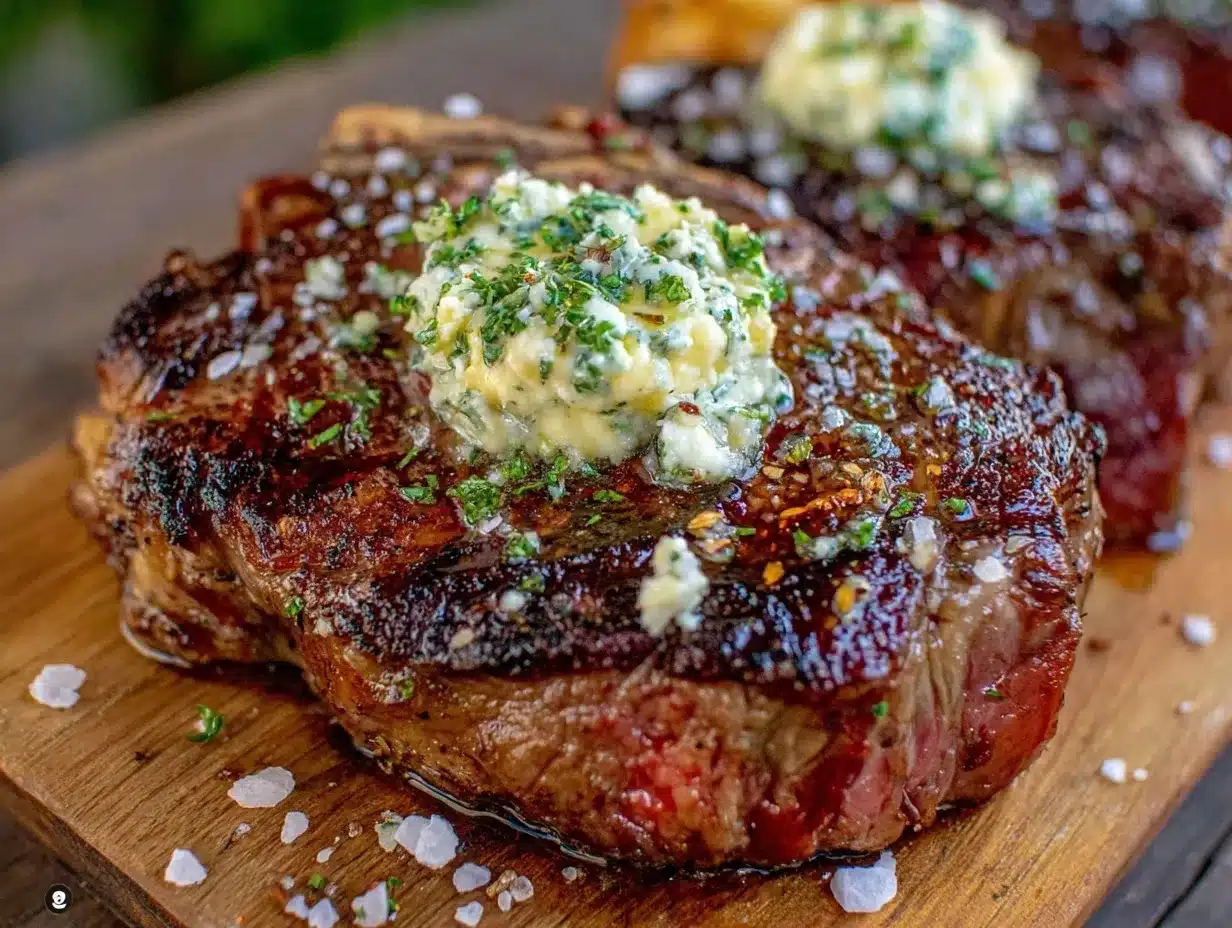
- Prepare the Herb Compound Butter (10 minutes): In a small bowl, combine 4 tablespoons (60g) softened unsalted butter, 2 tablespoons chopped parsley, 1 teaspoon thyme leaves, 1 minced garlic clove, and lemon zest from half a lemon. Mix well until evenly combined. Season lightly with salt and pepper. Set aside or refrigerate to firm up while you prepare the steak.
- Bring the Steak to Room Temperature (20-30 minutes): Take your 16-ounce (450g) dry-aged ribeye out of the fridge and let it sit on the counter. This helps it cook more evenly. Pat the steak dry with paper towels to remove excess moisture, which is key for a good sear.
- Season the Steak: Generously season both sides of the ribeye with coarse sea salt and freshly ground black pepper. If you like, add a pinch of smoked paprika or chili flakes for an extra layer of flavor.
- Preheat Your Cast-Iron Skillet: Place your skillet on the stove over medium-high heat and add 1 tablespoon (15ml) olive oil. Heat until shimmering but not smoking—this usually takes about 3-4 minutes.
- Sear the Steak (6-8 minutes total): Place the steak in the hot skillet and let it sear undisturbed for about 3-4 minutes on the first side. You’re looking for a deep, golden-brown crust. Flip the steak carefully using tongs and sear the other side for another 3-4 minutes for medium-rare doneness (internal temp around 130°F/54°C). Adjust time slightly for thicker cuts or preferred doneness.
- Add Herb Butter and Baste (Optional but Recommended): Reduce heat to medium-low. Drop 1-2 tablespoons of the herb compound butter on top of the steak. As it melts, tilt the pan slightly and spoon the melted butter over the steak repeatedly for about 1-2 minutes. This adds flavor and moisture.
- Rest the Steak (5-10 minutes): Transfer the ribeye to a plate or cutting board and cover loosely with foil. Resting allows the juices to redistribute, making each bite juicy and tender.
- Serve: Slice the steak against the grain and top each portion with a dollop of the remaining herb compound butter. Enjoy immediately.
Pro tip: If you’re unsure about doneness, use a meat thermometer rather than guessing. Also, avoid overcrowding the pan if cooking multiple steaks—better to sear in batches for that perfect crust.
Cooking Tips & Techniques
One key to the perfect dry-aged ribeye is patience with the sear. Resist the urge to move the steak too soon; giving it time to form that crust is crucial. I learned this the hard way after flipping prematurely and ending up with a less appealing texture.
Using a cast-iron skillet is a game-changer because it holds heat evenly, but make sure it’s properly preheated. You want that instant sizzle when the steak hits the pan. I’ve found that olive oil handles high heat well here, but feel free to use avocado oil if you prefer.
When making the herb compound butter, soften your butter at room temperature so it blends smoothly. Fresh herbs are best, but if you’re using dried, reduce the quantity by half to avoid overpowering the butter.
Resting is non-negotiable! I once skipped this step in a rush, and the steak lost a lot of its juicy flavor. Cover loosely with foil so the crust stays crisp but the meat stays warm.
Lastly, don’t forget to season liberally. Dry-aged beef has an intense flavor, and a good amount of salt and pepper balances it beautifully. If you want to multitask, prep the herb butter while the steak comes to room temperature—that way, everything flows smoothly.
Variations & Adaptations
Want to mix things up or accommodate dietary needs? Here are a few variations I’ve tried and loved:
- Garlic and Rosemary Butter: Swap thyme and parsley for rosemary and add an extra garlic clove for a woodsy, aromatic twist.
- Spicy Cajun Butter: Add smoked paprika, cayenne pepper, and a pinch of cumin to the butter for a smoky, spicy kick.
- Grilled Instead of Pan-Sear: For a smoky outdoor flavor, grill the ribeye over high heat for 4-5 minutes per side, then top with herb butter while resting.
- Dairy-Free Option: Use a vegan butter substitute mixed with herbs and garlic. The texture won’t be quite the same, but it still adds richness.
- Seasonal Herb Swap: In summer, try fresh basil and oregano in the butter to brighten the flavor profile.
One personal favorite twist is adding a tiny splash of Worcestershire sauce to the butter mix—gives it a subtle umami boost without overpowering the beef.
Serving & Storage Suggestions
Serve your dry-aged ribeye steak hot and fresh from the pan, topped with a generous spoonful of herb compound butter. It pairs beautifully with simple sides like roasted garlic mashed potatoes, sautéed green beans, or a crisp arugula salad dressed with lemon vinaigrette.
For beverages, a full-bodied red wine like Cabernet Sauvignon or Malbec complements the steak’s richness, but a robust craft beer works too if that’s your style.
Leftovers? Wrap the steak tightly in foil or plastic wrap and refrigerate for up to 3 days. To reheat, gently warm in a low oven (around 275°F/135°C) for 10-15 minutes until warmed through, then add fresh herb butter on top to revive the flavor.
Steak flavor deepens slightly after resting overnight, so if you’re planning ahead, slice and store separately from the butter, adding it fresh when reheating.
Nutritional Information & Benefits
A 16-ounce (450g) dry-aged ribeye steak provides about 1000 calories, with roughly 70 grams of protein and 75 grams of fat, depending on how much butter you use. The dry-aging process reduces moisture and concentrates flavor, making it more satisfying in smaller portions.
The herb compound butter adds healthy fats and antioxidants from fresh parsley and thyme. Garlic and lemon zest contribute vitamin C and beneficial plant compounds.
This recipe suits keto and low-carb diets beautifully due to its high protein and fat content. For those watching sodium, adjust salt amounts to taste.
From a wellness perspective, enjoying a quality cut of beef like dry-aged ribeye in moderation can be part of a balanced diet, especially when paired with fresh herbs that add flavor without extra calories.
Conclusion
If you’ve ever dreamed of making a steak at home that tastes like it came from a top steakhouse, this perfect dry-aged ribeye steak recipe with easy herb compound butter is your new go-to. It’s approachable enough for a weekday treat but special enough for celebrations. I love this recipe because it’s forgiving, packed with flavor, and that herb butter just brings everything together in the best possible way.
Feel free to tweak the herbs or cooking method to suit your taste—cooking is personal, after all! I’d love to hear how your steak night goes, or if you’ve added your own twist. Drop a comment, share your photos, or tell me about your favorite steak side. Let’s savor every juicy bite together!
FAQs
What is dry-aged ribeye, and how is it different from regular ribeye?
Dry-aged ribeye is beef that has been hung in a controlled, refrigerated environment for several weeks, allowing enzymes to break down muscle tissue. This process intensifies flavor and tenderizes the meat compared to fresh ribeye.
Can I use regular ribeye if I can’t find dry-aged?
Absolutely! While dry-aged offers a deeper flavor, a high-quality fresh ribeye will still deliver great results, especially with the herb compound butter.
How do I know when my steak is cooked to medium-rare?
The best way is to use a meat thermometer—medium-rare is about 130°F (54°C). Alternatively, you can use the finger test method, but a thermometer is more reliable.
Can I prepare the herb compound butter ahead of time?
Yes! You can make it up to 3 days in advance and keep it refrigerated. Bring it to room temperature before using for easy spreading and melting.
What sides go well with this dry-aged ribeye steak?
Classic sides include roasted or mashed potatoes, sautéed vegetables, or a fresh salad. For something different, try grilled asparagus or creamy polenta.
Pin This Recipe!
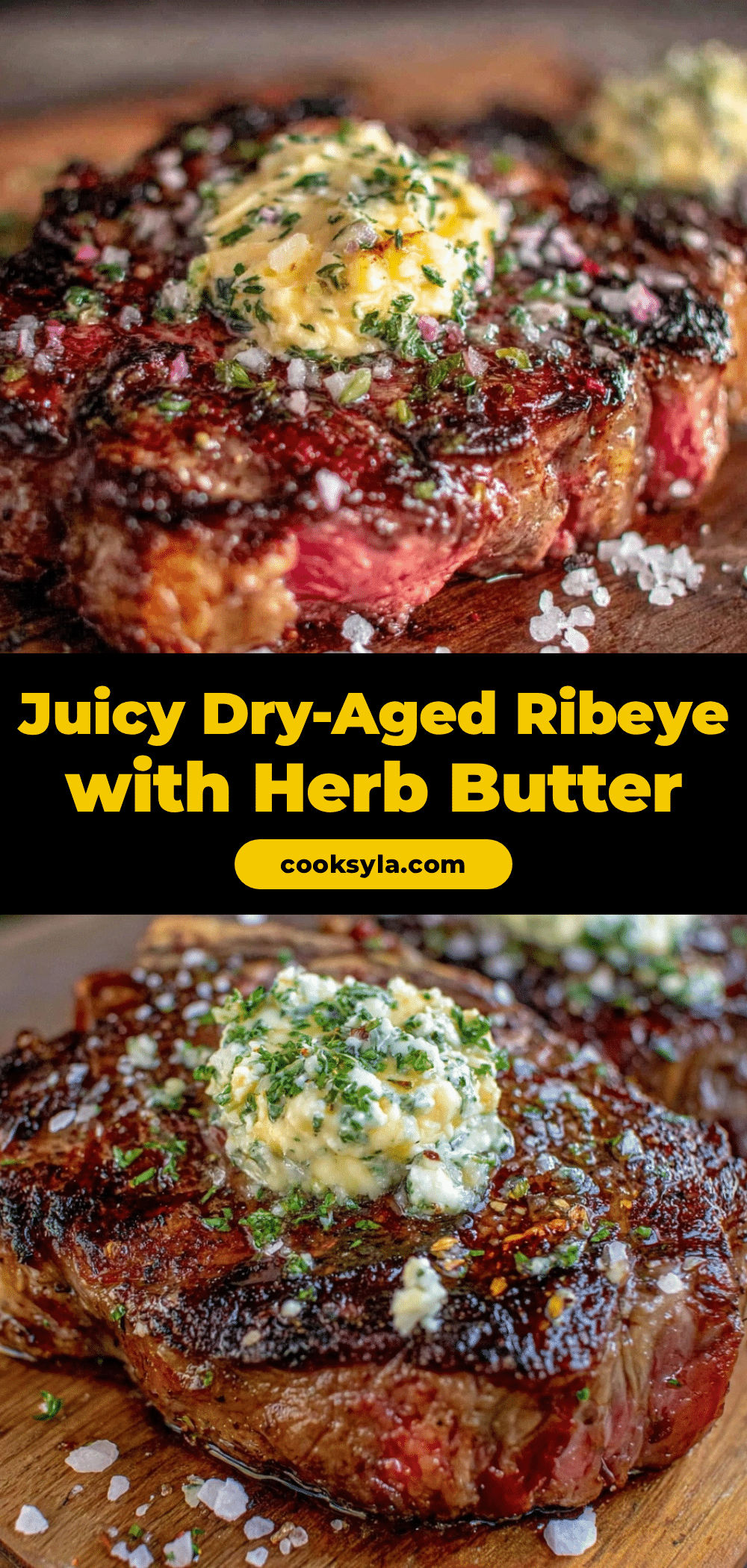
Perfect Dry-Aged Ribeye Steak Recipe with Easy Herb Compound Butter
A straightforward and forgiving recipe for a tender, flavorful dry-aged ribeye steak topped with a creamy, garlicky herb compound butter. Perfect for impressing guests or enjoying a five-star steak night at home.
- Prep Time: 10 minutes
- Cook Time: 10 minutes
- Total Time: 30-40 minutes
- Yield: 1 steak (serves 1-2) 1x
- Category: Main Course
- Cuisine: American
Ingredients
- 16 ounces (1 pound) dry-aged ribeye steak, about 1.5 inches thick
- 4 tablespoons (60g) unsalted butter, softened
- 2 tablespoons fresh parsley, finely chopped
- 1 teaspoon fresh thyme leaves, stripped from stems
- 1 clove garlic, minced
- Zest of half a lemon
- Sea salt, to taste
- Freshly ground black pepper, to taste
- 1 tablespoon (15ml) extra virgin olive oil
- Optional: pinch of smoked paprika or chili flakes
Instructions
- Prepare the Herb Compound Butter: In a small bowl, combine softened unsalted butter, chopped parsley, thyme leaves, minced garlic, and lemon zest. Mix well until evenly combined. Season lightly with salt and pepper. Set aside or refrigerate to firm up while preparing the steak.
- Bring the Steak to Room Temperature: Remove the ribeye from the refrigerator and let it sit on the counter for 20-30 minutes. Pat dry with paper towels to remove excess moisture.
- Season the Steak: Generously season both sides with coarse sea salt and freshly ground black pepper. Add smoked paprika or chili flakes if desired.
- Preheat the Cast-Iron Skillet: Place skillet over medium-high heat and add olive oil. Heat until shimmering but not smoking, about 3-4 minutes.
- Sear the Steak: Place steak in hot skillet and sear undisturbed for 3-4 minutes until a deep golden-brown crust forms. Flip and sear the other side for another 3-4 minutes for medium-rare (internal temp ~130°F/54°C). Adjust time for thickness or preferred doneness.
- Add Herb Butter and Baste: Reduce heat to medium-low. Drop 1-2 tablespoons of herb compound butter on top of the steak. As it melts, tilt the pan and spoon melted butter over the steak repeatedly for 1-2 minutes.
- Rest the Steak: Transfer steak to a plate or cutting board and cover loosely with foil. Rest for 5-10 minutes to allow juices to redistribute.
- Serve: Slice against the grain and top each portion with remaining herb compound butter. Serve immediately.
Notes
Use a meat thermometer to check doneness for best results. Resting the steak is essential for juicy, tender meat. If you don’t have a cast-iron skillet, a heavy-bottomed stainless steel pan can be used but watch heat carefully. Butter can be made ahead and refrigerated. For dairy-free, substitute vegan butter. Adjust salt to taste for sodium control.
Nutrition
- Serving Size: One 16-ounce ribeye
- Calories: 1000
- Fat: 75
- Saturated Fat: 35
- Carbohydrates: 1
- Protein: 70
Keywords: dry-aged ribeye, ribeye steak, herb compound butter, steak recipe, cast iron skillet steak, easy steak recipe, garlic butter steak, steak dinner