Love this? Save it for later!
Share the inspiration with your friends
Introduction
“You won’t believe where I first tasted this tender osso buco,” my friend Marco said, grinning as we sipped espresso at a tiny trattoria tucked away in a cobblestone alley of Florence. He wasn’t bluffing. That evening, the rich aroma of braised veal shanks filled the air, mingling with the tangy brightness of gremolata, and honestly, it was a revelation. I wasn’t expecting to fall head over heels for a dish that looked so simple, but that first bite—the meat so soft it practically melted, the sauce deep and comforting, and that zesty gremolata cutting through the richness—was unforgettable.
It took me a while to recreate Marco’s version back home. I had a cracked ceramic pan that didn’t quite do the job, and let me tell you, the first attempt was… less than perfect (more like veal stew with a side of frustration). But after a few tries, and a couple of late-night kitchen experiments, I landed on this recipe: tender osso buco with zesty gremolata, classic braised veal shanks that have that perfect balance of hearty and fresh.
Maybe you’ve been there—craving something that feels like a warm hug after a long day, but with a little spark to keep things interesting. That’s exactly what this recipe delivers, and why it’s stuck with me ever since. So, let me tell you how to bring a touch of Tuscany into your kitchen with this timeless dish.
Why You’ll Love This Recipe
This tender osso buco recipe isn’t just another braised meat dish—it’s a culinary experience that has been fine-tuned through many meals and shared stories. Here’s why you’ll want to make it your own:
- Quick & Easy: Comes together in about 2 to 2.5 hours, which is pretty speedy for braising veal shanks to perfect tenderness.
- Simple Ingredients: Uses pantry staples and fresh produce you can find at any market, no exotic shopping necessary.
- Perfect for Cozy Dinners: Ideal for weekend dinners or special occasions where comfort and elegance meet.
- Crowd-Pleaser: This is one of those dishes that impresses guests without making you sweat in the kitchen.
- Unbelievably Delicious: The slow braise creates a tender texture that almost falls off the bone, while the gremolata adds a bright, fresh contrast that keeps every bite lively.
What makes this recipe stand out is the gremolata—it’s not just a garnish but a zesty punch that wakes up the whole dish. Also, I’ve found that browning the veal shanks thoroughly before braising seals in flavor and creates a deep, rich sauce that’s anything but ordinary. Honestly, this isn’t just osso buco; it’s comfort food with a little Italian soul.
What Ingredients You Will Need
This recipe uses simple, wholesome ingredients to deliver bold flavor and satisfying texture without the fuss. Most are pantry staples, and the fresh gremolata is a snap to whip up.
- Veal Shanks: 4 pieces (about 1.5 to 2 inches thick each) – look for well-marbled, bone-in cuts for the best gelatinous texture.
- All-Purpose Flour: ½ cup (60g) for dredging – helps create a nice crust and thickens the braising liquid.
- Olive Oil: 3 tablespoons – I prefer extra virgin from brands like Colavita for a fruity undertone.
- Unsalted Butter: 2 tablespoons – adds richness to the sauce.
- Yellow Onion: 1 large, finely chopped – the savory foundation.
- Carrots: 2 medium, diced – for sweetness and texture.
- Celery Stalks: 2, diced – classic soffritto base.
- Garlic Cloves: 3, minced – for aromatic depth.
- Dry White Wine: 1 cup (240ml) – choose a crisp, dry variety like Pinot Grigio.
- Beef or Veal Stock: 2 cups (480ml) – homemade or store-bought, adds savory richness.
- Crushed Tomatoes: 1 cup (240g) – for acidity and body.
- Fresh Thyme: 2 teaspoons, chopped – for herbal notes.
- Bay Leaf: 1 large – classic braising flavor.
- Salt and Freshly Ground Black Pepper: to taste – seasoning is key.
For the Zesty Gremolata:
- Fresh Parsley: ½ cup, finely chopped – the herbaceous base.
- Lemon Zest: from 1 large lemon – adds bright citrus punch.
- Garlic: 1 small clove, finely minced – sharp and fresh.
- Olive Oil: 1 tablespoon – to bind the gremolata.
For substitutions, almond flour works well instead of all-purpose flour for a gluten-free option. If you can’t find veal shanks, beef shanks are a reasonable alternative but note the flavor will differ slightly. The gremolata can be tweaked with lime zest or fresh basil for a twist, but the classic lemon-parsley combo is my go-to.
Equipment Needed
- Heavy-Bottomed Dutch Oven or Braiser: Essential for even heat distribution and slow braising. I use my 5-quart Le Creuset, but a stainless steel pot with a tight-fitting lid works too.
- Sharp Chef’s Knife: For chopping veggies and zesting lemons cleanly.
- Cutting Board: Preferably sturdy and easy to clean.
- Tongs: Handy for turning the veal shanks without piercing the meat.
- Fine Microplane or Zester: For the lemon zest in gremolata.
- Mixing Bowl: To toss gremolata ingredients together.
If you don’t have a Dutch oven, a large heavy pan with a lid can suffice, but be sure it retains moisture well during braising. I’ve tried braising in a slow cooker, but the flavor isn’t quite the same—there’s something magical about the stovetop caramelization step.
Preparation Method
- Prep the veal shanks: Pat the veal shanks dry with paper towels. Season generously with salt and freshly ground black pepper. Dredge each shank in flour, shaking off any excess. This step helps create a beautiful crust and thickens the sauce later. (Approx. 10 minutes)
- Brown the meat: Heat olive oil and butter in your Dutch oven over medium-high heat until shimmering. Add the veal shanks carefully, working in batches if necessary. Brown on all sides until deep golden, about 4-5 minutes per side. Don’t rush this—browning is critical for flavor. Once browned, remove shanks and set aside. (Approx. 15 minutes)
- Sauté the soffritto: In the same pot, lower heat to medium and add chopped onions, carrots, and celery. Cook gently, stirring occasionally, until softened and translucent, about 8-10 minutes. Add minced garlic in the last 2 minutes to avoid burning. (Approx. 10 minutes)
- Deglaze with wine: Pour in white wine to deglaze the pan, scraping up all those browned bits from the bottom with a wooden spoon. Let the wine reduce by half—this concentrates the flavor and removes any raw alcohol taste. (Approx. 5-7 minutes)
- Add remaining liquids and herbs: Stir in crushed tomatoes, beef or veal stock, thyme, and bay leaf. Bring the mixture to a gentle simmer. Taste and adjust seasoning with salt and pepper.
- Braise the veal: Nestle the browned veal shanks back into the pot, making sure they are partially submerged in the liquid. Cover with the lid and transfer to a preheated oven at 325°F (160°C). Braise for about 2 hours, or until the meat is fork-tender and falling off the bone. Check halfway through—if the liquid level is low, add a splash of stock or water. (Approx. 2 hours)
- Make the gremolata: While the veal braises, combine chopped parsley, lemon zest, minced garlic, and olive oil in a small bowl. Mix well and set aside to let flavors meld. (Approx. 5 minutes)
- Finish and serve: Once the veal is perfectly tender, remove the shanks and keep warm. Skim any excess fat from the sauce, then simmer uncovered for a few minutes to thicken if needed. Spoon sauce generously over the shanks and sprinkle with the zesty gremolata just before serving. (Approx. 10 minutes)
Pro tip: The sauce tastes even better the next day, so if you have the patience, make it ahead and reheat gently.
Cooking Tips & Techniques
Braising veal shanks is all about patience and layering flavors, and I’ve learned a few things the hard way. First, don’t skip the flour dredging—that crust is the base of your sauce’s body. Also, browning the meat well is where the magic happens. I once rushed this step and ended up with a pale, bland sauce that left me regretting every shortcut.
Keep the heat moderate when sautéing vegetables to avoid burning the garlic—bitterness is a quick way to ruin this dish. When adding wine, be sure it reduces sufficiently; otherwise, the sauce can taste too sharp or acidic.
Timing-wise, you can prep the gremolata while the shanks braise, which helps keep the kitchen flow smooth. And always taste the sauce before serving—sometimes a pinch more salt or a squeeze of lemon juice can make all the difference.
One trick I swear by is resting the meat in the sauce off the heat for 10 minutes after braising. It lets the flavors settle and the meat relax, making every bite tender and juicy.
Variations & Adaptations
This tender osso buco recipe is wonderfully versatile. Here are a few ways to make it your own:
- Gluten-Free: Substitute all-purpose flour with chickpea or almond flour for dredging. They brown nicely and add a subtle nuttiness.
- Vegetarian Version: Replace veal with large, thick slices of portobello mushrooms or eggplant. Braise in the same sauce for a hearty, meat-free twist.
- Spicy Kick: Add a pinch of red pepper flakes to the sauce while it simmers for an unexpected warmth that pairs beautifully with the gremolata.
- Seasonal Twist: Swap out parsley in gremolata for fresh basil or cilantro in warmer months, or add a touch of orange zest for a sweeter citrus note.
- Slow Cooker Adaptation: Brown the shanks and sauté veggies as usual, then transfer everything to a slow cooker. Cook on low for 6-8 hours until tender.
I once tried gremolata with a bit of finely chopped mint, and it was surprisingly refreshing—definitely worth a try if you like experimenting.
Serving & Storage Suggestions
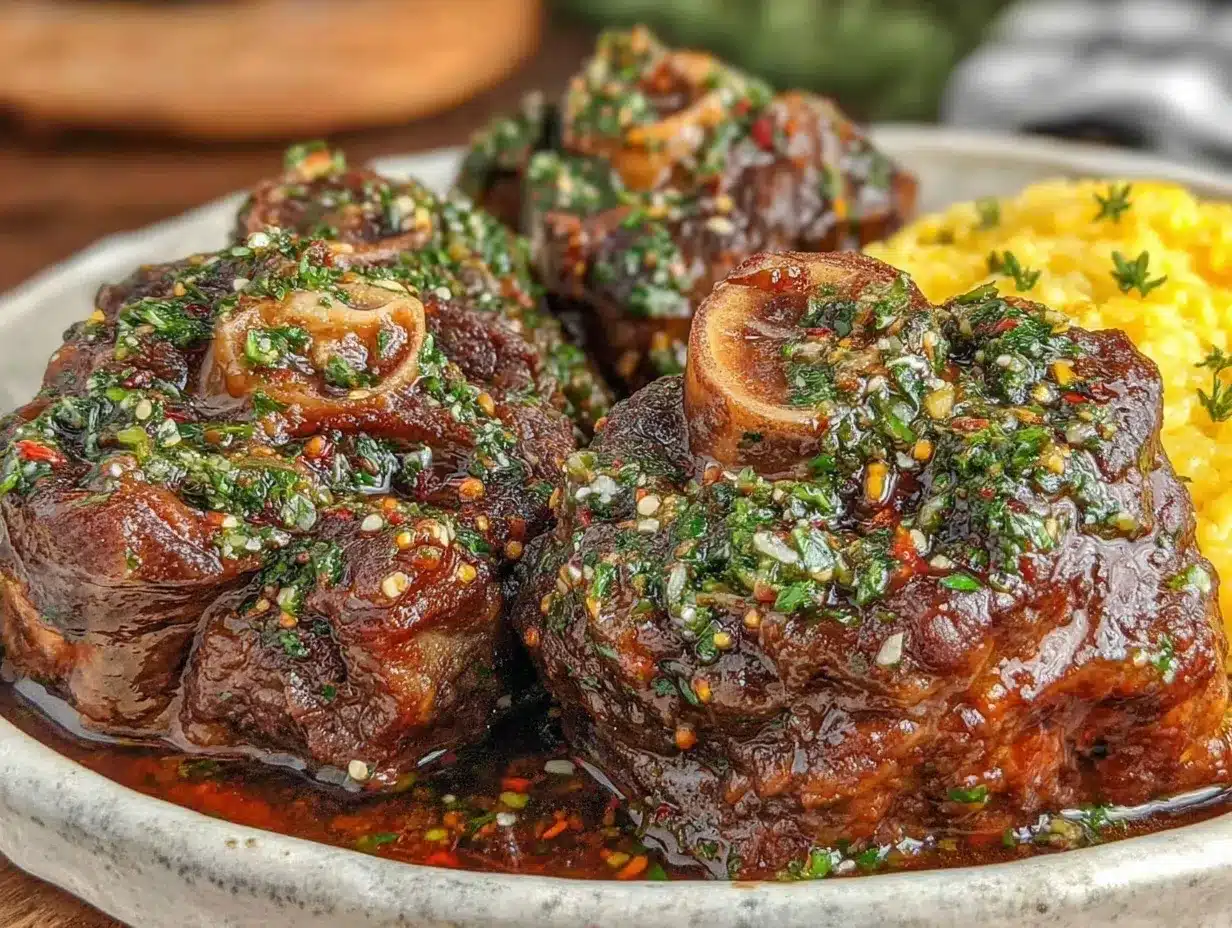
This osso buco is best served hot, straight from the pot, with the gremolata sprinkled on top just before plating. It pairs beautifully with creamy polenta, saffron risotto, or buttery mashed potatoes to soak up the luscious sauce.
For drinks, a glass of full-bodied red wine like Barolo or Chianti complements the flavors perfectly. But honestly, any robust red will do.
Store leftovers in an airtight container in the refrigerator for up to 3 days. The flavors deepen overnight, making the next-day meal even better. To reheat, warm gently on the stovetop over low heat, stirring occasionally to prevent sticking.
If you want to freeze portions, wrap tightly and freeze for up to 2 months. Thaw overnight in the fridge before reheating slowly.
Nutritional Information & Benefits
This recipe offers a satisfying balance of protein, healthy fats, and vegetables. Veal shanks are an excellent source of collagen and minerals like zinc and iron, which support skin and immune health. The fresh parsley and lemon in gremolata provide antioxidants and vitamin C, boosting the dish’s nutritional profile.
While this is not a low-fat dish, the slow braising method means it’s tender and juicy without needing extra fats. For those watching carbs, serving with vegetables or a light salad keeps the meal balanced.
Note: This recipe contains gluten (from flour) and dairy (from butter), so swap as needed for dietary restrictions.
Conclusion
So there you have it—tender osso buco with zesty gremolata that’s approachable, comforting, and bursting with flavor. Whether you’re looking to impress guests or just want a meal that feels special without complicated steps, this recipe delivers. I love that it’s a dish you can make ahead, share stories over, and savor bite after bite.
Give it a try, make it yours with a personal twist, and let me know how it turns out. I mean, honestly, once you’ve had osso buco done right, it’s hard to settle for anything less!
Feel free to leave your thoughts or any tweaks you discover—sharing kitchen wins is what keeps us all inspired.
FAQs
Can I use beef shanks instead of veal shanks for osso buco?
Absolutely! Beef shanks are a good substitute and slightly more affordable, though the flavor and tenderness will be a bit different. Just adjust the braising time as needed, since beef can take a bit longer to become tender.
How do I know when the osso buco is done braising?
The veal is done when the meat is fork-tender and easily pulls away from the bone. The sauce should be thick and flavorful. Typically, this takes about 2 hours at 325°F (160°C).
What’s the purpose of gremolata in this recipe?
Gremolata adds a fresh, zesty contrast to the rich, slow-braised veal. The lemon zest, parsley, and garlic brighten the dish and balance the deep flavors of the sauce.
Can I prepare osso buco ahead of time?
Yes! The flavors actually improve after resting overnight. Store the braised veal and sauce separately from gremolata, then reheat gently and add gremolata just before serving.
Is osso buco traditionally served with a specific side?
Traditionally, osso buco is served with risotto alla Milanese (saffron risotto) or polenta, both of which soak up the delicious sauce beautifully.
Pin This Recipe!
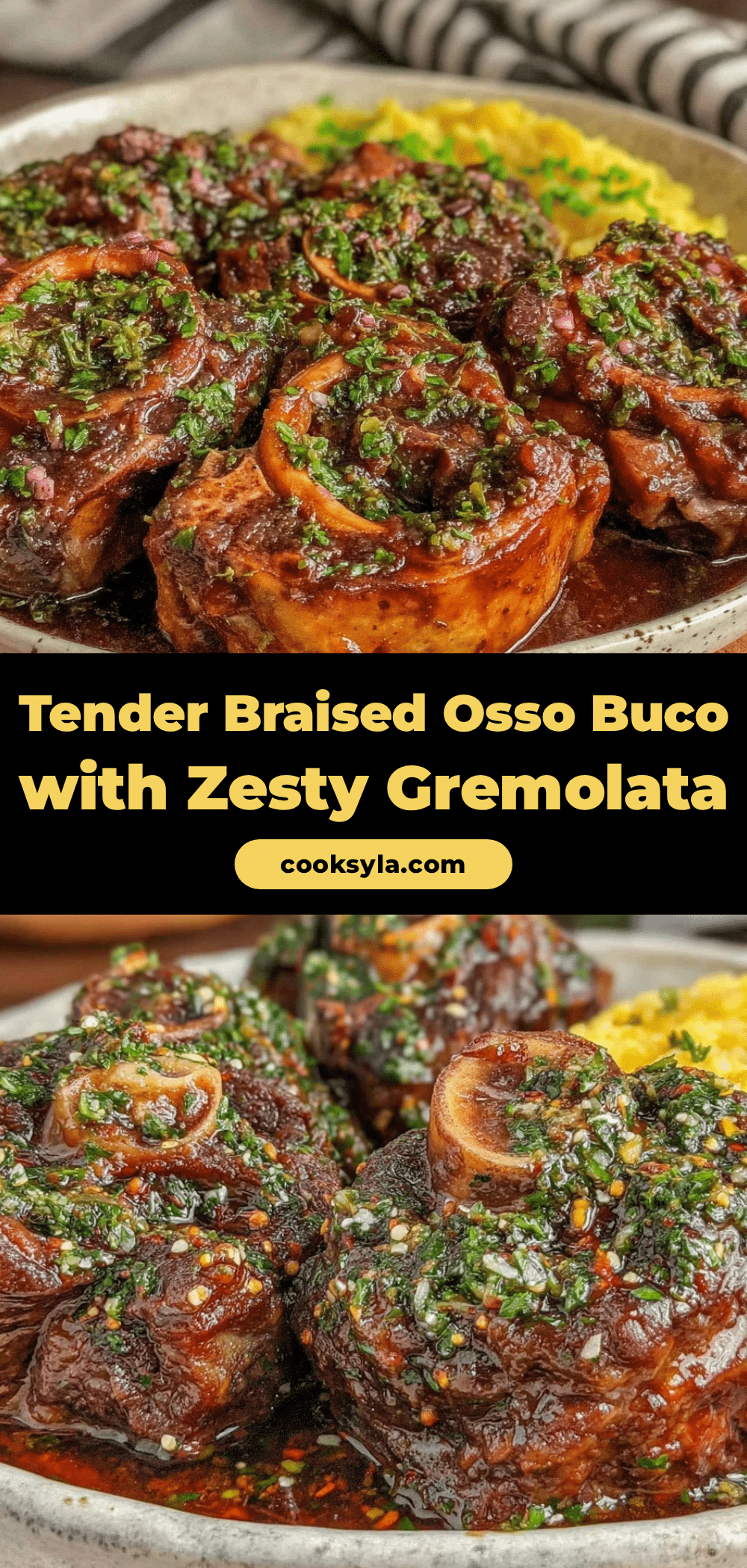
Tender Osso Buco Recipe Easy Classic Braised Veal Shanks with Zesty Gremolata

A classic Italian dish featuring tender braised veal shanks with a rich sauce, brightened by a zesty gremolata. Perfect for cozy dinners and special occasions.
- Prep Time: 25 minutes
- Cook Time: 2 hours 30 minutes
- Total Time: 2 hours 55 minutes
- Yield: 4 servings 1x
- Category: Main Course
- Cuisine: Italian
Ingredients
- 4 veal shanks (about 1.5 to 2 inches thick each), bone-in
- ½ cup (60g) all-purpose flour (or almond flour for gluten-free)
- 3 tablespoons olive oil (extra virgin preferred)
- 2 tablespoons unsalted butter
- 1 large yellow onion, finely chopped
- 2 medium carrots, diced
- 2 celery stalks, diced
- 3 garlic cloves, minced
- 1 cup (240ml) dry white wine (e.g., Pinot Grigio)
- 2 cups (480ml) beef or veal stock
- 1 cup (240g) crushed tomatoes
- 2 teaspoons fresh thyme, chopped
- 1 large bay leaf
- Salt and freshly ground black pepper to taste
- For the gremolata:
- ½ cup fresh parsley, finely chopped
- Zest of 1 large lemon
- 1 small garlic clove, finely minced
- 1 tablespoon olive oil
Instructions
- Pat the veal shanks dry with paper towels. Season generously with salt and freshly ground black pepper. Dredge each shank in flour, shaking off any excess. (Approx. 10 minutes)
- Heat olive oil and butter in a Dutch oven over medium-high heat until shimmering. Add veal shanks in batches and brown on all sides until deep golden, about 4-5 minutes per side. Remove shanks and set aside. (Approx. 15 minutes)
- Lower heat to medium and add chopped onions, carrots, and celery to the same pot. Cook gently, stirring occasionally, until softened and translucent, about 8-10 minutes. Add minced garlic in the last 2 minutes. (Approx. 10 minutes)
- Pour in white wine to deglaze the pan, scraping up browned bits. Let wine reduce by half. (Approx. 5-7 minutes)
- Stir in crushed tomatoes, beef or veal stock, thyme, and bay leaf. Bring to a gentle simmer. Taste and adjust seasoning with salt and pepper.
- Nestle browned veal shanks back into the pot, partially submerged in liquid. Cover and transfer to a preheated oven at 325°F (160°C). Braise for about 2 hours until meat is fork-tender. Check halfway and add stock or water if needed. (Approx. 2 hours)
- While veal braises, combine parsley, lemon zest, minced garlic, and olive oil in a small bowl. Mix well and set aside. (Approx. 5 minutes)
- Remove veal shanks and keep warm. Skim excess fat from sauce and simmer uncovered to thicken if needed. Spoon sauce over shanks and sprinkle with gremolata before serving. (Approx. 10 minutes)
Notes
Browning the veal shanks thoroughly before braising is critical for flavor. The sauce tastes even better the next day. Rest the meat in the sauce off heat for 10 minutes after braising to enhance tenderness. For gluten-free, substitute flour with almond or chickpea flour. Beef shanks can be used as a substitute but may require longer braising.
Nutrition
- Serving Size: 1 veal shank with sa
- Calories: 550
- Sugar: 6
- Sodium: 650
- Fat: 28
- Saturated Fat: 9
- Carbohydrates: 15
- Fiber: 3
- Protein: 50
Keywords: osso buco, veal shanks, braised veal, Italian recipe, gremolata, classic osso buco, braised meat, comfort food