Love this? Save it for later!
Share the inspiration with your friends
“I never thought a chance encounter at a countryside market would lead me to the perfect pappardelle with wild boar ragù,” I confessed to my friend Marco one chilly November afternoon. We were standing by a rustic wooden stall, the kind that looks like it’s been there for centuries, wrapped in the quiet hum of Tuscan village life. Marco, a spry local with a mischievous grin, insisted I try the ragù his grandmother swore by — wild boar slow-cooked with tomatoes, herbs, and just enough red wine to make you feel like you’re tasting the forest itself.
That day, as the ragù simmered gently on his stove, the kitchen filled with a rich, earthy aroma that seemed to wrap around me like a warm blanket. The pappardelle, broad ribbons of fresh pasta, clung to the sauce like best friends reunited after years apart. Honestly, I wasn’t expecting to fall head over heels for a dish so straightforward yet so deeply rooted in tradition. But let me tell you, this recipe has stayed with me ever since—maybe you’ve been there, where a simple meal becomes a story worth sharing.
It’s not just the flavors — it’s the memories, the slow cooking, the way the wild boar’s gamey richness balances perfectly with the acidity of the tomatoes and the rustic chew of the handmade pasta. I’ve made a few messes trying to replicate that day, including a pan that almost caught fire (don’t ask) and a grocery run where I forgot the wine. But every attempt brought me closer to this perfect pappardelle with wild boar ragù, a true Tuscan classic that’s both comforting and impressive.
Why You’ll Love This Recipe
After countless trials, tweaks, and tasting sessions, I can confidently say this wild boar ragù with pappardelle is a recipe you’ll want in your cooking arsenal. Here’s why:
- Slow-Simmered Goodness: The ragù cooks low and slow, developing deep, rich flavors that you just can’t rush.
- Rustic & Authentic: This recipe honors traditional Tuscan techniques but is designed for home cooks — no fancy equipment needed.
- Perfect for Special Occasions: Whether you’re hosting a cozy dinner or celebrating a holiday, this dish impresses without stress.
- Broad, Tender Pasta: The pappardelle’s wide ribbons soak up every bit of ragù, offering an irresistible texture combo.
- Wild Boar’s Unique Flavor: If you’ve never cooked with wild boar, this recipe is a gentle introduction that balances gamey notes with familiar tomato and herb comforts.
- Family-Approved: Even picky eaters tend to go back for seconds — trust me, I’ve tested this with the toughest critics.
What sets this apart? I’ve found that marinating the boar overnight in a splash of red wine and herbs brings a depth that’s subtle but noticeable. Plus, a touch of pancetta adds a smoky undertone without overpowering the ragù. This isn’t just another pasta dish — it’s a rustic experience you’ll want to savor again and again.
What Ingredients You Will Need
This recipe uses simple, wholesome ingredients to deliver bold flavor and satisfying texture without the fuss. Many of these are pantry staples or easy to find at your local butcher or specialty store.
- Wild boar shoulder or leg, cubed (about 2 pounds / 900 g) – Look for fresh, lean cuts from a trusted source.
- Pancetta, diced (3 oz / 85 g) – Adds a smoky richness; can substitute with bacon if needed.
- Yellow onion, finely chopped (1 medium) – For sweetness and depth.
- Carrots, finely diced (2 medium) – Adds subtle sweetness and texture.
- Celery stalks, finely diced (2 stalks) – Classic soffritto base.
- Garlic cloves, minced (3 large) – For aroma and flavor.
- Canned crushed tomatoes (28 oz / 800 g) – Use San Marzano if you can; it’s worth it.
- Red wine (1 cup / 240 ml) – Dry and full-bodied, like Chianti or Sangiovese.
- Fresh rosemary sprigs (2) – Adds piney, earthy notes.
- Fresh thyme sprigs (2) – For subtle herbal aroma.
- Olive oil (3 tbsp) – Extra virgin for finishing; lighter for cooking.
- Salt and freshly ground black pepper – To taste.
- Fresh pappardelle pasta (1 lb / 450 g) – Homemade or store-bought; wide, flat ribbons work best.
- Parmigiano-Reggiano, grated (for serving) – Adds nutty, salty richness.
Substitutions: If wild boar is tricky to find, try this with pork shoulder for a milder taste. For a gluten-free option, use gluten-free pappardelle or wide rice noodles.
Equipment Needed
- Large heavy-bottomed pot or Dutch oven – Essential for even heat and slow simmering; I prefer cast iron for heat retention.
- Sharp chef’s knife – For chopping the vegetables and cutting the meat.
- Wooden spoon or silicone spatula – To stir gently without scratching your pot.
- Colander or pasta strainer – For draining the pappardelle.
- Large pot for boiling pasta – With plenty of salted water.
- Optional: food thermometer – To check meat tenderness if you’re unsure (aim for about 190°F / 88°C for fall-apart meat).
If you don’t have a Dutch oven, a thick-bottomed saucepan works, but be sure to watch the heat closely to avoid burning. For budget options, stainless steel pots are great and easy to maintain.
Preparation Method
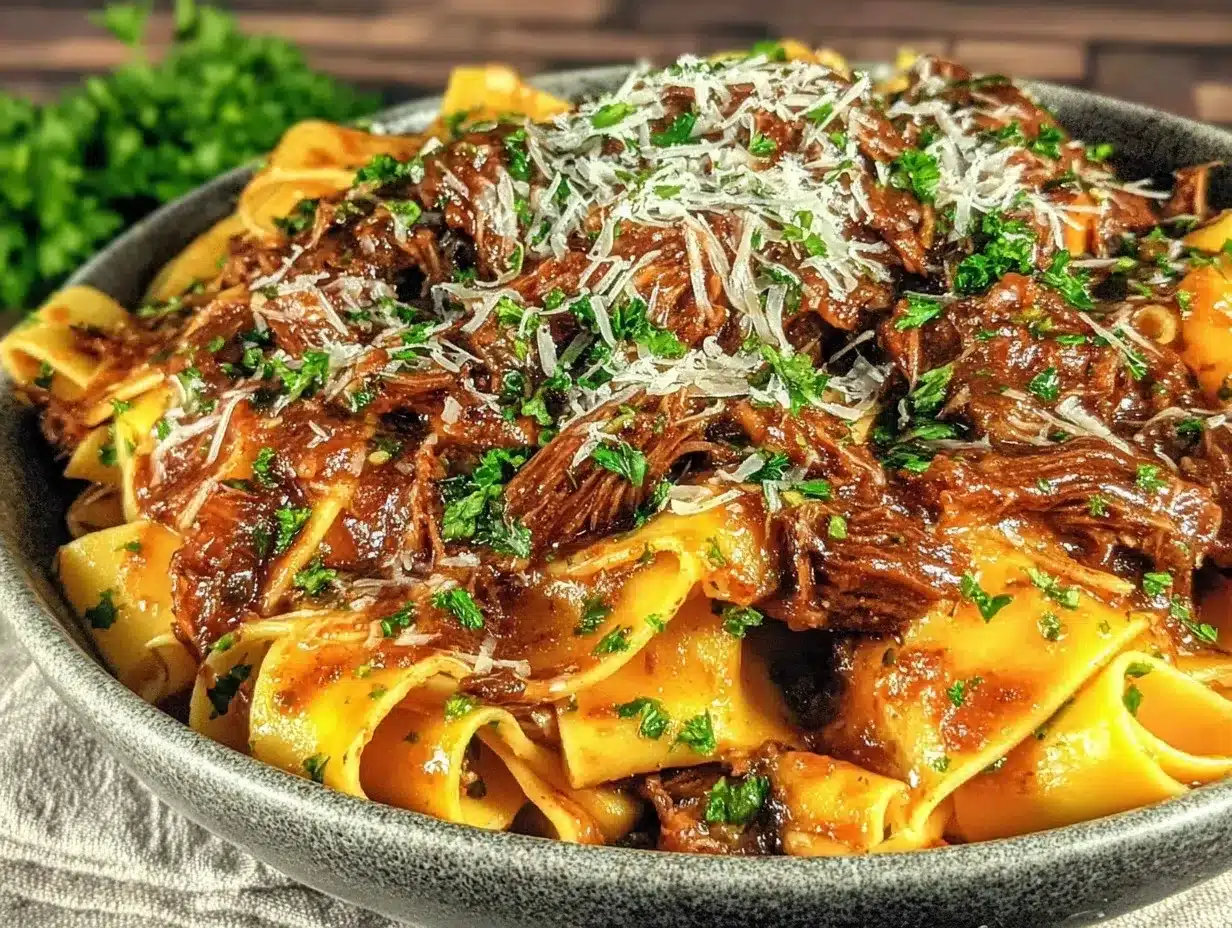
- Marinate the wild boar: The night before, place the cubed wild boar in a bowl with red wine, a pinch of salt, pepper, and one rosemary sprig. Cover and refrigerate overnight to tenderize and infuse flavor. (Time: 12 hours)
- Prepare the soffritto: Finely chop onion, carrots, and celery. Mince garlic cloves. This trio will build your ragù’s base.
- Render pancetta: Heat 2 tbsp olive oil over medium heat in your Dutch oven. Add diced pancetta and cook until crisp and golden, about 5 minutes. Remove pancetta with a slotted spoon; set aside.
- Sauté vegetables: In the same pot, add chopped onion, carrot, and celery. Stir occasionally until softened and fragrant, roughly 7-10 minutes. Add garlic in the last 2 minutes, stirring carefully to avoid burning.
- Brown the wild boar: Drain boar from marinade (reserve marinade liquid) and pat dry with paper towels. Increase heat to medium-high, add a little more oil if needed, and brown meat in batches without crowding. This step is crucial for developing rich flavor. (Approx. 10 minutes)
- Deglaze and combine: Once all meat is browned, return pancetta to the pot. Pour in reserved marinade and canned crushed tomatoes. Add remaining rosemary, thyme, salt, and pepper. Stir well to combine.
- Simmer slowly: Reduce heat to low and cover partially with a lid. Let the ragù simmer gently for 2.5 to 3 hours, stirring occasionally. The sauce should thicken, and meat become tender enough to fall apart. (Pro tip: if sauce thickens too much, add a splash of water or broth.)
- Cook pappardelle: About 10 minutes before ragù is done, bring a large pot of salted water to a rolling boil. Add pappardelle and cook according to package or homemade pasta instructions (usually 3-5 minutes). Drain well, reserving some pasta water.
- Toss and serve: Add pasta to the ragù pot and toss over low heat, adding a splash of pasta water to loosen if needed. Serve immediately with a generous sprinkle of grated Parmigiano-Reggiano and a drizzle of extra virgin olive oil.
Note: The key is patience—slow cooking melds flavors and softens the boar perfectly. If you find the ragù too thick at any point, don’t hesitate to adjust with warm water or broth. You’ll know it’s ready when the meat is tender enough to shred with a fork.
Cooking Tips & Techniques
One big lesson I learned making this ragù is that browning the meat well can’t be rushed. You want a deep, caramelized crust for maximum flavor, so don’t overcrowd the pan or you’ll steam the meat instead. Patting the meat dry beforehand helps, too.
Another tip: be gentle when stirring the ragù during simmering to keep the meat chunks intact. I’ve had batches where I got too enthusiastic with the spoon — ended up with more shredded bits than I wanted!
Timing is everything here. Start the ragù early in the day, so it has plenty of time to develop those rich flavors. While it’s simmering, you can prep your kitchen, set the table, or even try your hand at a simple Tuscan salad on the side.
When cooking pappardelle, salt your water generously—like the sea, honestly. It seasons the pasta from within. Also, reserve some pasta water before draining; the starchy liquid helps marry the noodles and sauce beautifully.
Lastly, don’t skip the final drizzle of extra virgin olive oil. It adds a silky finish that just brings everything together.
Variations & Adaptations
- Dietary tweaks: For a gluten-free option, swap pappardelle for gluten-free pasta or wide rice noodles. The ragù itself is naturally gluten-free.
- Seasonal twist: In autumn, add a handful of chopped chestnuts or mushrooms to the ragù for an earthy boost that pairs well with wild boar.
- Flavor swap: If wild boar isn’t available, pork shoulder or beef chuck make good substitutes, though the flavor will be milder.
- Cooking method: This ragù can be finished in a slow cooker—brown the meat and soffritto on the stove, then transfer all to the slow cooker for 4-6 hours on low.
- Personal variation: I once added a splash of balsamic vinegar near the end of cooking—it added unexpected brightness that cut through the richness beautifully.
Serving & Storage Suggestions
This pappardelle with wild boar ragù is best served hot and fresh, with a sprinkle of Parmigiano and a rustic chunk of crusty bread on the side to mop up every last drop. Pair it with a bold red wine, like a Chianti Classico, to complement the gamey flavors.
If you have leftovers (and you might!), store them in an airtight container in the fridge for up to 3 days. The flavors actually deepen overnight, making reheated portions even better.
To reheat, warm gently on the stovetop with a splash of water or broth, stirring until heated through. Avoid the microwave if you can—it tends to dry out the ragù.
Frozen ragù also freezes well for up to 2 months. Thaw overnight in the fridge before reheating.
Nutritional Information & Benefits
This rustic wild boar ragù is rich in protein and packed with iron, thanks to the wild game meat. The slow cooking process renders fat and breaks down connective tissue, making it easier to digest. Tomatoes bring antioxidants like lycopene, and the fresh herbs add a dose of vitamins and minerals.
Because this recipe uses fresh ingredients and minimal processed components, it’s a wholesome choice that aligns well with a balanced diet. The dish is naturally gluten-free if served with gluten-free pasta and contains no added sugars.
Keep in mind the pancetta adds some sodium and fat, but in moderation, they contribute to the ragù’s signature depth and mouthfeel.
Conclusion
If you’ve been searching for a dish that combines rustic charm with rich, complex flavors, this perfect pappardelle with wild boar ragù is your answer. It’s a recipe that invites you to slow down, savor, and share a taste of Tuscan tradition right at home.
Feel free to tweak the herbs, adjust the wine, or try different pasta shapes—this dish is forgiving and meant to be enjoyed your way. Personally, I keep coming back to this recipe because it brings that comforting feeling of a countryside kitchen, even on the busiest nights.
Give it a try, and please let me know how your version turns out. Your stories and twists make this recipe even richer!
FAQs
What can I substitute if I can’t find wild boar?
Pork shoulder or beef chuck are good alternatives that mimic the texture, though they’ll have a milder flavor.
Can I make this ragù in advance?
Absolutely! It tastes even better the next day after the flavors have had time to meld.
Is fresh pappardelle necessary, or can I use dried pasta?
Fresh pappardelle is ideal for texture and authenticity, but good-quality dried wide pasta works fine in a pinch.
How long should I marinate the wild boar?
Overnight (about 12 hours) is best to tenderize and infuse flavor, but 3-4 hours can still work if you’re short on time.
What wine pairs best with this dish?
A medium-bodied red like Chianti or Sangiovese complements the ragù’s richness perfectly.
Pin This Recipe!
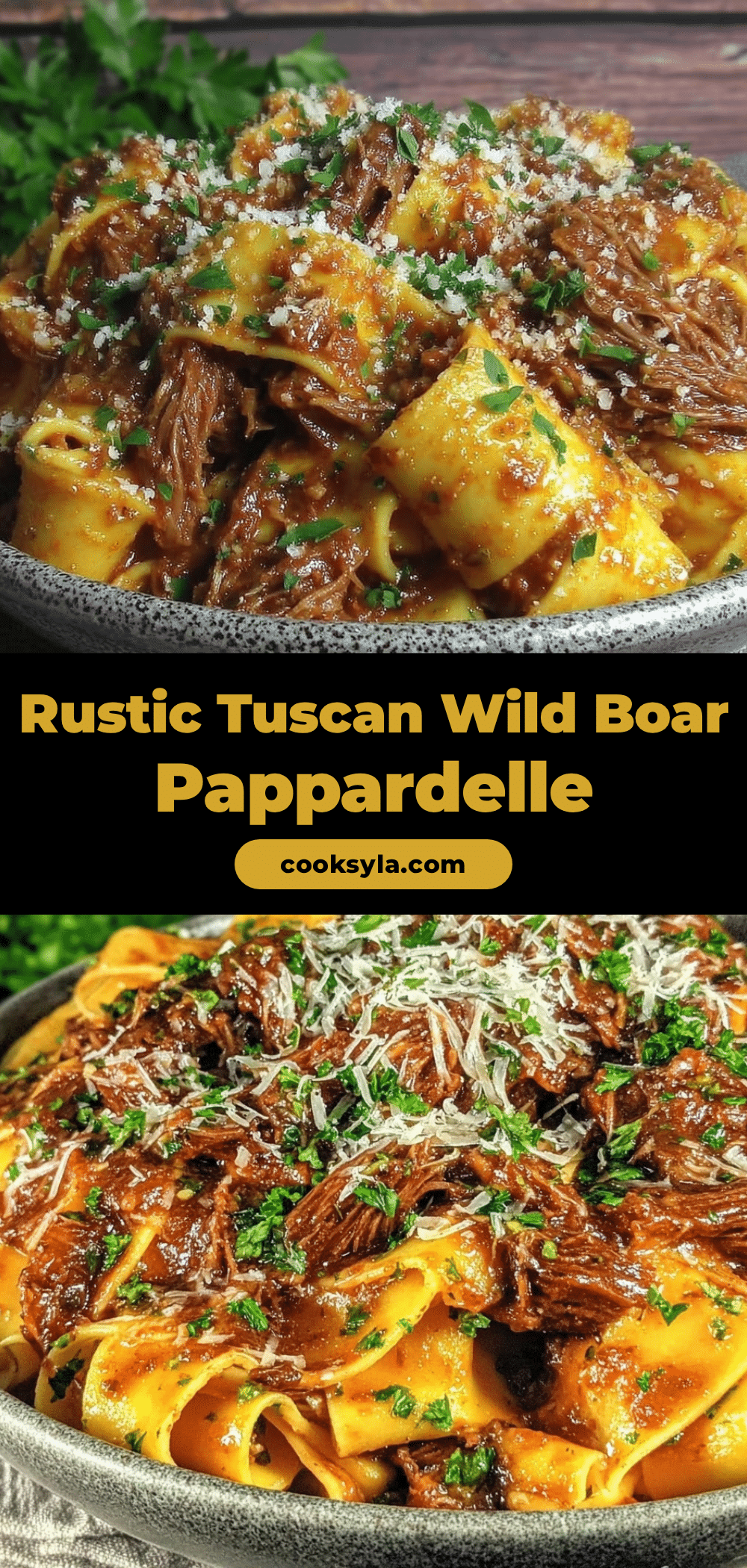
Perfect Pappardelle with Wild Boar Ragù

A rustic Tuscan classic featuring slow-simmered wild boar ragù paired with broad ribbons of fresh pappardelle pasta, delivering rich, earthy flavors and comforting textures.
- Prep Time: 15 minutes (plus 12 hours marinating)
- Cook Time: 3 hours
- Total Time: 3 hours 15 minutes (plus 12 hours marinating)
- Yield: 4 servings 1x
- Category: Main Course
- Cuisine: Tuscan, Italian
Ingredients
- 2 pounds wild boar shoulder or leg, cubed
- 3 oz pancetta, diced (can substitute with bacon)
- 1 medium yellow onion, finely chopped
- 2 medium carrots, finely diced
- 2 celery stalks, finely diced
- 3 large garlic cloves, minced
- 28 oz canned crushed tomatoes (preferably San Marzano)
- 1 cup dry red wine (such as Chianti or Sangiovese)
- 2 fresh rosemary sprigs
- 2 fresh thyme sprigs
- 3 tbsp olive oil (extra virgin for finishing, lighter for cooking)
- Salt and freshly ground black pepper, to taste
- 1 lb fresh pappardelle pasta (homemade or store-bought)
- Parmigiano-Reggiano, grated (for serving)
Instructions
- Marinate the wild boar overnight in a bowl with red wine, a pinch of salt, pepper, and one rosemary sprig. Cover and refrigerate for about 12 hours.
- Finely chop onion, carrots, and celery. Mince garlic cloves to prepare the soffritto base.
- Heat 2 tbsp olive oil over medium heat in a Dutch oven. Add diced pancetta and cook until crisp and golden, about 5 minutes. Remove pancetta with a slotted spoon and set aside.
- In the same pot, add chopped onion, carrot, and celery. Stir occasionally until softened and fragrant, about 7-10 minutes. Add garlic in the last 2 minutes, stirring carefully to avoid burning.
- Drain the wild boar from marinade (reserve marinade liquid) and pat dry with paper towels. Increase heat to medium-high, add more oil if needed, and brown meat in batches without crowding, about 10 minutes.
- Return pancetta to the pot. Pour in reserved marinade and canned crushed tomatoes. Add remaining rosemary, thyme, salt, and pepper. Stir well to combine.
- Reduce heat to low and partially cover with a lid. Let ragù simmer gently for 2.5 to 3 hours, stirring occasionally. Add a splash of water or broth if sauce thickens too much.
- About 10 minutes before ragù is done, bring a large pot of salted water to a rolling boil. Cook pappardelle according to package or homemade instructions (usually 3-5 minutes). Drain well, reserving some pasta water.
- Add pasta to the ragù pot and toss over low heat, adding reserved pasta water to loosen if needed. Serve immediately with grated Parmigiano-Reggiano and a drizzle of extra virgin olive oil.
Notes
Marinate the wild boar overnight for best flavor and tenderness. Brown the meat well without overcrowding the pan to develop rich flavor. Stir gently during simmering to keep meat chunks intact. Salt pasta water generously and reserve some pasta water before draining to help marry sauce and noodles. Add a final drizzle of extra virgin olive oil for a silky finish. If ragù thickens too much, add warm water or broth. Leftovers store well in fridge for 3 days or freeze up to 2 months.
Nutrition
- Serving Size: 1 serving (approxima
- Calories: 650
- Sugar: 9
- Sodium: 700
- Fat: 28
- Saturated Fat: 9
- Carbohydrates: 55
- Fiber: 6
- Protein: 45
Keywords: wild boar ragù, pappardelle, Tuscan recipe, slow-cooked ragù, rustic pasta, Italian pasta dish, wild game recipe