Love this? Save it for later!
Share the inspiration with your friends
This was supposed to be a simple pork roast. Nothing fancy, just salt, pepper, and a hot oven. But I grabbed the wrong bottle from the pantry—apple cider instead of chicken broth—and by the time I realized it, the liquid was already splashing into the pan. I stood there for a second, staring at the glug-glug of golden cider pooling around the meat, and honestly, I almost poured it out. The oven was preheated, the pork was seared, and I was already running late for a phone call with my sister. You know that feeling when you are one distraction away from ruining dinner?
I let it ride. I figured worst case, we’d order pizza. But about twenty minutes in, the kitchen started smelling like autumn in a bottle—sweet but not cloying, warm with a little bite. The pork came out so tender I could barely slice it without it falling apart. The cider had reduced into this silky, tangy sauce that clung to every piece. I texted my sister a photo mid-call, and she said, “That looks like a restaurant dish.” It wasn’t. It was a mistake. But it was the kind of mistake you keep making on purpose.
That’s how this apple cider braised pork tenderloin became my go-to for nights when I want something that feels special but doesn’t demand much. It’s forgiving, it’s fast, and it taught me that sometimes the best recipes come from grabbing the wrong bottle. Maybe you’ve been there—staring at a pan, wondering if you just ruined dinner, only to discover you accidentally made something unforgettable.
Why You’ll Love This Recipe
I have tested this apple cider braised pork tenderloin at least a dozen times—sometimes with different cuts of meat, sometimes swapping the cider for apple juice to see what happened. Every single time, it delivered. Here is why this version stands out and why I think you will come back to it again and again.
- Quick & Easy: From start to finish, this comes together in about 30 minutes. The braising liquid does all the heavy lifting, so you barely have to stir or fuss.
- Simple Ingredients: You need pork tenderloin, apple cider, a little butter, garlic, and a few pantry spices. No weird specialty items or trips to three different stores.
- Perfect for Weeknights or Company: It feels fancy enough for a dinner party but is easy enough for a Tuesday. I have served it to guests who thought I spent hours on it.
- Crowd-Pleaser: My picky-eater nephew asked for seconds the first time I made it. The apple cider flavor is subtle enough for adults but sweet enough for kids.
- Unbelievably Tender: The braising method keeps the pork juicy and fork-tender. No dry, chewy slices here.
What makes this recipe different from the dozens of other braised pork recipes out there? It is the balance. The apple cider adds a gentle sweetness that doesn’t overpower the pork, and a splash of Dijon mustard at the end cuts through with just enough tang. I tested this with a few different mustard types, and trust me—Dijon is the one. This isn’t just another pork tenderloin recipe. It is the one that makes you close your eyes after the first bite and think, why didn’t I try this sooner?
What Ingredients You Will Need
This recipe relies on simple, everyday ingredients to build deep flavor without a lot of fuss. Most of these are pantry staples or easy to find at any grocery store. Here is what you will need and why each one matters.
- Pork tenderloin (1 to 1.5 pounds): Look for a tenderloin that is evenly thick so it cooks consistently. I prefer getting it from a local butcher when I can, but grocery store packs work great too. Trim off any silver skin before cooking.
- Apple cider (1 cup): Use unsweetened, unfiltered apple cider if possible. It has a richer, more complex flavor than apple juice. I have tried both, and cider gives a deeper, almost caramel-like sweetness after it reduces.
- Unsalted butter (2 tablespoons): Adds richness and helps brown the pork. You can use ghee if you are dairy-free, but butter gives the best flavor here.
- Garlic (4 cloves, smashed): Whole smashed cloves infuse the braising liquid without burning. I have used minced garlic in a pinch, but smashed cloves are less likely to turn bitter during cooking.
- Fresh thyme (4 to 5 sprigs): Adds an earthy, slightly floral note that pairs beautifully with apple cider. Dried thyme works in a pinch—use about 1 teaspoon.
- Dijon mustard (1 tablespoon): Stirred in at the end, this brightens the sauce and balances the sweetness. I recommend Maille or Grey Poupon for the best tang.
- Chicken broth (½ cup): Helps thin the braising liquid just enough so it doesn’t become syrupy too quickly. Low-sodium is best so you can control the salt.
- Salt and black pepper (to taste): Simple seasonings that let the apple cider shine. Use kosher salt for better control.
- Olive oil (1 tablespoon): For searing the pork. Avocado oil works too if you prefer a higher smoke point.
Substitution Notes: If you are out of apple cider, use apple juice plus a teaspoon of brown sugar to mimic the depth. For a dairy-free version, swap the butter for coconut oil or a plant-based butter. And if you don’t have fresh thyme, rosemary is a lovely alternative—just use a little less since it is stronger.
Equipment Needed
You do not need anything fancy for this recipe. A few basic tools will get the job done, and I have included some alternatives if you are working with a limited kitchen setup.
- Large oven-safe skillet or Dutch oven: A 12-inch cast iron skillet is my go-to because it holds heat beautifully and transitions from stovetop to oven seamlessly. A stainless steel skillet or any oven-safe pan works too. If you don’t have an oven-safe pan, you can transfer the pork to a baking dish after searing.
- Tongs: For flipping the pork without piercing it. Piercing releases juices, and we want to keep every drop inside. I have a pair of spring-loaded tongs that I have used for years—they are worth the small investment.
- Meat thermometer: This is non-negotiable for pork tenderloin. Overcooking is the number one mistake, and a thermometer takes the guesswork out. I use a simple instant-read digital one that costs about ten dollars.
- Cutting board and sharp knife: Let the pork rest before slicing, and use a sharp knife to cut clean slices. A dull knife will shred the tender meat.
- Measuring cups and spoons: For the cider, broth, and mustard. Eyeballing works for some recipes, but braising liquids need precision to reduce properly.
Budget-Friendly Tip: If you don’t own a Dutch oven, a heavy-bottomed skillet covered tightly with foil works just as well for braising. I did this for years before I got my first enameled pot.
Preparation Method
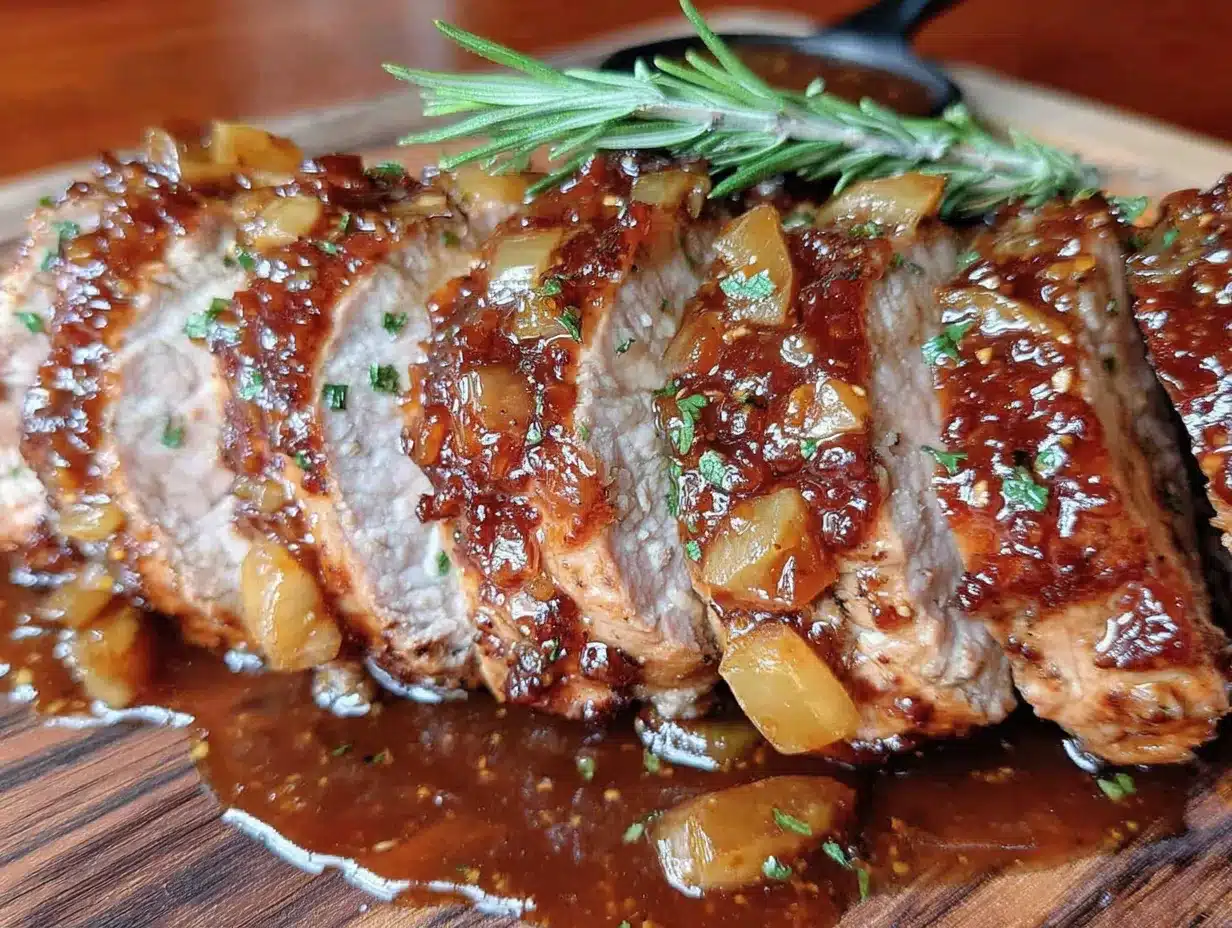
This apple cider braised pork tenderloin comes together in under 30 minutes, but the timing matters. Follow these steps closely, and you will get tender, juicy pork every time.
- Preheat your oven to 375°F (190°C). While it heats, pat the pork tenderloin dry with paper towels. Moisture is the enemy of a good sear, so be thorough. Season generously on all sides with salt and black pepper.
- Heat the olive oil in your oven-safe skillet over medium-high heat. Wait until the oil shimmers—about 2 minutes. Carefully place the pork in the pan. Sear for 3 to 4 minutes per side, until a deep golden-brown crust forms. Do not move the pork while it sears; let it develop that crust. Total searing time is about 8 to 10 minutes.
- Reduce the heat to medium. Add the butter and smashed garlic cloves to the pan. Tilt the pan slightly and spoon the melted butter over the pork for about 1 minute. This extra step adds unbelievable flavor.
- Pour in the apple cider and chicken broth. Add the fresh thyme sprigs. The liquid should come about halfway up the sides of the pork—not covering it entirely. Bring the liquid to a gentle simmer, scraping up any browned bits from the bottom of the pan with a wooden spoon. Those bits are pure flavor.
- Transfer the skillet to the preheated oven. Braise uncovered for 12 to 15 minutes, or until the internal temperature of the pork reaches 140°F (60°C). The temperature will rise a few degrees as it rests. Do not skip this step—undercooked pork is tough, but overcooked pork is dry.
- Remove the skillet from the oven. Using tongs, transfer the pork to a cutting board and tent loosely with foil. Let it rest for 5 to 7 minutes. Resting is critical—it allows the juices to redistribute so every slice is moist.
- While the pork rests, make the sauce. Place the skillet over medium heat. Whisk in the Dijon mustard. Let the sauce simmer for 2 to 3 minutes, stirring occasionally, until it thickens slightly. Taste and adjust salt and pepper. If the sauce tastes too sharp, add a tiny pat of butter to smooth it out.
- Slice the pork against the grain into ½-inch thick medallions. Arrange on a platter and spoon the sauce over the top. Garnish with fresh thyme leaves or a sprinkle of flaky sea salt if you are feeling fancy.
Sensory Cues: When you sear the pork, listen for a steady sizzle—if it is silent, the pan isn’t hot enough. The sauce should smell sweet and savory, with the cider mellowing into something almost like caramel. When you slice the pork, look for a faint blush of pink in the center—that is perfectly cooked.
Cooking Tips & Techniques
I have made this apple cider braised pork tenderloin enough times to learn a few hard lessons. Here are the tips I wish someone had told me before I started.
- Don’t skip the sear. I know it adds a few minutes, but that brown crust is where the flavor lives. The Maillard reaction creates depth that you simply cannot get from braising alone. I once tried to save time by skipping the sear, and the sauce tasted flat.
- Use a meat thermometer. Seriously. Pork tenderloin is lean and unforgiving. Pull it at 140°F, and it will carryover cook to a safe 145°F while resting. I ruined three tenderloins before I bought a ten-dollar thermometer. Now I never guess.
- Let the pork rest. I know you are hungry. I have been there. But if you slice into it immediately, all those juices will pool on the cutting board instead of staying in the meat. Five minutes makes a world of difference.
- Watch the sauce consistency. The sauce should coat the back of a spoon but still be pourable. If it gets too thick, add a splash of broth or cider. If it is too thin, let it simmer another minute or two.
- Smash the garlic, don’t mince it. Smashed cloves release flavor slowly without burning. Minced garlic can scorch in the hot pan and turn bitter. I learned this the hard way when my kitchen smelled like burnt garlic bread instead of apple cider.
Multitasking Strategy: While the pork braises in the oven, use that time to prep a side dish. Roasted Brussels sprouts or a simple apple slaw pair perfectly and will be ready around the same time as the pork.
Variations & Adaptations
This recipe is flexible, and I have played around with it more than I care to admit. Here are a few variations that turned out surprisingly well.
- Apple Cider Braised Pork with Rosemary: Swap the thyme for two sprigs of fresh rosemary. The piney, slightly citrusy notes of rosemary complement the apple cider beautifully. I made this version for a holiday dinner, and it was a hit.
- Slow Cooker Version: Sear the pork in a skillet first, then transfer to a slow cooker with the cider, broth, garlic, and thyme. Cook on low for 4 to 5 hours or on high for 2 to 3 hours. Thicken the sauce on the stovetop afterward. This is my go-to for busy days when I want dinner ready when I walk in the door.
- Dairy-Free Adaptation: Replace the butter with olive oil or a plant-based butter. The sauce will be slightly less rich but still delicious. I tested this with coconut oil once, and honestly, it worked better than I expected.
- Spicy Apple Cider Pork: Add a pinch of red pepper flakes or a small diced jalapeño along with the garlic. The heat cuts through the sweetness and adds a nice kick. My brother-in-law loves this version and requests it every time he visits.
- Apple Cider Braised Pork with Onions: Slice one medium onion and sauté it in the pan before searing the pork. The caramelized onions add sweetness and texture to the sauce. This is my favorite variation for fall.
Serving & Storage Suggestions
This apple cider braised pork tenderloin is versatile enough to pair with almost any side dish. Here is how I like to serve it and how to store leftovers so they taste just as good the next day.
Serving Temperature: Serve the pork warm, with the sauce spooned over the top immediately before serving. If the sauce has cooled, reheat it gently on the stovetop or in the microwave. I like to garnish with a few fresh thyme leaves or a sprinkle of flaky sea salt for a pop of texture.
Complementary Sides: Mashed potatoes are the classic choice—the creamy texture soaks up the sauce perfectly. Roasted root vegetables like carrots, parsnips, and sweet potatoes also work beautifully. For something lighter, try a crisp apple and fennel slaw with a lemon vinaigrette. The acidity cuts through the richness of the pork.
Storage Instructions: Store leftover pork and sauce in an airtight container in the refrigerator for up to 4 days. The flavors actually deepen overnight, so leftovers can taste even better. To freeze, place the cooled pork and sauce in a freezer-safe container for up to 3 months. Thaw overnight in the refrigerator before reheating.
Reheating Tips: Reheat gently to avoid drying out the pork. Place slices in a skillet with a splash of broth or cider, cover, and warm over low heat for 5 to 7 minutes. You can also reheat in the microwave at 50% power in 30-second bursts. Avoid high heat, which will toughen the meat.
Nutritional Information & Benefits
This apple cider braised pork tenderloin is a balanced, protein-rich meal that fits nicely into a healthy eating plan. Here is a rough estimate of the nutrition per serving (based on 4 servings).
| Nutrient | Amount Per Serving |
|---|---|
| Calories | 320 |
| Protein | 35g |
| Fat | 14g |
| Saturated Fat | 6g |
| Carbohydrates | 12g |
| Fiber | 0g |
| Sugar | 8g |
| Sodium | 480mg |
Health Benefits: Pork tenderloin is one of the leanest cuts of pork, packed with high-quality protein, B vitamins, and minerals like selenium and zinc. Apple cider contains antioxidants and may support digestion. The small amount of butter adds vitamin A and healthy fats that help your body absorb fat-soluble nutrients from any vegetables you serve alongside.
Dietary Considerations: This recipe is naturally gluten-free and nut-free. For a lower-sodium version, use low-sodium broth and reduce the added salt. If you are watching your sugar intake, the apple cider adds natural sugar, but you can swap half the cider for broth to cut the sugar in half.
Conclusion
This apple cider braised pork tenderloin started as a happy accident, but it has earned a permanent spot in my dinner rotation. It is proof that simple ingredients and a little patience can create something truly special. The pork comes out tender every single time, and the sauce is the kind you want to lick off the plate. Honestly, I have done it.
I hope you give this recipe a try and make it your own. Swap the herbs, add a little heat, or serve it with your favorite fall sides. Cooking is supposed to be fun, and this recipe leaves plenty of room for your own twists. If you make it, I would love to hear how it turned out. Leave a comment below or tag me in your photos—I always get excited when someone tries one of my recipes and loves it as much as I do. Happy cooking!
Frequently Asked Questions
Can I use bone-in pork chops instead of tenderloin?
Yes, but the cooking time will vary. Bone-in chops are thicker and take longer to cook. Use a meat thermometer and cook until the internal temperature reaches 140°F. The sauce might need a little extra time to thicken since chops release more liquid.
Do I have to use apple cider, or can I use apple juice?
Apple juice works in a pinch, but the flavor will be lighter and less complex. If you use apple juice, add a teaspoon of brown sugar to mimic the depth of cider. The sauce will still taste good, just not as rich.
Can I make this recipe ahead of time?
Absolutely. You can braise the pork a day ahead, slice it, and store it in the sauce in the refrigerator. Reheat gently on the stovetop before serving. The flavors meld together beautifully overnight.
What if I don’t have an oven-safe skillet?
No problem. Sear the pork in any skillet, then transfer it to a baking dish or a small roasting pan. Add the liquid and braise in the oven as directed. Just cover the dish tightly with foil to trap the steam.
How do I know when the pork is done without a thermometer?
If you don’t have a thermometer, look for the meat to be firm but still give slightly when pressed. The juices should run clear, not pink. However, I strongly recommend using a thermometer for the most reliable results—pork tenderloin is too lean to guess.
Pin This Recipe!
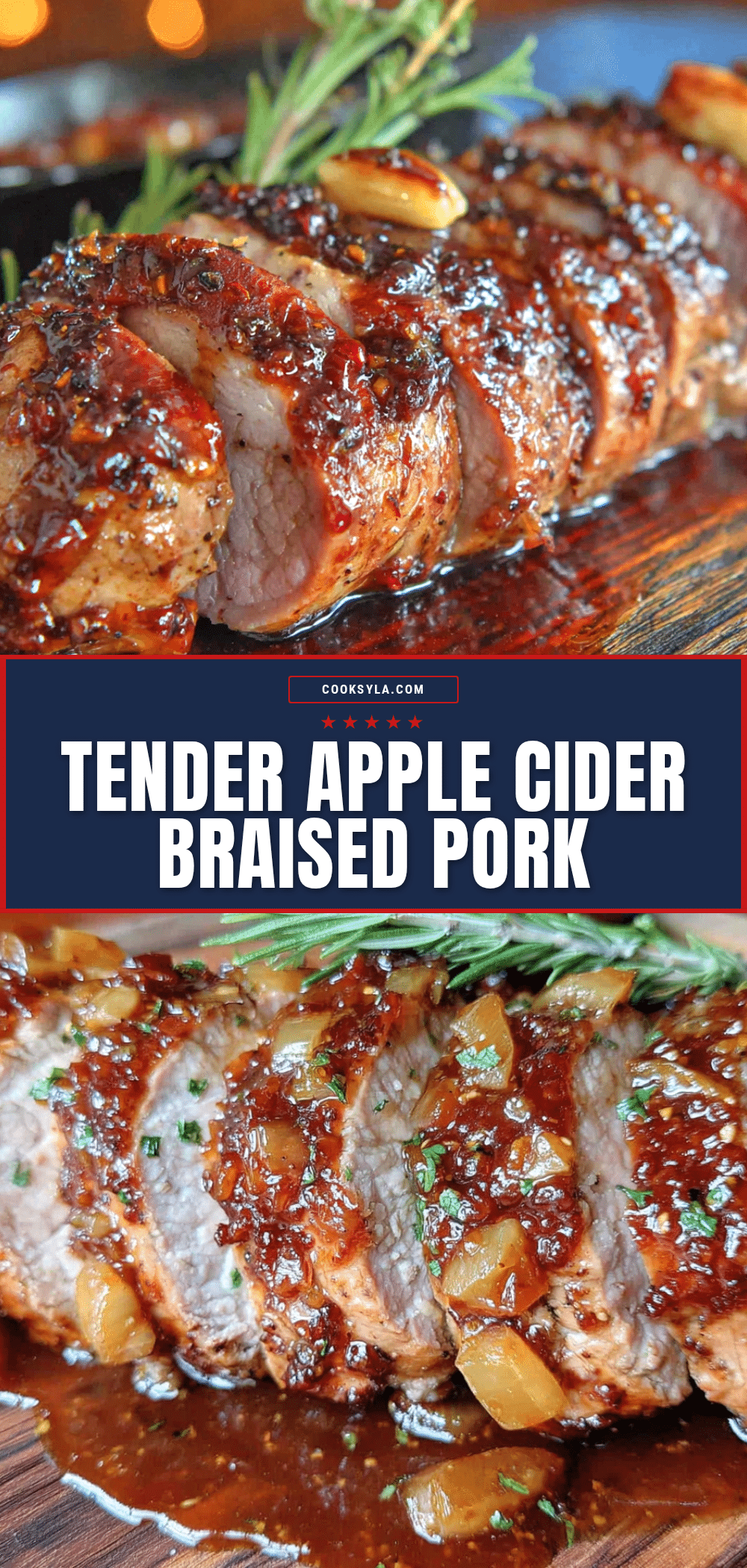
Tender Apple Cider Braised Pork Tenderloin (Easy 30-Min Recipe)
This apple cider braised pork tenderloin is a quick and easy 30-minute recipe that turns a simple pork tenderloin into a tender, flavorful dish with a silky, tangy sauce. Perfect for weeknights or company, it uses simple ingredients and delivers unforgettable results.
- Prep Time: 10 minutes
- Cook Time: 20 minutes
- Total Time: 30 minutes
- Yield: 4 servings 1x
- Category: Main Course
- Cuisine: American
Ingredients
- 1 to 1.5 pounds pork tenderloin
- 1 cup unsweetened, unfiltered apple cider
- 2 tablespoons unsalted butter
- 4 cloves garlic, smashed
- 4 to 5 sprigs fresh thyme
- 1 tablespoon Dijon mustard
- ½ cup low-sodium chicken broth
- Salt and black pepper to taste
- 1 tablespoon olive oil
Instructions
- Preheat your oven to 375°F (190°C). Pat the pork tenderloin dry with paper towels and season generously on all sides with salt and black pepper.
- Heat the olive oil in an oven-safe skillet over medium-high heat until shimmering. Carefully place the pork in the pan and sear for 3 to 4 minutes per side, until a deep golden-brown crust forms (total searing time about 8 to 10 minutes).
- Reduce the heat to medium. Add the butter and smashed garlic cloves to the pan. Tilt the pan slightly and spoon the melted butter over the pork for about 1 minute.
- Pour in the apple cider and chicken broth. Add the fresh thyme sprigs. Bring the liquid to a gentle simmer, scraping up any browned bits from the bottom of the pan with a wooden spoon.
- Transfer the skillet to the preheated oven. Braise uncovered for 12 to 15 minutes, or until the internal temperature of the pork reaches 140°F (60°C).
- Remove the skillet from the oven. Using tongs, transfer the pork to a cutting board and tent loosely with foil. Let it rest for 5 to 7 minutes.
- While the pork rests, place the skillet over medium heat. Whisk in the Dijon mustard. Let the sauce simmer for 2 to 3 minutes, stirring occasionally, until it thickens slightly. Taste and adjust salt and pepper.
- Slice the pork against the grain into ½-inch thick medallions. Arrange on a platter and spoon the sauce over the top. Garnish with fresh thyme leaves or flaky sea salt if desired.
Notes
Don’t skip the sear—it builds flavor. Use a meat thermometer for perfect doneness (pull at 140°F). Let the pork rest before slicing to keep it juicy. For a dairy-free version, swap butter for olive oil or plant-based butter. If using apple juice instead of cider, add 1 teaspoon brown sugar for depth.
Nutrition
- Serving Size: 4 servings
- Calories: 320
- Sugar: 8
- Sodium: 480
- Fat: 14
- Saturated Fat: 6
- Carbohydrates: 12
- Protein: 35
Keywords: apple cider braised pork tenderloin, easy pork tenderloin recipe, 30-minute pork dinner, braised pork tenderloin, apple cider pork