Love this? Save it for later!
Share the inspiration with your friends
My sister asked why I couldn’t just throw everything on one pan and call it dinner. I started to explain why that wouldn’t work—something about uneven cooking times and soggy vegetables. Then I stopped. Honestly, I had no good reason. I had just spent forty-five minutes dirtying every dish in my kitchen for a salmon dinner that was, fine. Not great. Just fine. She looked at me with that expression siblings perfect over decades, the one that says “you’re overcomplicating this.”
So I tried it her way. I tossed asparagus on a sheet pan, laid the salmon fillets right on top, and drizzled everything with lemon and olive oil. Fifteen minutes later, I was eating the best weeknight salmon of my life. The asparagus was perfectly tender-crisp, the salmon flaky and buttery, and my sink held exactly one pan. I felt like an absolute fool for not figuring this out sooner. Maybe you’ve been there—staring at a recipe that requires three pots, a blender, and a partridge in a pear tree, wondering why dinner has to be so complicated.
This easy sheet pan salmon with lemon asparagus became my weeknight hero. It’s the recipe I make when I’m tired, when I’m busy, when I just want something good without the production. The lemon gets all bright and roasty in the oven, the garlic infuses everything, and that little char on the asparagus tips? Perfection. I keep coming back to it because it proves that simple doesn’t mean boring. Sometimes the best meals are the ones you almost didn’t make.
Why You’ll Love This Recipe
I’ve tested this sheet pan salmon more times than I care to admit. I tried different temperatures, different marinades, different ways of arranging the vegetables. This version won every single time. It’s the one my family requests, the one I bring to friends who just had babies, the one that makes me look like I have my life together even when I definitely don’t.
- Quick & Easy: From fridge to table in under 20 minutes. No marinating, no complicated techniques, no stress.
- Simple Ingredients: You need salmon, asparagus, lemon, garlic, olive oil, salt, and pepper. That’s it. No weird specialty items.
- Perfect for Busy Weeknights: This is the dinner you make when you have zero energy but still want something that feels like a real meal.
- Crowd-Pleaser: Even people who “don’t like fish” have asked me for this recipe. The lemon and garlic do something magical.
- One-Pan Cleanup: The best part. Seriously. One pan, a knife, and a cutting board. You’ll be done cleaning before the oven timer even beeps.
What makes this different from every other salmon recipe out there? It’s the timing. Most recipes either overcook the fish or undercook the vegetables. This method nails both, thanks to a simple trick I figured out after one too many sad, floppy asparagus spears. The salmon stays moist and tender, the asparagus gets that perfect bite, and the lemon slices caramelize just enough to add sweetness without bitterness.
This is comfort food that doesn’t weigh you down. It’s light and bright but still deeply satisfying. You can serve it for a fancy dinner party or a random Tuesday when you’re eating over the sink. No judgment here. It’s that versatile, that forgiving, that good.
What Ingredients You Will Need
This recipe uses simple, wholesome ingredients that work together to create something greater than the sum of their parts. Most of these are probably in your kitchen right now, which is exactly the point.
- Salmon Fillets (4 fillets, about 6 ounces each): Look for fillets that are roughly the same thickness so they cook evenly. I prefer wild-caught when I can find it, but farm-raised works beautifully too. Pat them dry with paper towels before seasoning—this helps them develop that nice golden exterior instead of steaming.
- Asparagus (1 bunch, about 1 pound): Thicker spears hold up better to roasting. Thin asparagus can get mushy. Snap off the woody ends—they’ll naturally break where the tender part begins. Don’t skip this step, or you’ll be chewing on twigs.
- Lemons (2 large): One for juicing, one for slicing. The slices go on the pan and roast alongside everything, getting all jammy and sweet. I recommend using fresh lemons here—the bottled stuff just doesn’t bring the same brightness.
- Garlic (4 cloves, minced): Fresh garlic is non-negotiable. The pre-minced stuff in jars has a different flavor that can turn bitter in the oven. Take the thirty seconds to mince it yourself. Your taste buds will thank you.
- Extra Virgin Olive Oil (3 tablespoons): Good quality olive oil makes a difference here since it’s a primary flavor. You don’t need the expensive stuff, just something that tastes fresh and fruity.
- Salt and Black Pepper (to taste): I use kosher salt for its clean flavor and easy pinchability. Freshly ground black pepper adds a subtle heat that complements the lemon beautifully.
- Optional Garnishes: Fresh dill or parsley, red pepper flakes for heat, flaky sea salt for finishing. These aren’t necessary but they make things look fancy with zero extra effort.
One ingredient tip I learned the hard way: don’t crowd the pan. If your asparagus is overlapping too much, use two pans or cook in batches. Overcrowding creates steam instead of roast, and you’ll end up with sad, limp vegetables. Give everything a little breathing room.
Equipment Needed
You don’t need a professional kitchen for this recipe. Just a few basics that you probably already own.
- Sheet Pan (18×13 inches): A rimmed baking sheet is ideal. The rim catches any juices and prevents spills. I use a half-sheet pan, which fits four fillets and a full bunch of asparagus perfectly. If you only have a smaller pan, just use two.
- Parchment Paper or Aluminum Foil: Line your pan for the easiest cleanup of your life. Parchment is my preference because nothing sticks to it, but foil works in a pinch. If using foil, give it a quick spray of cooking oil.
- Chef’s Knife and Cutting Board: For trimming the asparagus and mincing the garlic. A sharp knife makes this job take about two minutes.
- Measuring Spoons: For the olive oil and seasonings. Eyeballing works too, but measuring helps with consistency the first time you make it.
- Instant-Read Thermometer (Optional but Recommended): Salmon is perfectly cooked at 125-130°F for medium. A thermometer takes the guesswork out and prevents overcooking that dry, flaky tragedy we’ve all experienced.
I bought a cheap instant-read thermometer at the grocery store for like eight dollars, and it’s honestly one of the best kitchen investments I’ve ever made. No more cutting into salmon to check if it’s done, no more serving dry fish to guests. Just perfect results every time.
Preparation Method
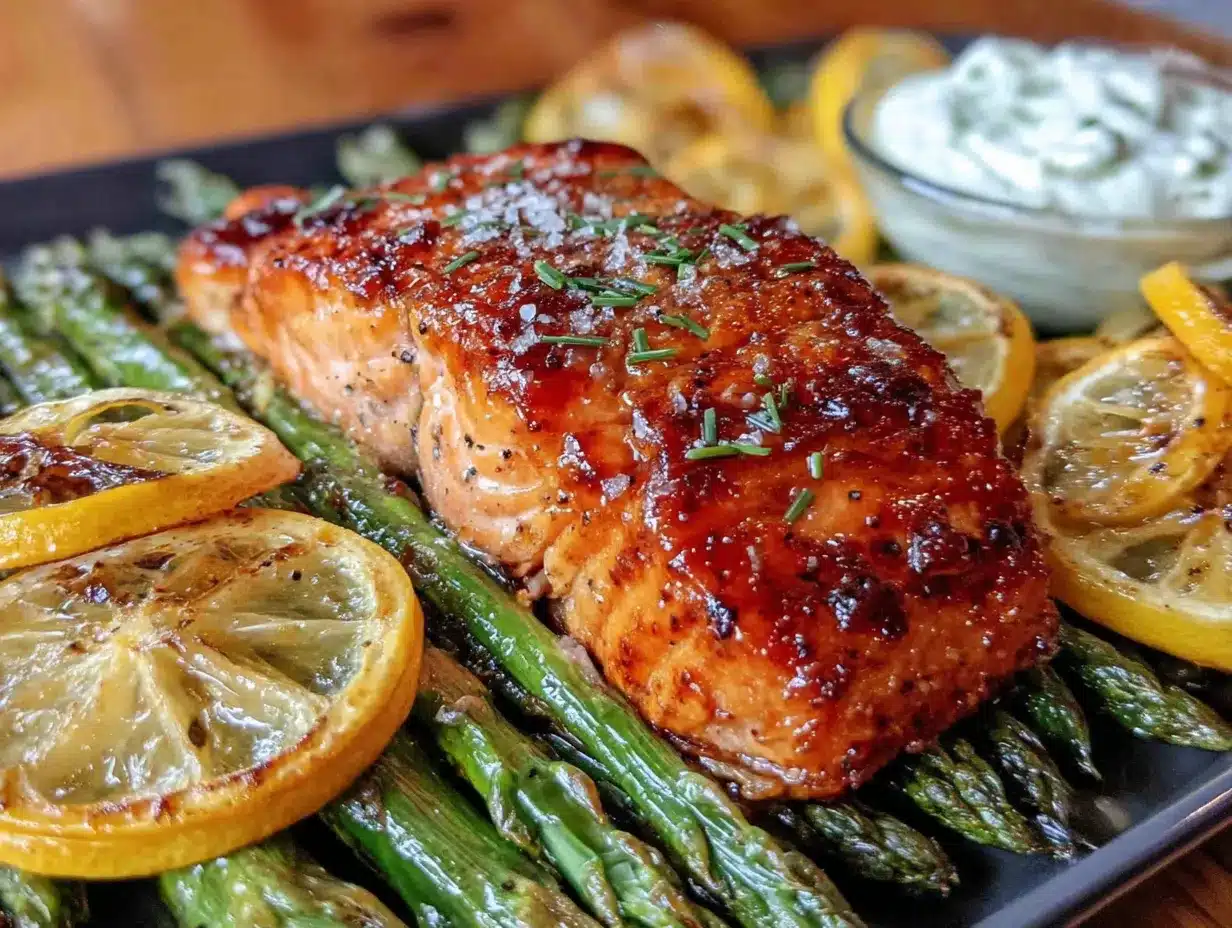
- Preheat your oven to 400°F (200°C). Position the rack in the middle of the oven. While it’s heating, line your sheet pan with parchment paper or foil. This takes thirty seconds and saves you fifteen minutes of scrubbing later.
- Prepare the asparagus. Rinse the asparagus and snap off the woody ends. You can do this by holding each spear near the bottom and bending gently—it will naturally break where the tender part begins. Discard the ends. Arrange the asparagus in a single layer on one side of the sheet pan. Drizzle with 1 tablespoon of olive oil, season with salt and pepper, and toss gently to coat.
- Season the salmon. Pat the salmon fillets dry with paper towels. This step matters—wet salmon steams instead of roasts. Place the fillets on the other side of the sheet pan, skin-side down if they have skin. Drizzle with the remaining 2 tablespoons of olive oil. Sprinkle generously with salt and pepper. Rub the minced garlic over the tops of the fillets.
- Add the lemon. Slice one lemon into thin rounds. Place a slice or two on top of each salmon fillet. Tuck a few slices among the asparagus spears. Squeeze the juice of the second lemon evenly over everything. The lemon juice will mellow and sweeten as it roasts.
- Roast for 12-15 minutes. The exact time depends on the thickness of your salmon and asparagus. At 12 minutes, start checking. The salmon should be opaque and flake easily with a fork. The asparagus should be tender but still have a little resistance when pierced with a fork. If you’re using a thermometer, look for 125-130°F in the thickest part of the fillet.
- Optional broil for color. If you want extra caramelization, switch the oven to broil for the last 1-2 minutes. Watch it carefully—broiling goes from golden to burned in about thirty seconds. I usually skip this step because I’m lazy, but it does make things look prettier.
- Rest and serve. Let the salmon rest on the pan for 2-3 minutes before serving. This allows the juices to redistribute. Garnish with fresh dill or parsley, red pepper flakes, or a squeeze of extra lemon juice. Serve directly from the sheet pan for maximum rustic appeal.
One thing I learned the hard way: don’t walk away during the last few minutes of cooking. I once got distracted folding laundry and ended up with salmon that was technically still edible but had all the moisture of a cardboard box. Set a timer. Trust me.
Cooking Tips & Techniques
After making this recipe approximately forty-seven times (I may have lost count), I’ve picked up some tricks that make a real difference.
Bring your salmon to room temperature. Take the fillets out of the fridge about 15 minutes before cooking. Cold salmon cooks unevenly—the outside can overcook while the inside stays raw. Room temperature salmon cooks more evenly and stays juicier. I learned this after serving one too many fillets that were perfect on the ends and raw in the middle.
Don’t flip the salmon. You don’t need to flip it halfway through. The heat from the sheet pan cooks the bottom, the oven heat cooks the top, and flipping just increases the chance of the fish breaking apart. Let it be. If your fillets have skin, the skin will get crispy and delicious on the bottom.
Check thickness, not just time. A thin fillet might be done in 10 minutes. A thick one might need 16. Use visual cues: the salmon should change from translucent to opaque about halfway up the sides. When it flakes easily with a fork, it’s done. The thermometer takes all the guesswork out.
Trim asparagus evenly. If your asparagus spears vary wildly in thickness, cut the thick ones in half lengthwise so they cook at the same rate as the thin ones. This seems fussy, but it prevents the situation where some spears are perfect and others are either raw or mush.
Use the right pan size. A crowded pan traps steam and prevents browning. If your salmon and asparagus don’t fit in a single layer with space between them, use two pans. You can put one on the top rack and one on the bottom, then swap them halfway through if needed.
Variations & Adaptations
This recipe is incredibly forgiving and adapts well to whatever you have on hand. Here are some variations I’ve tried and loved.
Vegetable Swap: No asparagus? Use broccoli florets, green beans, zucchini slices, or bell pepper strips. Adjust cooking time based on the vegetable—broccoli takes about the same time, zucchini might need a few minutes less. I once used a random mix of vegetables from my crisper drawer and it turned out fantastic. Don’t overthink it.
Herb Crust: Mix 2 tablespoons of fresh dill, parsley, and chives with 1/4 cup of panko breadcrumbs and 1 tablespoon of melted butter. Press this mixture onto the salmon before roasting. It creates a lovely crispy topping that feels fancy with zero extra effort. I did this for a dinner party and everyone thought I was a culinary genius.
Spicy Version: Add 1/2 teaspoon of red pepper flakes or a drizzle of sriracha to the olive oil mixture. The heat balances beautifully with the lemon. My brother-in-law, who puts hot sauce on everything, declared this his favorite version.
Mediterranean Twist: Add cherry tomatoes, sliced red onion, and kalamata olives to the pan. Swap the dill for oregano and add a sprinkle of feta cheese after cooking. This turns a simple weeknight dinner into something that feels like a vacation.
Maple-Dijon Glaze: Whisk together 2 tablespoons of maple syrup, 1 tablespoon of Dijon mustard, and 1 tablespoon of olive oil. Brush this over the salmon before roasting. The sweetness caramelizes beautifully and pairs surprisingly well with the lemon asparagus. I was skeptical about this combination until I tried it. Now it’s my second-favorite version.
Serving & Storage Suggestions
This sheet pan salmon is versatile enough for any occasion, from a quick lunch to an impressive dinner.
Serving Temperature: Serve the salmon warm, right from the oven. The lemon slices on top will be soft and jammy—don’t skip them. They’re delicious eaten alongside the fish or spread on a piece of crusty bread.
What to Serve With It: This dish is pretty complete on its own, but it pairs beautifully with rice, quinoa, or couscous to soak up the lemony juices. A simple green salad with a vinaigrette adds freshness. Crusty bread is always welcome for sopping up every last drop. For a low-carb option, serve it over cauliflower rice or alongside extra roasted vegetables.
Storage Instructions: Store leftovers in an airtight container in the refrigerator for up to 3 days. The asparagus will soften over time, but the flavors actually meld and deepen. I’ve been known to eat cold salmon straight from the fridge the next day for a protein-packed lunch.
Reheating: The best way to reheat is in a 300°F oven for about 5-7 minutes, or until just warmed through. The microwave works in a pinch but can overcook the salmon. If using the microwave, reheat in short 30-second bursts and stop as soon as it’s warm. The asparagus won’t be as crisp, but it’ll still taste great.
Freezing: Cooked salmon freezes well for up to 2 months. Wrap individual portions tightly in plastic wrap and then foil. Thaw overnight in the refrigerator and reheat gently. I’ve done this for meal prep and it works surprisingly well—just don’t expect the asparagus to retain its texture after freezing.
Nutritional Information & Benefits
This recipe is not just delicious—it’s genuinely good for you. Here’s what you’re getting in each serving.
| Nutrient | Amount Per Serving |
|---|---|
| Calories | 380 |
| Protein | 35g |
| Fat | 22g |
| Saturated Fat | 4g |
| Carbohydrates | 8g |
| Fiber | 3g |
| Sugar | 3g |
| Sodium | 450mg |
| Vitamin C | 25% DV |
| Vitamin A | 20% DV |
| Iron | 15% DV |
| Calcium | 6% DV |
Salmon is packed with omega-3 fatty acids, which support heart and brain health. It’s also an excellent source of high-quality protein and B vitamins. Asparagus is loaded with fiber, folate, and vitamins A, C, and K. It’s also a natural diuretic that can help reduce bloating. This meal is naturally gluten-free, low-carb, and fits into most balanced eating plans. If you’re watching your sodium, reduce the salt slightly—the lemon and garlic provide plenty of flavor on their own.
Conclusion
This easy sheet pan salmon with lemon asparagus has become my go-to answer for the eternal question of “what’s for dinner?” It’s fast enough for a frantic Tuesday, fancy enough for guests, and simple enough that you can practically make it in your sleep. The cleanup is minimal, the ingredients are basic, and the results are consistently impressive.
I love this recipe because it proves that you don’t need complicated techniques or exotic ingredients to eat well. Sometimes the best meals come from trusting your instincts—or in my case, trusting my sister who knew better than I did. Give it a try, and don’t be afraid to make it your own. Swap in whatever vegetables you have, adjust the seasonings to your taste, and serve it however makes you happy.
I’d love to hear how it turns out for you! Drop a comment below and let me know if you made any fun variations. Share this recipe with someone who needs an easy dinner win. And remember—the pan doesn’t have to be pretty for the food to be amazing. Happy cooking!
Frequently Asked Questions
Can I use frozen salmon for this recipe?
Yes, but thaw it completely in the refrigerator first and pat it very dry with paper towels. Frozen salmon releases a lot of water as it thaws, which can make your sheet pan dinner soggy. I recommend thawing overnight in the fridge for best results.
How do I know when the salmon is fully cooked?
The salmon should be opaque and flake easily with a fork when gently pressed. For the most accurate results, use an instant-read thermometer inserted into the thickest part—125-130°F for medium, 135-140°F for well-done. The salmon will continue cooking slightly after you remove it from the oven, so take it out just before it reaches your desired doneness.
Can I make this recipe with other types of fish?
Absolutely! This method works beautifully with trout, arctic char, cod, or halibut. Adjust cooking times based on thickness—thicker fillets like cod might need a few extra minutes, while thinner fillets like trout might cook faster. The lemon and garlic complement almost any white fish or fatty fish.
What if I don’t have a sheet pan?
Any rimmed baking pan will work. A 9×13 baking dish is a good substitute, though the vegetables might not brown as well since the sides are higher. You can also use a cast iron skillet or even a disposable aluminum pan in a pinch. Just make sure it has sides to catch the juices.
Can I prepare this recipe ahead of time?
You can prep the ingredients up to a day ahead—trim the asparagus, mince the garlic, and portion the salmon. Store everything separately in the refrigerator. When you’re ready to cook, just arrange everything on the pan and roast. The actual cooking needs to happen fresh for the best texture, but the prep work makes dinner come together in minutes.
Pin This Recipe!
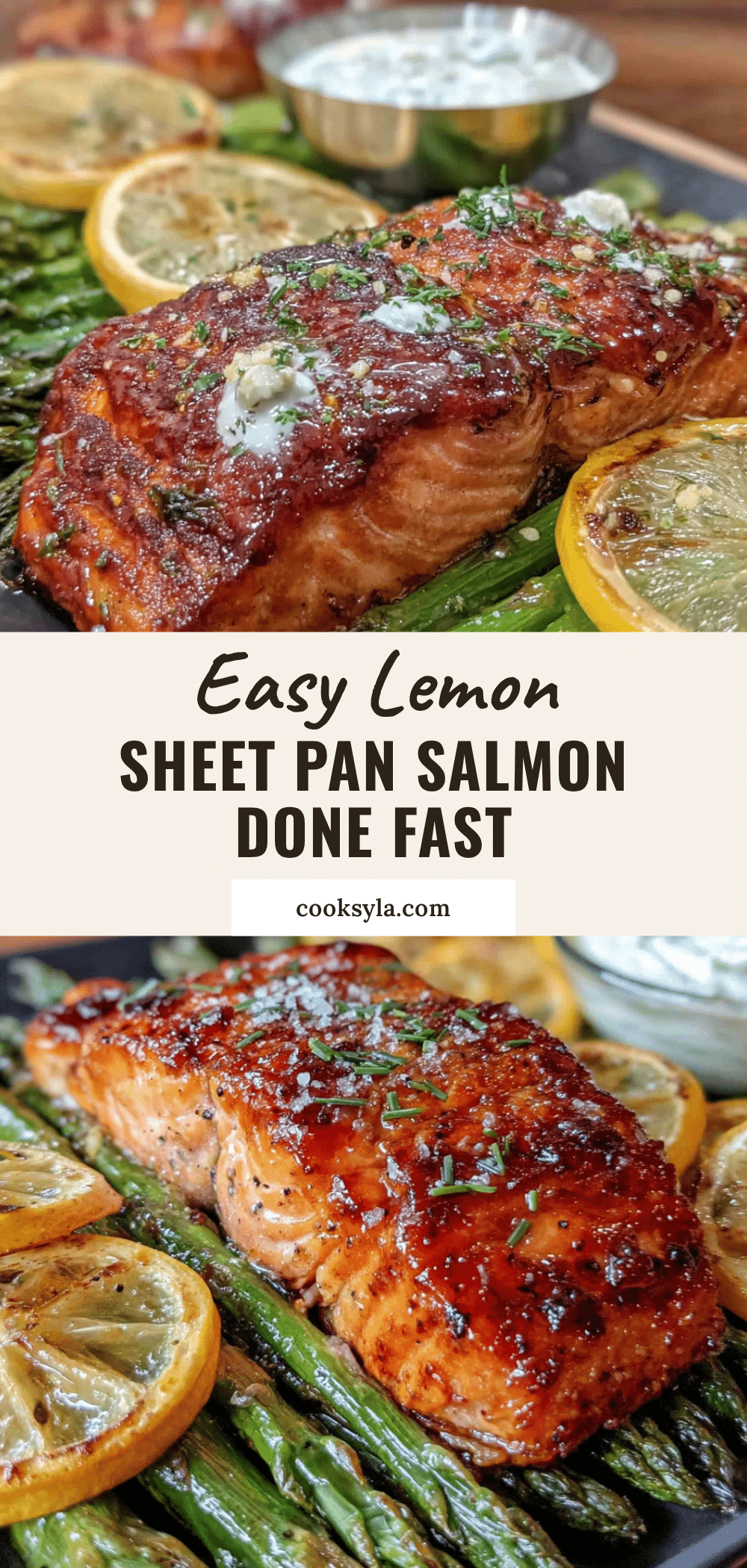
Easy Sheet Pan Salmon with Lemon Asparagus – Best 20-Minute Dinner

This easy sheet pan salmon with lemon asparagus is the perfect weeknight dinner. It’s quick, simple, and requires only one pan for minimal cleanup, delivering perfectly flaky salmon and tender-crisp asparagus every time.
- Prep Time: 5 minutes
- Cook Time: 15 minutes
- Total Time: 20 minutes
- Yield: 4 servings 1x
- Category: Main Course
- Cuisine: American
Ingredients
- 4 salmon fillets (about 6 ounces each)
- 1 bunch asparagus (about 1 pound), woody ends snapped off
- 2 large lemons (1 juiced, 1 sliced into thin rounds)
- 4 cloves garlic, minced
- 3 tablespoons extra virgin olive oil
- Kosher salt, to taste
- Freshly ground black pepper, to taste
- Optional: fresh dill or parsley, red pepper flakes, flaky sea salt for garnish
Instructions
- Preheat your oven to 400°F (200°C). Position the rack in the middle of the oven. Line a sheet pan with parchment paper or aluminum foil.
- Prepare the asparagus: Rinse and snap off woody ends. Arrange in a single layer on one side of the sheet pan. Drizzle with 1 tablespoon olive oil, season with salt and pepper, and toss gently to coat.
- Season the salmon: Pat fillets dry with paper towels. Place on the other side of the sheet pan, skin-side down if they have skin. Drizzle with remaining 2 tablespoons olive oil. Sprinkle generously with salt and pepper. Rub minced garlic over the tops of the fillets.
- Add the lemon: Place a slice or two of lemon on each salmon fillet. Tuck a few slices among the asparagus spears. Squeeze the juice of the second lemon evenly over everything.
- Roast for 12-15 minutes. Start checking at 12 minutes. Salmon should be opaque and flake easily with a fork. Asparagus should be tender but still have a little resistance. For medium salmon, internal temperature should reach 125-130°F.
- Optional: For extra caramelization, switch the oven to broil for the last 1-2 minutes. Watch carefully to avoid burning.
- Let the salmon rest on the pan for 2-3 minutes before serving. Garnish with fresh dill or parsley, red pepper flakes, or extra lemon juice. Serve directly from the sheet pan.
Notes
Bring salmon to room temperature 15 minutes before cooking for even cooking. Don’t flip the salmon during roasting. Check thickness of fillets for cooking time adjustments. Don’t crowd the pan; use two pans if needed. For best results, use fresh garlic and fresh lemons.
Nutrition
- Serving Size: 1 serving (1 salmon
- Calories: 380
- Sugar: 3
- Sodium: 450
- Fat: 22
- Saturated Fat: 4
- Carbohydrates: 8
- Fiber: 3
- Protein: 35
Keywords: sheet pan salmon, lemon asparagus, easy dinner, weeknight dinner, one-pan meal, healthy salmon recipe, quick dinner, 20-minute meal