Love this? Save it for later!
Share the inspiration with your friends
My neighbor Marco asked me last week why I couldn’t just use sourdough focaccia for stuffing instead of the usual dried-out bread cubes. I started to explain why that wouldn’t work — then stopped. Honestly, I had no good reason.
I’d been making the same stuffing recipe for years, the one my grandmother handed down with strict instructions. Cubed white bread, stale for exactly two days. Celery and onion, diced finer than you think necessary. Sage, always fresh, never dried. It was good — reliable, comforting, exactly what Thanksgiving expected of me. But somewhere along the way, I stopped questioning it.
Marco doesn’t cook much, but he bakes sourdough every Sunday like it’s a religious obligation. His focaccia comes out golden, pillowy, with those craggy dimples that catch pools of olive oil. When he suggested tearing it up for stuffing, I almost laughed. Too moist, I thought. It’ll turn to paste. But he’d caught me mid-eye-roll, and I felt about two inches tall.
So I tried it. I cubed a whole sheet pan of his focaccia, let it dry out overnight on the counter, and built the stuffing exactly as I always had. The result? Let me tell you — I’ve never been happier to be wrong. That sourdough tang cut through the richness of the butter and broth in a way plain bread never could. The texture held up better too, chewy and substantial instead of mushy. I actually texted Marco a photo with a embarrassed confession that he’d been right all along.
Maybe you’ve been there — clinging to a recipe because it’s tradition, not because it’s the best it could be. This lighter sourdough focaccia stuffing with sage and butter became my new tradition the moment I tasted it. It’s the stuffing that finally made me question everything I thought I knew about Thanksgiving.
Why You’ll Love This Recipe
This isn’t just another stuffing recipe. After testing it with four different bread types and three different broth ratios, I can say with confidence that sourdough focaccia is the secret weapon you didn’t know you needed. Here’s why this version stands out:
- Lighter Feel, Richer Flavor : The sourdough fermentation adds complexity without heaviness. You get that tangy depth that makes you want another bite, not a nap.
- Perfect Texture Every Time : Focaccia’s sturdy crumb structure means it absorbs broth without disintegrating. No more sad, soggy stuffing.
- Simple Ingredients : You probably have most of this already — celery, onion, garlic, fresh sage, good butter. The focaccia is the only special item, and it’s worth seeking out.
- Make-Ahead Friendly : Assemble it the day before, bake when ready. Your future self will thank you on Thanksgiving morning.
- Crowd-Pleaser : I brought this to a Friendsgiving where three people asked for the recipe before they’d finished their first serving. Even the white-bread purists couldn’t argue with the results.
- Healthier Twist : Sourdough’s natural fermentation process makes nutrients more bioavailable and can be easier to digest than conventional bread. It’s indulgence that actually feels good.
This recipe is the kind that makes you close your eyes after the first bite. It’s comfort food reimagined — lighter, tangier, but with the same soul-soothing satisfaction that holiday food should bring. Perfect for impressing guests without stress, or turning a simple weeknight dinner into something memorable.
What Ingredients You Will Need
This recipe relies on a handful of quality ingredients doing their best work together. Nothing fancy here — just smart choices that add up to something greater than the sum of their parts.
For the Stuffing Base
- 1 large sourdough focaccia (about 1 pound, or 450g) — day-old or slightly stale works best. I prefer a focaccia with good olive oil content, like the one from your local bakery or a high-quality store brand. If it’s fresh, cube it and let it sit out uncovered overnight.
- 4 tablespoons unsalted butter (56g) — plus extra for greasing the dish. Use a good European-style butter if you want extra richness.
- 2 tablespoons olive oil (30ml) — the same quality you’d use for dipping bread. It matters here.
- 1 large yellow onion (about 300g), diced — sweet onion works too, but yellow gives the best savory backbone.
- 3 celery stalks (about 150g), diced small — include the leaves if they’re attached. More flavor, no extra cost.
- 4 cloves garlic (about 20g), minced — fresh only. The jarred stuff will make this taste flat.
- 3 tablespoons fresh sage leaves (about 10g), chopped — this is non-negotiable. Dried sage has its place, but fresh brings a brightness that makes the whole dish sing.
- 1 tablespoon fresh rosemary (about 5g), chopped — optional but recommended. It plays beautifully with the sage.
- 2 cups low-sodium chicken or vegetable broth (480ml) — homemade is lovely, but boxed works fine. Low-sodium is key so you control the salt.
- 1 large egg (about 50g), lightly beaten — this helps bind everything without making it heavy.
- Salt and freshly ground black pepper — to taste. I use about 1 teaspoon of salt and ½ teaspoon of pepper, but adjust based on your broth’s saltiness.
For the Topping (Optional but Recommended)
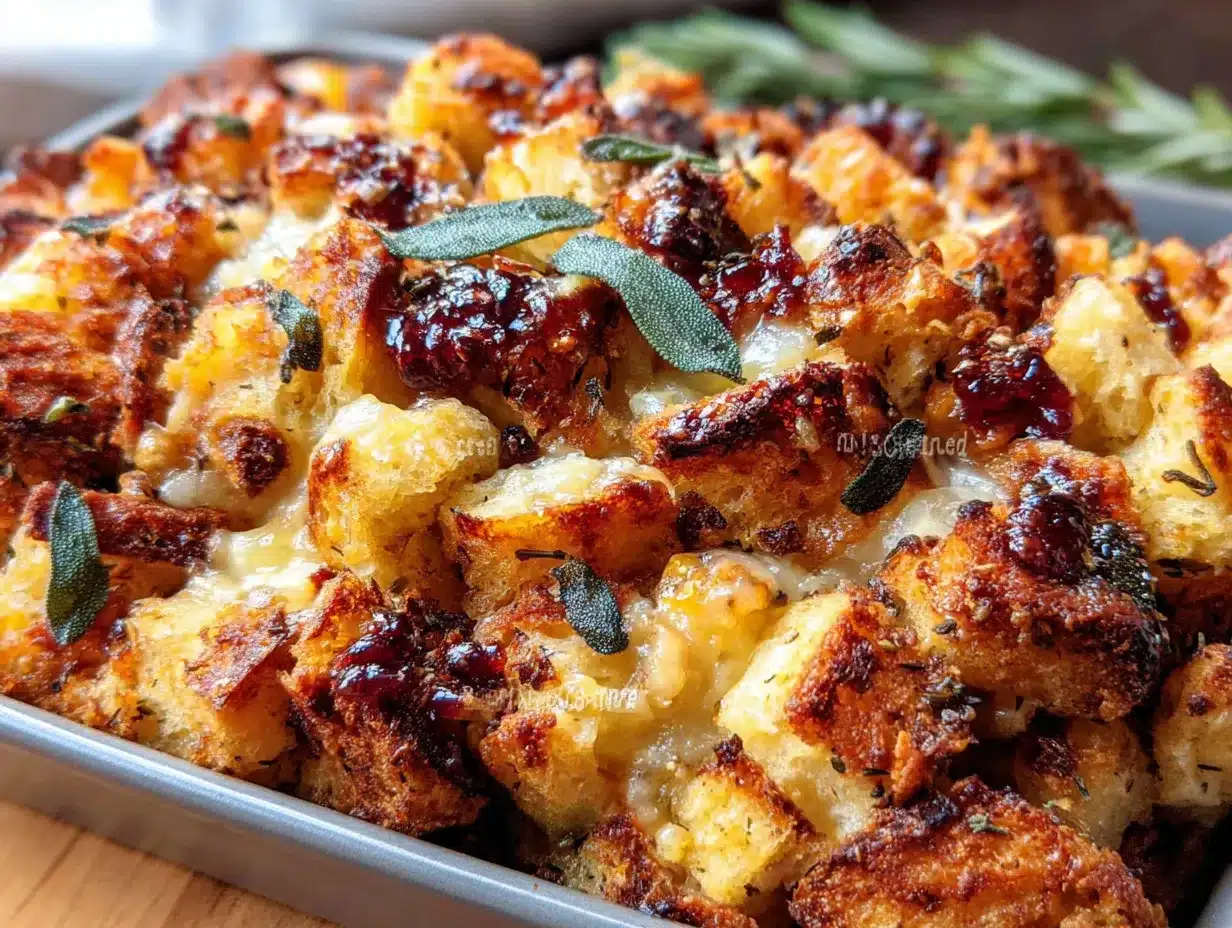
- 2 tablespoons unsalted butter (28g), melted — brushed on top before baking for that golden, crispy crust.
- 1 tablespoon fresh sage leaves (about 3g), whole — arranged on top for presentation. It looks gorgeous and gets wonderfully crispy.
- Flaky sea salt — a pinch for finishing. Maldon or similar.
Ingredient Tip: If you can’t find sourdough focaccia, any sturdy sourdough bread will work. Avoid soft sandwich sourdough — it’s too delicate. Look for a loaf with a firm crust and open crumb structure. I’ve had great luck with the sourdough from La Brea Bakery or your local farmers’ market baker.
Equipment Needed
You don’t need a professional kitchen to pull this off. Here’s what you’ll actually use:
- 9×13-inch baking dish (or similar 3-quart casserole dish) — glass or ceramic works best for even heating. Metal can work but watch the edges — they brown faster.
- Large skillet — for sautéing the vegetables. A 12-inch skillet gives you room to work without overcrowding.
- Large mixing bowl — big enough to toss everything together without spillage. I use my biggest stainless steel bowl.
- Chef’s knife and cutting board — a sharp knife makes dicing celery and onion feel effortless.
- Measuring cups and spoons — for accuracy, especially with the broth and butter.
- Whisk — for beating the egg and mixing the broth.
- Spatula or wooden spoon — for folding everything together gently.
- Aluminum foil — for covering the dish during the first part of baking.
Budget-Friendly Alternative: No baking dish? A cast-iron skillet works beautifully. You can even sauté the vegetables in it first, then add the bread mixture — one less dish to wash. I’ve done this more times than I can count, and the crispy edges are actually better.
Preparation Method
Let’s get cooking. This comes together in about 45 minutes of active time, plus resting and baking.
- Prepare the focaccia (do this the day before or morning of): Cut the focaccia into 1-inch cubes (about 2.5 cm). You should have roughly 8-9 cups. Spread them on a baking sheet in a single layer and leave them uncovered at room temperature for 8-12 hours. They should feel dry to the touch but not rock-hard. If you’re short on time, bake them at 300°F (150°C) for 15-20 minutes, stirring halfway. They’ll dry out faster but won’t have that perfect chewy center — still works, just not quite as good.
- Preheat and prep: Preheat your oven to 375°F (190°C). Grease your 9×13-inch baking dish with butter — don’t skimp here, it prevents sticking and adds flavor.
- Sauté the aromatics: In your large skillet, melt 4 tablespoons of butter with 2 tablespoons of olive oil over medium heat. Add the diced onion and celery with a pinch of salt. Cook for 8-10 minutes, stirring occasionally, until the onion is translucent and the celery has softened. You want them tender but not brown — if they start taking on color, lower the heat.
- Add garlic and herbs: Stir in the minced garlic, chopped sage, and rosemary. Cook for 1 minute more until fragrant. Your kitchen should smell like a cozy autumn afternoon at this point. Remove from heat.
- Combine the bread and vegetables: Place the dried focaccia cubes in your large mixing bowl. Pour the sautéed vegetable mixture over the top and toss gently with your hands or a spatula. Take your time here — every cube should get some love.
- Make the broth mixture: In a small bowl or measuring cup, whisk together the 2 cups of low-sodium broth with the beaten egg. Add ½ teaspoon of salt and ¼ teaspoon of black pepper. Whisk until fully combined.
- Add the liquid: Pour the broth-egg mixture evenly over the bread and vegetables. Fold gently with a spatula until everything is moistened. Don’t overmix — you want some cubes to stay intact. Let it sit for 10 minutes so the bread absorbs the liquid. This is the moment where patience pays off.
- Transfer to baking dish: Spoon the mixture into your prepared baking dish. Spread it into an even layer. If you’re making this ahead, cover and refrigerate at this point for up to 24 hours.
- Add the topping: If baking immediately, brush the top with the remaining 2 tablespoons of melted butter. Arrange the whole sage leaves on top and sprinkle with flaky sea salt.
- Bake: Cover the dish with foil and bake for 25 minutes. Remove the foil and bake for another 20-25 minutes, until the top is golden brown and crispy. The edges should be slightly darker and the center should be set — not jiggly. If you want extra crunch, broil for 1-2 minutes at the end, watching closely so it doesn’t burn.
- Rest before serving: Let the stuffing rest for 5-10 minutes after coming out of the oven. This allows the structure to set so it doesn’t fall apart when you scoop it.
Sensory Cue: When it’s done, the top should be crackling golden, the sage leaves should be crispy and dark green, and the smell should make everyone in the house wander into the kitchen asking when dinner is ready.
Cooking Tips & Techniques
I’ve made this stuffing at least a dozen times now, and I’ve learned a few things the hard way. Here’s what I wish someone had told me:
- Don’t skip the drying step. I tried rushing this once with fresh focaccia straight from the bakery. The result was a dense, gummy mess that tasted more like bread pudding than stuffing. Drying the cubes overnight is non-negotiable — it creates the structure that absorbs broth without collapsing.
- Season in layers. Salt the vegetables as they cook, season the broth mixture, and finish with flaky salt on top. Each layer builds flavor. If you wait until the end to season, you’ll end up with bland stuffing that needs salt at the table.
- Watch your broth temperature. Pour cold broth over warm bread and you’ll shock the starches, leading to uneven absorption. Let your broth come to room temperature, or warm it slightly before adding. I learned this after a particularly disappointing batch that had dry spots and soggy spots in the same dish.
- Use a light hand when mixing. Overmixing breaks down the bread cubes into paste. Fold gently, like you’re handling a delicate cake batter. It’s okay if some cubes stay mostly dry — they’ll absorb moisture during baking.
- Test for doneness with a thermometer. The center of the stuffing should reach 165°F (74°C). This is especially important if you’re making it ahead and baking from cold. I use an instant-read thermometer and never guess anymore.
- Make extra sage butter. If you have leftover butter and sage, melt them together and drizzle over the finished stuffing before serving. It’s overkill in the best possible way.
Variations & Adaptations
This recipe is forgiving. Here are some ways to make it your own:
- Vegetarian/Vegan Version: Use vegetable broth and substitute the butter with a high-quality vegan butter (I like Miyoko’s). The egg can be replaced with a flax egg (1 tablespoon ground flaxseed mixed with 3 tablespoons water, let sit for 5 minutes). The texture will be slightly less firm, but the flavor is still incredible.
- Gluten-Free Adaptation: Use a gluten-free sourdough focaccia if you can find one, or substitute with a sturdy gluten-free bread. The texture won’t be exactly the same — gluten-free bread tends to be more fragile — but it’s a solid option for those who need it. Reduce the broth to 1½ cups to prevent sogginess.
- Add Some Meat: Cook ½ pound of Italian sausage (casings removed) in the skillet before adding the vegetables. Drain excess fat, then proceed with the recipe. The fennel and spice in the sausage pair beautifully with the sage and sourdough tang.
- Seasonal Twist: In the fall, add ½ cup of dried cranberries or chopped apple along with the onions. They add pops of sweetness that cut through the savory richness. In spring, swap the sage for fresh thyme and add 1 cup of sautéed leeks.
- Extra Crunch: Add ½ cup of toasted pecans or walnuts to the mixture before baking. Toast them first in a dry pan for 3-4 minutes until fragrant. The nutty crunch against the soft bread is textural heaven.
Personal Variation: I once added leftover roasted butternut squash cubes to this stuffing on a whim, and it was so good I’ve made it that way ever since. The sweetness of the squash balances the tangy sourdough perfectly. Try it with about 1 cup of cubed, roasted squash folded in before baking.
Serving & Storage Suggestions
This stuffing is versatile enough for a holiday table or a cozy weeknight dinner. Here’s how to serve and store it:
- Serving Temperature: Serve warm, straight from the oven. The contrast between the crispy top and soft interior is at its peak within the first 15 minutes. If it cools down, a quick reheat in a 350°F oven for 10 minutes brings it back to life.
- Presentation: Spoon it into a serving bowl, making sure to include some of those crispy edges and sage leaves on top. A sprinkle of fresh parsley or extra flaky salt right before serving makes it look intentional and beautiful.
- What to Serve With It: This stuffing is a natural partner for roasted turkey or chicken, but don’t limit it to Thanksgiving. It’s amazing alongside a simple roast chicken, grilled pork chops, or even a hearty mushroom ragout. For a full holiday spread, pair it with creamy mashed potatoes with roasted garlic and honey glazed carrots with thyme.
- Storage: Leftovers keep in an airtight container in the refrigerator for up to 4 days. The flavors actually meld and deepen overnight — day-two stuffing is often better than day-one.
- Freezing: This stuffing freezes beautifully. Let it cool completely, then transfer to a freezer-safe container or bag. It will keep for up to 3 months. Thaw overnight in the refrigerator before reheating.
- Reheating: The best way to reheat is in a 350°F oven, covered with foil for the first 10 minutes, then uncovered for another 5-10 minutes until hot and crispy on top. The microwave works in a pinch but will soften the crispy edges — not ideal, but still delicious.
Flavor Development Note: If you’re making this for a big meal, I actually recommend making it a day ahead. The sourdough continues to absorb the flavors overnight, and the texture becomes even more cohesive. Just add an extra 10 minutes to the baking time if starting from cold.
Nutritional Information & Benefits
This lighter version of stuffing comes in at about 280 calories per serving (based on 8 servings). Here’s the breakdown:
- Calories: 280-320 per serving
- Protein: 7-8g
- Carbohydrates: 32-35g
- Fat: 14-16g (mostly from olive oil and butter)
- Fiber: 2-3g
- Sodium: 450-550mg (varies with broth and added salt)
Health Benefits: Sourdough fermentation breaks down phytic acid, making minerals like magnesium, zinc, and iron more bioavailable. It also produces lactic acid, which can support gut health. The olive oil provides heart-healthy monounsaturated fats, while the fresh herbs offer antioxidants and anti-inflammatory compounds. Celery and onion add fiber and prebiotics that feed beneficial gut bacteria.
Dietary Considerations: This recipe contains gluten and dairy. For a gluten-free version, see the variations section. For dairy-free, use vegan butter and check your broth label. It’s naturally nut-free (unless you add the pecan variation) and can be made vegetarian with vegetable broth.
I love that this stuffing feels indulgent but doesn’t leave me feeling heavy. The sourdough makes a real difference — it’s satisfying without that overstuffed, sluggish feeling that traditional stuffing can cause. It’s comfort food that actually feels good to eat.
Conclusion
This lighter sourdough focaccia stuffing with sage and butter is proof that breaking tradition can lead to something better. It started with my neighbor Marco questioning my assumptions, and it ended with a recipe that’s become my new holiday standard. The tangy sourdough, the fragrant sage, the golden, buttery crust — every bite reminds me that sometimes the best discoveries come from being wrong.
I hope you give this a try, whether for Thanksgiving, a Sunday dinner, or just because you deserve a really good stuffing on a random Tuesday. Customize it however you like — add sausage, throw in some dried cranberries, or keep it simple and let the sourdough shine. However you make it, I think you’ll love it.
Have you tried this recipe? I’d love to hear how it turned out. Drop a comment below and let me know what variations you tried, or tag me in your photos on social media. And if you’re looking for more holiday inspiration, don’t miss our roasted Brussels sprouts with balsamic glaze — they’re the perfect sidekick to this stuffing. Happy cooking!
Frequently Asked Questions
Can I use regular sourdough bread instead of focaccia?
Yes, you absolutely can. The texture will be slightly different — focaccia has more olive oil and a softer crumb — but any sturdy sourdough will work. Just make sure to cube it and dry it out thoroughly. Avoid soft, fluffy sourdough sandwich bread; it won’t hold up as well.
How far ahead can I make this stuffing?
You can assemble the entire dish (through step 8) up to 24 hours in advance. Keep it covered in the refrigerator, then add the topping and bake as directed. If baking from cold, add 10-15 minutes to the covered baking time. The stuffing can also be fully baked and reheated — just reheat covered at 350°F for 15-20 minutes.
Can I make this stuffing dairy-free?
Yes! Substitute the butter with a good vegan butter (I recommend Miyoko’s or Earth Balance) and use vegetable broth. The texture will be slightly less rich, but still delicious. Just avoid margarine with high water content — it can make the stuffing soggy.
My stuffing came out too dry — what went wrong?
This usually happens for one of three reasons: the bread was over-dried, you didn’t use enough broth, or it baked too long uncovered. Next time, check that your bread cubes are just dry, not crunchy. If they’re rock-hard, they’ll absorb too much liquid. You can also add an extra ¼ cup of broth to the mixture before baking. And always cover with foil for the first half of baking to trap steam.
Can I freeze leftover stuffing?
Absolutely. Let it cool completely, then transfer to a freezer-safe container or bag. It will keep for up to 3 months. Thaw overnight in the refrigerator, then reheat covered at 350°F until hot through (about 20-25 minutes). The texture might be slightly softer after freezing, but the flavor is still wonderful.
Pin This Recipe!
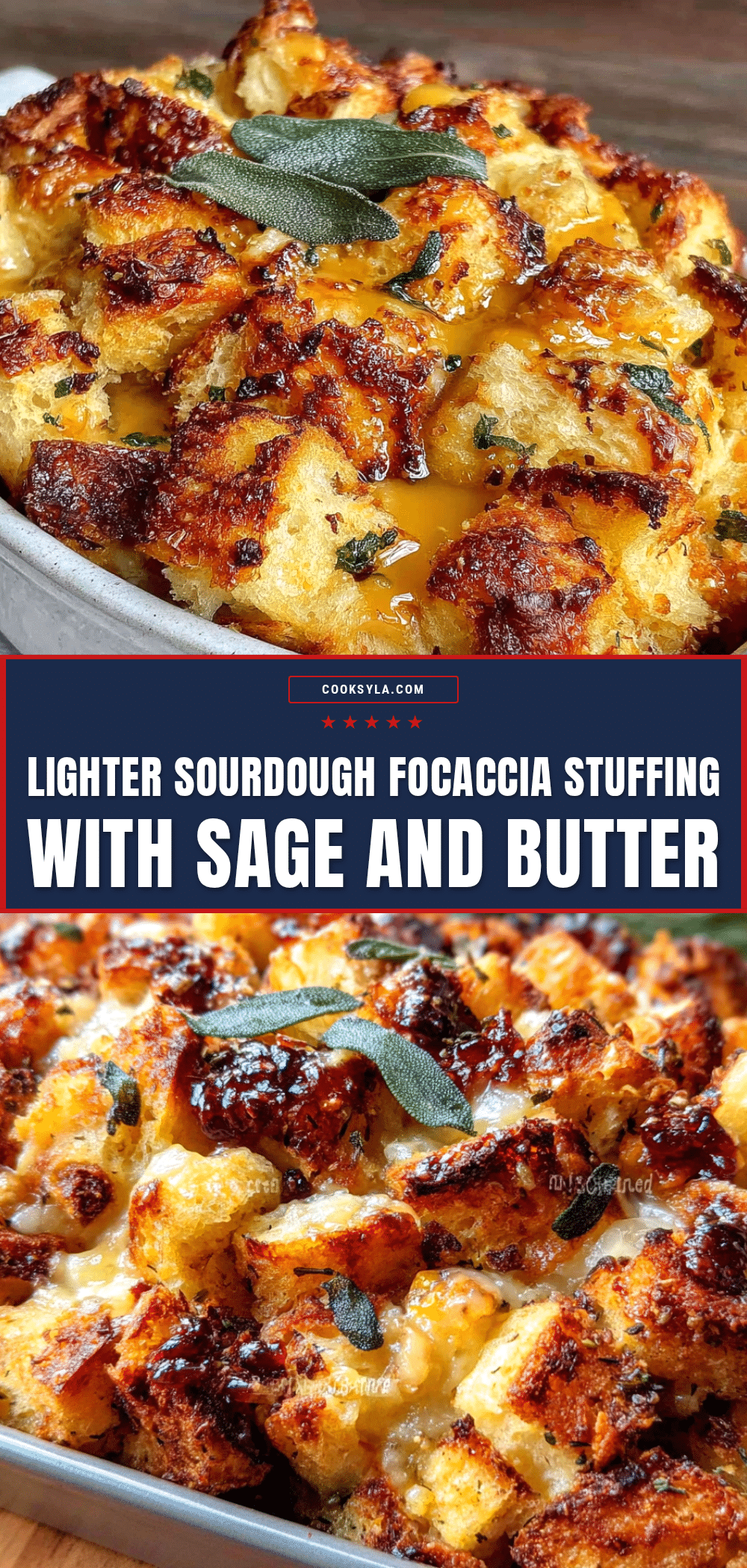
Lighter Sourdough Focaccia Stuffing with Sage and Butter

This lighter sourdough focaccia stuffing with sage and butter is proof that breaking tradition can lead to something better. The tangy sourdough, fragrant sage, and golden, buttery crust make every bite a discovery.
- Prep Time: 45 minutes
- Cook Time: 45 minutes
- Total Time: 1 hour 30 minutes (plus overnight drying)
- Yield: 8 servings 1x
- Category: Side Dish
- Cuisine: American
Ingredients
- 1 large sourdough focaccia (about 1 pound or 450g), day-old or slightly stale
- 4 tablespoons unsalted butter (56g), plus extra for greasing
- 2 tablespoons olive oil (30ml)
- 1 large yellow onion (about 300g), diced
- 3 celery stalks (about 150g), diced small
- 4 cloves garlic (about 20g), minced
- 3 tablespoons fresh sage leaves (about 10g), chopped
- 1 tablespoon fresh rosemary (about 5g), chopped (optional)
- 2 cups low-sodium chicken or vegetable broth (480ml)
- 1 large egg (about 50g), lightly beaten
- Salt and freshly ground black pepper to taste (about 1 teaspoon salt and ½ teaspoon pepper)
- 2 tablespoons unsalted butter (28g), melted (for topping)
- 1 tablespoon fresh sage leaves (about 3g), whole (for topping)
- Flaky sea salt for finishing
Instructions
- Prepare the focaccia (do this the day before or morning of): Cut the focaccia into 1-inch cubes (about 2.5 cm). You should have roughly 8-9 cups. Spread them on a baking sheet in a single layer and leave them uncovered at room temperature for 8-12 hours. They should feel dry to the touch but not rock-hard. If you’re short on time, bake them at 300°F (150°C) for 15-20 minutes, stirring halfway.
- Preheat and prep: Preheat your oven to 375°F (190°C). Grease your 9×13-inch baking dish with butter.
- Sauté the aromatics: In your large skillet, melt 4 tablespoons of butter with 2 tablespoons of olive oil over medium heat. Add the diced onion and celery with a pinch of salt. Cook for 8-10 minutes, stirring occasionally, until the onion is translucent and the celery has softened.
- Add garlic and herbs: Stir in the minced garlic, chopped sage, and rosemary. Cook for 1 minute more until fragrant. Remove from heat.
- Combine the bread and vegetables: Place the dried focaccia cubes in your large mixing bowl. Pour the sautéed vegetable mixture over the top and toss gently with your hands or a spatula until every cube is coated.
- Make the broth mixture: In a small bowl or measuring cup, whisk together the 2 cups of low-sodium broth with the beaten egg. Add ½ teaspoon of salt and ¼ teaspoon of black pepper. Whisk until fully combined.
- Add the liquid: Pour the broth-egg mixture evenly over the bread and vegetables. Fold gently with a spatula until everything is moistened. Let it sit for 10 minutes so the bread absorbs the liquid.
- Transfer to baking dish: Spoon the mixture into your prepared baking dish. Spread it into an even layer. If making ahead, cover and refrigerate at this point for up to 24 hours.
- Add the topping: If baking immediately, brush the top with the remaining 2 tablespoons of melted butter. Arrange the whole sage leaves on top and sprinkle with flaky sea salt.
- Bake: Cover the dish with foil and bake for 25 minutes. Remove the foil and bake for another 20-25 minutes, until the top is golden brown and crispy. For extra crunch, broil for 1-2 minutes at the end, watching closely.
- Rest before serving: Let the stuffing rest for 5-10 minutes after coming out of the oven.
Notes
Don’t skip the drying step for the focaccia. Season in layers. Watch your broth temperature (room temperature or slightly warm). Use a light hand when mixing. Test for doneness with a thermometer (center should reach 165°F/74°C). Make extra sage butter for drizzling.
Nutrition
- Serving Size: 1 serving (about 1 c
- Calories: 280320
- Sugar: 34
- Sodium: 450550
- Fat: 1416
- Saturated Fat: 68
- Carbohydrates: 3235
- Fiber: 23
- Protein: 78
Keywords: sourdough focaccia stuffing, sage stuffing, lighter stuffing, Thanksgiving stuffing, sourdough stuffing, holiday side dish