Love this? Save it for later!
Share the inspiration with your friends
My neighbor Sarah wasn’t trying to impress me. I’d stopped by to borrow a ladder—mine had mysteriously vanished after a garage sale—and this incredible smell hit me before I even knocked. Sweet, savory, with a little bit of garlicky punch. She opened the door holding a baking sheet, and I just stood there, ladder completely forgotten. “Oh, this?” she said, waving the pan around like it was nothing. “Just salmon. It’s the easiest thing.”
Honestly, I think I annoyed her with how many questions I asked. She was trying to get dinner on the table before her kids’ soccer practice, and I was hovering over her shoulder, watching her drizzle this gorgeous, glossy sauce over the fish. She didn’t measure a thing. Just poured honey, splashed soy sauce, threw in some garlic. I grabbed a piece of asparagus from the pan—partly because I was hungry, partly because I needed to taste what my nose was telling me—and let me tell you, that first bite stopped me mid-sentence.
I went home with the ladder and immediately made my own version. It took a few tries to get the balance right—I wanted that sticky, caramelized coating without burning the garlic—but once I nailed it, this sticky honey garlic baked salmon with asparagus became my weeknight secret weapon. It’s one of those rare recipes that feels fancy but takes almost no effort. Maybe you’ve been there—wanting something that looks like you spent hours on it when really, you just threw everything on a sheet pan and let the oven do the work.
That’s this recipe. It’s the one I make when I want to feel like I have my life together, and honestly? It works every time.
Why You’ll Love This Recipe
I’ve tested this sticky honey garlic baked salmon with asparagus more times than I care to admit—partly for perfection, partly because my family keeps requesting it. Here’s why it’s become a staple in my kitchen and why I think it’ll become one in yours too.
- Quick & Easy: From fridge to table in under 30 minutes. No marinating, no complicated steps, no standing over a hot stove. Just mix, pour, and bake.
- Simple Ingredients: You probably have everything in your pantry right now. Honey, soy sauce, garlic, a little oil. No trips to specialty stores required.
- Perfect for Busy Weeknights: This is the kind of dinner that saves you on those days when you’re running on empty. It looks impressive but takes almost zero brainpower.
- Crowd-Pleaser: Even people who “don’t really like fish” have asked me for the recipe. The sticky-sweet glaze wins everyone over.
- One Pan, Minimal Mess: The salmon and asparagus roast together on a single sheet pan. Less cleanup means more time to actually enjoy your evening.
What makes this version different from all the other honey garlic salmon recipes out there? It’s the texture. The glaze caramelizes just enough to create that sticky, almost tacky coating on the salmon without turning into a sugary mess. The asparagus roasts in the same pan, soaking up the extra sauce, so every bite—fish and vegetable—has that same sweet-savory punch. I’ve tried versions where the sauce stays too runny or the garlic burns, and honestly, this one hits the sweet spot every time.
This isn’t just good salmon. It’s the kind that makes you close your eyes after the first bite. The kind that makes you feel like you’ve got dinner handled, even on your most chaotic days.
What Ingredients You Will Need
This recipe relies on a handful of pantry staples and fresh ingredients to create something that tastes far more complex than it actually is. Here’s what you’ll need and a few notes on how to pick the best ones.
- Salmon Fillets (4 fillets, about 6 ounces each): Look for fillets that are roughly the same thickness so they cook evenly. I prefer center-cut fillets for their consistent shape and rich flavor. Skin-on or skinless both work—if you leave the skin on, it gets crispy underneath the salmon while the top caramelizes. Wild-caught salmon has a cleaner flavor, but farm-raised works beautifully here too since the glaze is so robust.
- Honey (⅓ cup): Use a mild, runny honey. Strong-flavored honey like buckwheat can overpower the dish. I usually grab a local wildflower honey—it’s floral enough to complement the garlic without stealing the show. If your honey is crystallized, warm it gently before mixing.
- Soy Sauce (¼ cup): Regular soy sauce gives the best balance of salt and umami. Low-sodium works if you’re watching your salt intake, but you might need to add a pinch of salt to the asparagus. Tamari or coconut aminos are great gluten-free alternatives.
- Garlic (4 cloves, minced): Fresh garlic is non-negotiable here. The pre-minced stuff in a jar has a sharper, less sweet flavor. Take the extra minute to mince fresh cloves—it makes a real difference in the final taste.
- Olive Oil (2 tablespoons, plus more for drizzling): A good extra virgin olive oil adds richness to the glaze and helps the asparagus roast without drying out. Avocado oil works too if you prefer a neutral flavor.
- Fresh Asparagus (1 pound, woody ends trimmed): Look for asparagus spears that are bright green with firm, closed tips. Thicker spears hold up better to roasting and won’t get mushy. If you’re stuck with thin asparagus, reduce the roasting time by a few minutes.
- Salt and Black Pepper (to taste): A generous pinch of flaky sea salt at the end really makes the flavors pop. Freshly ground black pepper adds a subtle warmth that plays nicely with the honey.
- Sesame Seeds (1 tablespoon, optional for garnish): Toasted sesame seeds add a nutty crunch and make the dish look restaurant-worthy. Black and white sesame seeds mixed together look especially nice.
- Green Onions (2, sliced, optional for garnish): A sprinkle of fresh green onion adds a pop of color and a mild onion kick that cuts through the sweetness.
I’ve made this with different brands over the years, and honestly, the biggest difference comes from the honey and soy sauce. A good-quality soy sauce—I prefer Kikkoman or San-J—gives a deeper, more rounded flavor. As for the honey, try to avoid the stuff that’s been sitting in your pantry for years. Fresh, runny honey makes a noticeably better glaze.
Equipment Needed
One of the best things about this recipe is how little equipment it requires. You don’t need a fancy kitchen to pull this off.
- Sheet Pan (half-sheet size, 18×13 inches): A sturdy rimmed baking sheet is essential. The rim catches any sauce that bubbles over and keeps your oven clean. I’ve used cheap nonstick pans and heavy-duty aluminum ones—the heavy-duty ones distribute heat more evenly and prevent the honey from burning in spots.
- Parchment Paper or Aluminum Foil: Lining your pan makes cleanup almost nonexistent. Parchment is my preference because nothing sticks to it, and the salmon slides right off. Foil works too, but you might need a little extra oil to prevent sticking.
- Small Mixing Bowl: For whisking together the glaze. Any small bowl works—I use the same one every time and it’s chipped on the edge from my overenthusiastic whisking.
- Whisk or Fork: To combine the honey, soy sauce, garlic, and oil. A fork works perfectly if you don’t feel like dirtying another utensil.
- Chef’s Knife and Cutting Board: For mincing garlic and trimming the asparagus. A sharp knife makes the whole process faster and safer.
- Measuring Cups and Spoons: I use dry measuring cups for the honey (spray them lightly with oil first—it slides right out) and liquid measuring cups for the soy sauce.
- Instant-Read Thermometer (optional but helpful): Salmon is perfectly cooked at 125°F to 130°F in the thickest part. If you cook fish often, this little tool is worth every penny.
If you don’t have a sheet pan, a 9×13 baking dish works fine—just make sure the salmon and asparagus aren’t too crowded. Crowding leads to steaming instead of roasting, and you’ll lose that beautiful caramelization on the salmon.
Preparation Method
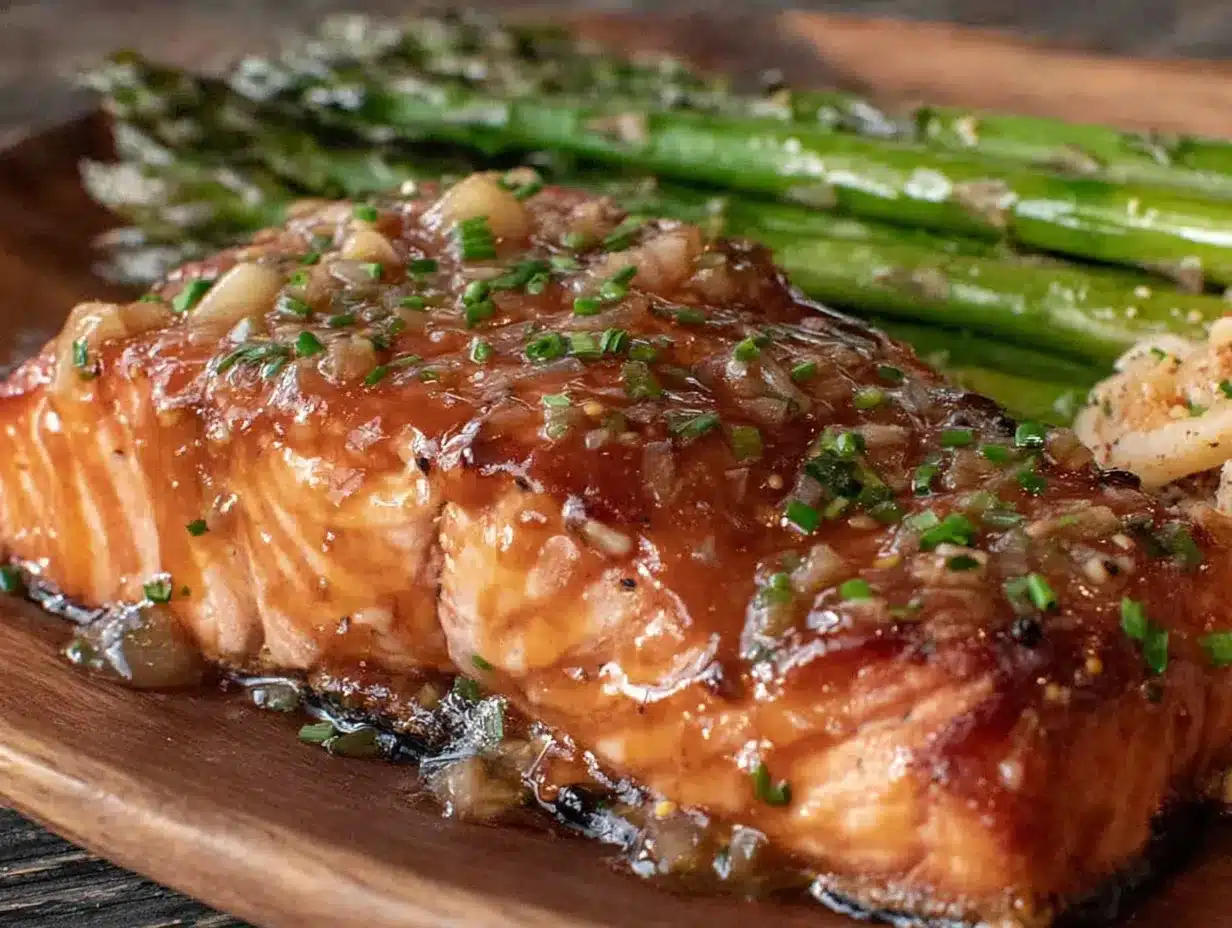
Let’s get cooking. This recipe moves fast, so I like to have everything prepped before I turn on the oven. Trust me on this one—it makes the whole process smoother.
- Preheat your oven to 400°F (200°C). Give it a full 15 minutes to come to temperature. A properly hot oven is what creates that gorgeous sticky glaze without drying out the fish.
- Line your sheet pan with parchment paper. Leave a little overhang on the edges if you can—it makes lifting the salmon off later even easier. If you’re using foil, give it a light spray of cooking oil.
- Make the glaze. In your small bowl, combine ⅓ cup honey, ¼ cup soy sauce, 4 minced garlic cloves, and 2 tablespoons olive oil. Whisk until everything is smooth and well combined. Taste it—it should be sweet, salty, and punchy with garlic. If it tastes too sweet, add a splash more soy sauce. Too salty? A little more honey balances it right out.
- Trim the asparagus. Grab each spear at both ends and bend gently until it snaps. It’ll break naturally where the tough part ends and the tender part begins. Discard the woody ends. I usually line up all the trimmed spears and cut them to roughly the same length so they look neat on the pan.
- Arrange the asparagus on the sheet pan. Spread the spears out in a single layer on one side of the pan. Drizzle with a little olive oil and sprinkle with salt and pepper. Toss them gently with your hands to coat evenly.
- Place the salmon fillets on the pan. Arrange them skin-side down (if using skin-on) on the other side of the pan, leaving a little space between each fillet. Don’t crowd them—if they’re touching, they’ll steam instead of roast.
- Pour the glaze over the salmon. Spoon it evenly over each fillet, letting some of it pool around the edges. Don’t worry if a little drips onto the asparagus—that’s actually a good thing. The asparagus will soak up those sweet-savory flavors as they roast.
- Bake for 12-15 minutes. The exact time depends on the thickness of your fillets. At 12 minutes, start checking. The salmon should be opaque and flake easily with a fork, but still feel slightly firm in the center. If you’re using a thermometer, aim for 125°F to 130°F in the thickest part.
- Optional: Broil for 1-2 minutes at the end. If you want that extra-sticky, almost caramelized top, switch your oven to broil for the last minute or two. Watch it closely—honey burns fast under the broiler. I’ve learned this the hard way more than once.
- Let it rest for 2-3 minutes. This is important. The salmon continues cooking slightly as it rests, and the glaze sets into that perfect sticky coating. If you cut into it immediately, the sauce runs all over the plate.
- Garnish and serve. Sprinkle with sesame seeds and sliced green onions if you’re using them. A final pinch of flaky sea salt right before serving makes everything pop.
The asparagus will be tender-crisp after 12-15 minutes—bright green with a little bite left in the center. If you prefer softer asparagus, give it a head start in the oven for 3-4 minutes before adding the salmon.
Cooking Tips & Techniques
I’ve made this sticky honey garlic baked salmon with asparagus probably thirty times by now, and I’ve messed it up in almost every way possible. Here’s what I’ve learned so you don’t have to repeat my mistakes.
Don’t over-marinate the salmon. I know it’s tempting to let it sit in the glaze for an hour, but honey and soy sauce can actually start “cooking” the fish if left too long. The acid in the soy sauce breaks down the proteins, and you’ll end up with mushy, weird-textured salmon. Five to ten minutes is plenty. Honestly, even just pouring the glaze on right before baking works perfectly.
Pat the salmon dry before glazing. This is one of those little steps that makes a big difference. If the fillets are wet, the glaze slides right off instead of sticking to the surface. Use a paper towel to gently pat both sides dry, then season lightly with salt and pepper before adding the glaze.
Watch your garlic. Fresh garlic is amazing, but it burns fast—especially under a broiler. If you’re broiling at the end, keep a close eye on it. Burnt garlic turns bitter and ruins the whole sweet-savory balance. I once walked away for “just a second” and came back to garlic that looked like tiny black charcoal bits. Not my finest moment.
Space matters. If your asparagus and salmon are crammed together on the pan, they’ll steam instead of roast. You want that dry heat to caramelize the glaze and crisp up the asparagus. Use two pans if you need to—it’s worth the extra minute of cleanup.
Room temperature salmon cooks more evenly. Take your fillets out of the fridge 10-15 minutes before you start cooking. Cold salmon straight from the refrigerator cooks unevenly—the outside can overcook while the center stays raw. Letting it sit on the counter while you prep the glaze makes a noticeable difference.
Save the extra glaze. If you have leftover glaze after pouring it over the salmon, don’t throw it away. Drizzle it over rice or quinoa when you serve the dish. It’s too good to waste.
Variations & Adaptations
One of the things I love about this recipe is how flexible it is. Here are some variations I’ve tried and loved.
Spicy Honey Garlic Salmon: Add ½ teaspoon of red pepper flakes or a tablespoon of sriracha to the glaze. The heat cuts through the sweetness beautifully and gives the dish a subtle kick. I made this version for a friend who loves spicy food, and she texted me the next day asking for the recipe.
Lemon Herb Variation: Replace the soy sauce with fresh lemon juice (about 3 tablespoons) and add a teaspoon of dried thyme or rosemary to the glaze. The bright, citrusy flavor pairs wonderfully with the salmon and asparagus. This version feels lighter and more spring-like.
Maple Dijon Twist: Swap the honey for maple syrup and add 1 tablespoon of Dijon mustard. The mustard adds a tangy depth that balances the sweetness. I tried this on a whim when I ran out of honey, and honestly, it might be my second favorite version now.
Low-Carb Option: The recipe is already fairly low-carb, but you can reduce the honey to 2 tablespoons and add a splash of rice vinegar for acidity. Serve with extra roasted vegetables instead of rice or quinoa.
Different Vegetables: Broccoli, green beans, or zucchini all work beautifully in place of asparagus. Just adjust the roasting time based on the vegetable—broccoli needs about the same time as asparagus, while zucchini might need a few minutes less.
Air Fryer Method: Cook the salmon at 375°F for 8-10 minutes in an air fryer. The glaze gets even stickier and more caramelized in the air fryer. Cook the asparagus separately at 400°F for 6-8 minutes.
I’ve tried most of these variations myself, and they all have their own charm. The spicy version is my go-to when I want something with a little attitude, while the lemon herb version feels like a gentle reset after a heavy week of eating.
Serving & Storage Suggestions
This sticky honey garlic baked salmon with asparagus is versatile enough for a casual weeknight dinner or a company-worthy meal. Here’s how to serve and store it.
Serving: I like to serve the salmon hot, straight from the oven, with the asparagus alongside. The glaze is at its stickiest and most flavorful right after resting. For a complete meal, add a side of steamed jasmine rice or fluffy quinoa to soak up any extra sauce. A simple cucumber salad with rice vinegar and sesame oil makes a refreshing counterpoint to the rich, sweet salmon.
Temperature: Serve the salmon warm—not piping hot, not room temperature. Letting it rest for those 2-3 minutes brings it to the perfect serving temperature where the flavors are most balanced.
Presentation: Arrange the salmon fillets on a platter with the asparagus fanned out beside them. Drizzle any remaining pan juices over the top. The sesame seeds and green onions add a beautiful finishing touch that makes the dish look like it came from a restaurant kitchen.
Storage: Leftovers keep well in an airtight container in the refrigerator for up to 3 days. The asparagus will soften slightly, but the flavor actually gets better as it sits. I’ve been known to eat the leftovers cold, straight from the fridge—the glaze sets into a almost jelly-like coating that’s oddly satisfying.
Reheating: The microwave works in a pinch, but it tends to overcook the salmon and make the asparagus soggy. For best results, reheat in a 300°F oven for 5-7 minutes, or in a skillet over medium-low heat with a splash of water to loosen the glaze. The skillet method gives you the most control and keeps the texture closest to the original.
Freezing: Cooked salmon freezes well for up to 2 months. Wrap each fillet individually in plastic wrap, then place in a freezer bag. Thaw overnight in the refrigerator and reheat gently. The asparagus doesn’t freeze well—it turns mushy—so I recommend freezing the salmon separately and making fresh vegetables when you reheat it.
The flavors actually deepen overnight as the honey and soy sauce meld together. I sometimes make a double batch just so I have leftovers for lunch the next day.
Nutritional Information & Benefits
This recipe isn’t just delicious—it’s packed with nutrients that make you feel good about eating it.
Estimated Nutritional Values (per serving, based on 4 servings):
- Calories: 420-450
- Protein: 35g
- Fat: 18g
- Carbohydrates: 28g
- Fiber: 3g
- Sugar: 24g
- Sodium: 680mg
Health Benefits: Salmon is one of the best sources of omega-3 fatty acids, which support heart health and brain function. It’s also rich in high-quality protein, B vitamins, and selenium. Asparagus is a nutritional powerhouse too—it’s loaded with fiber, folate, and vitamins A, C, and K. The honey provides natural sweetness with antioxidants, while garlic offers anti-inflammatory and immune-supporting properties.
Dietary Considerations: This recipe is naturally gluten-free if you use tamari or coconut aminos instead of regular soy sauce. It’s also dairy-free and low-carb friendly (about 8g net carbs per serving if you reduce the honey slightly). For a lower-sodium version, use low-sodium soy sauce and skip the added salt on the asparagus.
Potential Allergens: This recipe contains fish (salmon) and soy (soy sauce). If you have a soy allergy, coconut aminos are an excellent substitute with a similar flavor profile.
I personally love that this dish feels indulgent—sticky, sweet, satisfying—while still being genuinely good for you. It’s the kind of meal that makes you feel nourished without feeling deprived.
Conclusion
This sticky honey garlic baked salmon with asparagus has saved me on more busy weeknights than I can count. It’s the recipe I turn to when I want something that feels special but doesn’t require a trip to the grocery store or an hour of prep time. The glaze caramelizes into this gorgeous, glossy coating that clings to every flake of salmon, and the asparagus roasts right alongside it, soaking up all those sweet-savory flavors.
What I love most about this recipe is how forgiving it is. You can adjust the sweetness, the saltiness, the heat—it adapts to whatever you’re craving. It’s the kind of dish that makes you look like a hero in the kitchen when really, you just threw everything on a pan and let the oven do the heavy lifting.
I’d love to hear how this turns out for you. Did you add your own twist? Serve it with something unexpected? Drop a comment below and let me know—I read every single one, and your variations might just inspire my next experiment. And if you make this for someone you love, well, that’s the whole point, isn’t it?
Happy cooking, friend. You’ve got this.
Frequently Asked Questions
Can I use frozen salmon for this recipe?
Yes, but thaw it completely in the refrigerator first—usually overnight. Pat it very dry before glazing, because frozen salmon tends to release more water as it cooks. You might need to add 2-3 minutes to the baking time.
How do I know when the salmon is done?
The salmon should be opaque throughout and flake easily when you press it with a fork. For the most accurate result, use an instant-read thermometer—125°F to 130°F in the thickest part is perfect. Remember, it continues cooking slightly as it rests.
Can I make the glaze ahead of time?
Absolutely. Mix the honey, soy sauce, garlic, and olive oil up to 3 days in advance and store it in the refrigerator. Give it a good stir before using, as the honey will settle at the bottom. The garlic flavor actually mellows and blends beautifully overnight.
Why did my glaze burn in the oven?
Honey burns quickly because of its high sugar content. Make sure your oven isn’t running hot—use an oven thermometer to check. Also, avoid broiling for more than 1-2 minutes, and keep a close eye on it. If your pan is too thin, the bottom can get too hot and burn the glaze before the salmon is cooked through.
Can I double this recipe for a crowd?
Yes, but use two sheet pans instead of one. Crowding the pan leads to steaming, and you’ll lose that beautiful caramelized glaze. Rotate the pans halfway through baking if your oven has hot spots. Leftovers are great, so making extra is never a bad idea.
Pin This Recipe!
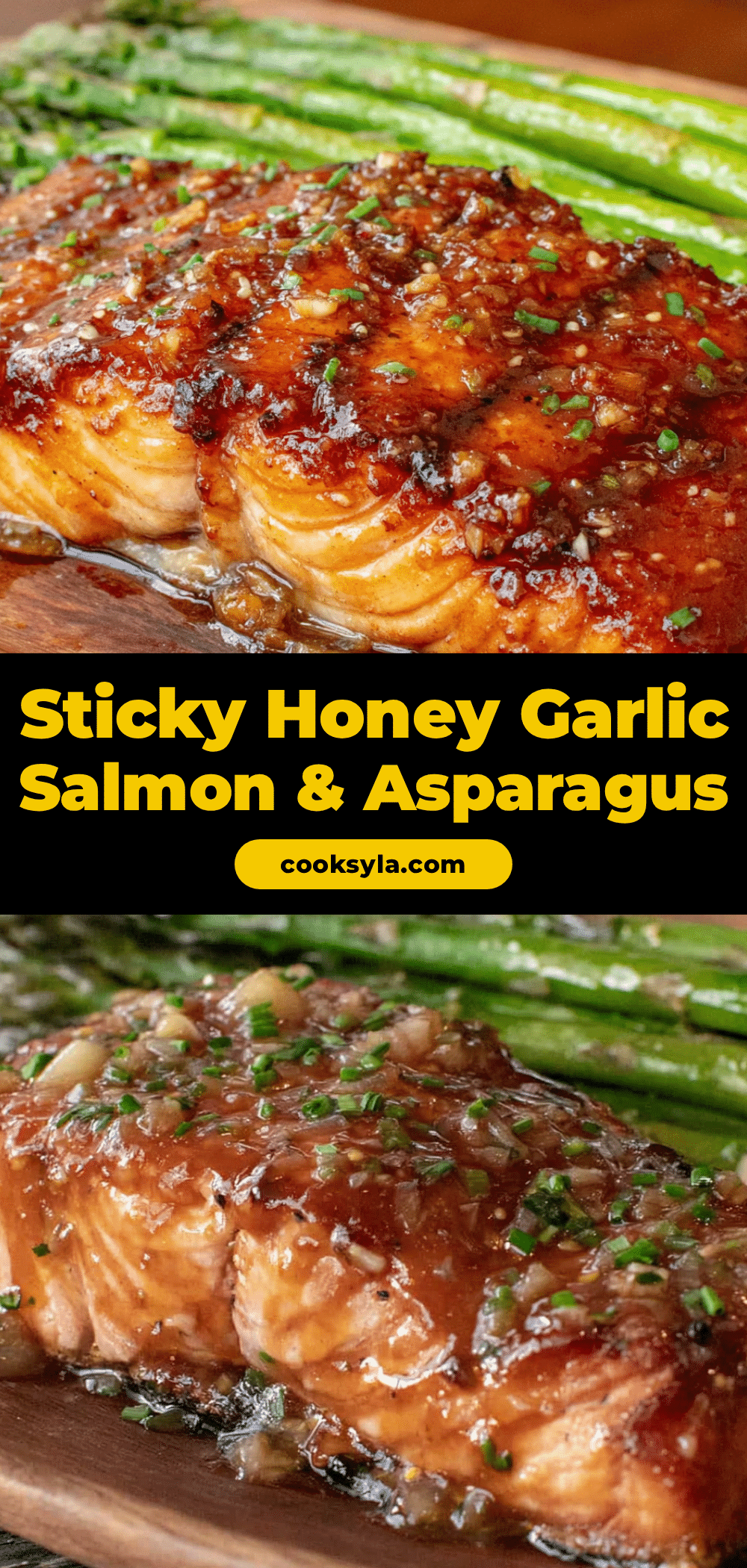
Easy Sticky Honey Garlic Baked Salmon with Asparagus
A quick and easy weeknight dinner featuring sticky, caramelized honey garlic salmon and tender roasted asparagus, all baked on a single sheet pan for minimal cleanup.
- Prep Time: 10 minutes
- Cook Time: 15 minutes
- Total Time: 25 minutes
- Yield: 4 servings 1x
- Category: Main Course
- Cuisine: American
Ingredients
- 4 salmon fillets (about 6 ounces each)
- 1/3 cup honey
- 1/4 cup soy sauce
- 4 cloves garlic, minced
- 2 tablespoons olive oil, plus more for drizzling
- 1 pound fresh asparagus, woody ends trimmed
- Salt and black pepper to taste
- 1 tablespoon sesame seeds (optional, for garnish)
- 2 green onions, sliced (optional, for garnish)
Instructions
- Preheat your oven to 400°F (200°C).
- Line a sheet pan with parchment paper or aluminum foil.
- In a small bowl, whisk together honey, soy sauce, minced garlic, and olive oil until smooth.
- Trim the woody ends from the asparagus by bending each spear until it snaps naturally.
- Arrange the asparagus in a single layer on one side of the sheet pan. Drizzle with olive oil and season with salt and pepper; toss to coat.
- Place the salmon fillets skin-side down on the other side of the pan, leaving space between each fillet.
- Spoon the glaze evenly over the salmon fillets, allowing some to drip onto the asparagus.
- Bake for 12-15 minutes, until the salmon is opaque and flakes easily with a fork (internal temperature of 125°F to 130°F).
- Optional: Broil for 1-2 minutes for extra caramelization, watching closely to prevent burning.
- Let the salmon rest for 2-3 minutes before serving.
- Garnish with sesame seeds and sliced green onions if desired.
Notes
Pat salmon dry before glazing to help the glaze stick. Do not over-marinate; 5-10 minutes is plenty. For even cooking, let salmon sit at room temperature for 10-15 minutes before baking. If asparagus is thin, reduce roasting time by a few minutes. Leftover glaze can be drizzled over rice or quinoa.
Nutrition
- Serving Size: 1 salmon fillet with
- Calories: 435
- Sugar: 24
- Sodium: 680
- Fat: 18
- Saturated Fat: 3
- Carbohydrates: 28
- Fiber: 3
- Protein: 35
Keywords: honey garlic salmon, baked salmon, sheet pan salmon, sticky salmon, asparagus, easy weeknight dinner, gluten-free option