Love this? Save it for later!
Share the inspiration with your friends
I was at the farmers’ market last November, wrestling with a bag of apples that kept trying to escape my arms, when the woman at the next stall caught my eye. She was maybe seventy, with flour dusted on her apron and the calmest hands I’d ever seen. She watched me fumble for a second, then said, “That turkey of yours—it always comes out dry, doesn’t it?” I wanted to be offended, but honestly, she wasn’t wrong. Every year I’d promised myself this would be the one, and every year I’d ended up with something that needed a swimming pool of gravy to be edible. She reached into her basket and handed me a lump of butter wrapped in brown paper. “Mix this with some herbs from your garden,” she said. “Rub it under the skin. Don’t skip the salt.” That was it. No big speech, no formal lesson. Just a neighbor who saw me struggling and decided to help. I walked home with apples, a mysterious butter packet, and a feeling that maybe this Thanksgiving would be different. And you know what? It was. This herb butter roasted turkey changed everything—not just for me, but for every family dinner since. Maybe you’ve been there, staring at a golden bird and hoping for the best. Let me tell you, this recipe is the one that finally delivers.
Why You’ll Love This Recipe
I’ve tested this herb butter roasted turkey more times than I can count—through trial and error, through one particularly stressful Christmas where the oven thermometer broke, and through a dozen happy Thanksgivings where guests went back for thirds. This isn’t just another turkey recipe. It’s the one I trust when the whole family is counting on me.
- Budget-Friendly Feast: Turkey is one of the most affordable ways to feed a crowd. A single bird stretches to feed 10-12 people with leftovers for days. No need for expensive cuts of meat.
- Simple Ingredients: Butter, fresh herbs, garlic, salt, and pepper. That’s it. No fancy grocery trips required. You probably have most of these in your kitchen right now.
- Picky Eater Approved: The herb butter keeps the meat incredibly moist and flavorful, but the flavor isn’t overwhelming. Kids and adults alike love it. My nephew, who usually pushes food around his plate, asked for seconds last year.
- Leftovers That Reheat Beautifully: This is huge for a family on a budget. The meat stays tender even after a few days in the fridge. Sandwiches, soups, casseroles—you’ll actually look forward to the leftovers.
- Stress-Free Method: Most of the work happens the night before. On the big day, you just pop it in the oven and let it do its thing. That means more time with your family and less time panicking in the kitchen.
What makes this recipe different from the rest? It’s the technique of getting that herb butter under the skin. Most people just slather butter on top, but that’s not enough. You need it directly against the breast meat to keep it from drying out. It’s a small step that makes a huge difference. And honestly, once you try it, you’ll never go back.
What Ingredients You Will Need
This recipe uses simple, wholesome ingredients to deliver big flavor without the fuss. Most of these are pantry staples or easy to find at any grocery store. Here’s what you’ll need:
For the Herb Butter
- 1 cup (2 sticks) unsalted butter, softened (I prefer Kerrygold for its rich flavor, but any good-quality butter works)
- 4 cloves garlic, minced
- 2 tablespoons fresh rosemary, finely chopped
- 2 tablespoons fresh thyme leaves
- 2 tablespoons fresh sage, finely chopped
- 1 tablespoon fresh parsley, chopped
- 1 teaspoon salt (use kosher salt for best results)
- 1/2 teaspoon black pepper
- Zest of 1 lemon (adds brightness and cuts through the richness)
For the Turkey
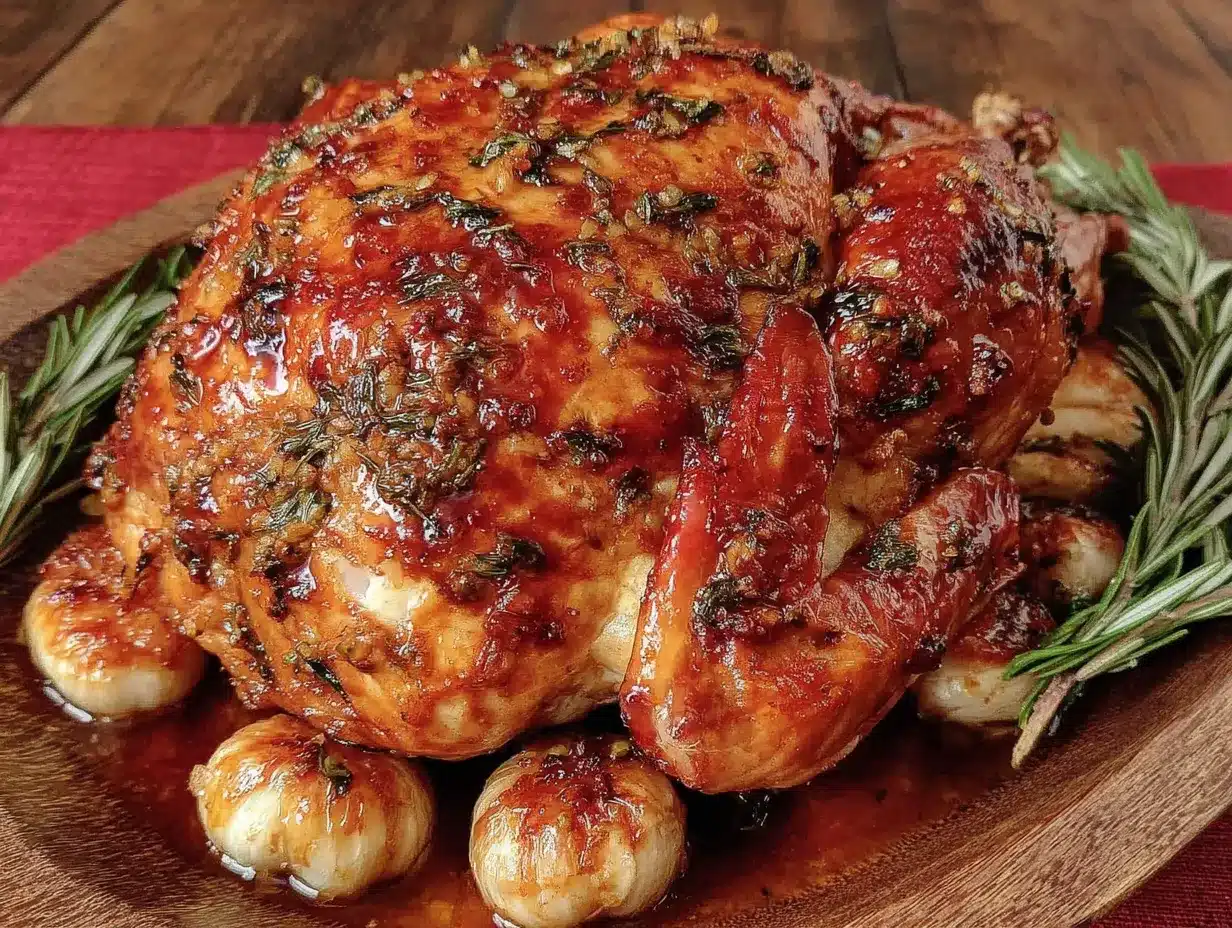
- 1 whole turkey (12-14 pounds), thawed if frozen (look for a turkey labeled “natural” or “minimally processed” for best texture)
- 1 large onion, quartered
- 2 carrots, cut into large chunks
- 2 celery stalks, cut into large chunks
- 1 lemon, halved
- 4 sprigs fresh rosemary
- 4 sprigs fresh thyme
- 1 cup low-sodium chicken broth (for the bottom of the pan)
- 2 tablespoons olive oil
- Salt and pepper for seasoning the outside
Ingredient Selection Tips: For the herbs, fresh is non-negotiable here. Dried herbs won’t give you the same flavor punch. If you’re on a tight budget, grow your own rosemary and thyme—they’re practically impossible to kill and save you money in the long run. For the butter, let it sit out for about an hour before you start. It needs to be soft enough to spread easily, not melted. Melted butter will just run off the turkey instead of staying under the skin where it belongs.
Substitution Guidance: If someone in your family is dairy-sensitive, you can use a high-quality vegan butter stick. Just make sure it’s the stick form, not the spreadable tub kind. The texture matters. For a gluten-free option, this recipe is naturally gluten-free as long as you check your broth label. Some broths contain wheat, so read carefully.
Equipment Needed
You don’t need a professional kitchen to pull this off. Here’s what you’ll actually use:
- Roasting Pan: A sturdy metal pan with a rack is ideal. If you don’t have one, a disposable aluminum pan works fine—just double it up so it doesn’t buckle under the weight.
- Meat Thermometer: This is non-negotiable. A $10 instant-read thermometer is better than guessing and ending up with dry meat. I’ve used the same ThermoPro for years and it’s never let me down.
- Kitchen Twine: For trussing the legs. If you don’t have twine, you can skip this step, but it helps the turkey cook evenly.
- Mixing Bowl: For combining the herb butter.
- Chef’s Knife and Cutting Board: For chopping herbs and vegetables.
- Pastry Brush or Spoon: For basting if you choose to do so.
- Aluminum Foil: For tenting the turkey if it browns too quickly.
- Basting Bulb (optional): I’ve gone back and forth on basting. Honestly, with this herb butter method, you don’t really need it, but if it makes you feel better, go ahead.
Budget-Friendly Tip: Don’t run out and buy a fancy roasting pan. A rimmed baking sheet with a wire cooling rack set inside works perfectly. I did this for years before I finally invested in a proper pan.
Preparation Method
This method is broken down into simple steps. Take your time, especially with step 3—it’s the most important part.
Step 1: Prep the Turkey (Night Before)
Remove the turkey from its packaging. Take out the giblets and neck (save them for gravy if you’re ambitious). Pat the turkey completely dry with paper towels—inside and out. Moisture is the enemy of crispy skin. Place the turkey on a rimmed baking sheet and refrigerate uncovered overnight. This dries out the skin, which helps it get golden and crispy during roasting. I know it sounds weird, but trust me on this.
Step 2: Make the Herb Butter (30 minutes before roasting)
In a medium bowl, combine the softened butter, minced garlic, chopped rosemary, thyme, sage, parsley, salt, pepper, and lemon zest. Mix until everything is evenly distributed. Taste a tiny bit (yes, raw butter—it’s fine) and adjust the salt if needed. Set aside at room temperature.
Step 3: Apply the Herb Butter (15 minutes)
This is where the magic happens. Using your fingers, gently loosen the skin of the turkey breast. Start at the neck cavity and work your way down, being careful not to tear the skin. You want to create a pocket between the skin and the meat. Take about two-thirds of the herb butter and push it under the skin, spreading it evenly over both breasts. Massage the skin from the outside to distribute the butter. Use the remaining butter to rub all over the outside of the turkey—legs, thighs, wings, everything. Don’t forget the cavity.
Step 4: Season and Stuff (10 minutes)
Season the outside of the turkey generously with salt and pepper. Stuff the cavity with the quartered onion, carrot chunks, celery, lemon halves, and fresh herb sprigs. These aromatics will flavor the meat from the inside out. Tuck the wing tips under the turkey (this prevents them from burning). Tie the legs together with kitchen twine.
Step 5: Set Up the Pan (5 minutes)
Place the turkey breast-side up on the rack in your roasting pan. Pour the chicken broth into the bottom of the pan—not over the turkey. The broth will create steam and keep the bottom of the pan from burning.
Step 6: Roast (2.5 to 3.5 hours)
Preheat your oven to 425°F. Place the turkey on the lowest oven rack and roast at 425°F for 30 minutes. This high heat kick-starts browning. Then, without opening the oven, reduce the temperature to 350°F and continue roasting. The total cooking time will be about 13-15 minutes per pound for an unstuffed turkey. For a 12-pound bird, that’s roughly 2.5 to 3 hours.
Sensory Cue: After the first 30 minutes, the skin should be starting to turn golden. By the time it’s done, the skin will be deep amber and crispy. The aroma will fill your entire house—that combination of butter, herbs, and roasting meat is pure comfort.
Step 7: Check for Doneness (5 minutes)
About 30 minutes before the estimated end time, start checking the temperature. Insert your meat thermometer into the thickest part of the thigh, being careful not to hit bone. You’re looking for 165°F. Also check the breast—it should be at least 160°F. If the skin is browning too quickly, tent the turkey loosely with aluminum foil.
Step 8: Rest (30-45 minutes)
This is the hardest part—waiting. Once the turkey hits 165°F, remove it from the oven and transfer it to a cutting board. Let it rest uncovered for at least 30 minutes. Do not skip this step. The resting period allows the juices to redistribute throughout the meat. If you cut into it too soon, all those beautiful juices will run out onto the cutting board instead of staying in the meat. I learned this the hard way one year and ended up with dry turkey despite all my efforts.
Cooking Tips & Techniques
I’ve made every mistake in the book so you don’t have to. Here’s what I’ve learned:
Don’t Skip the Dry Brine (Overnight Rest): That step where you leave the turkey uncovered in the fridge overnight? It’s not optional. The dry air helps the skin dry out, which means it will crisp up beautifully in the oven. I forgot to do this one year and ended up with pale, rubbery skin. Never again.
Use a Meat Thermometer, Not a Timer: Turkey cooking times are estimates at best. Every oven runs differently, and every turkey is a different shape. A thermometer takes the guesswork out. I ruined a Thanksgiving bird early in my cooking career because I trusted the timer. Now I only trust the thermometer.
Let the Butter Come to Room Temperature: Cold butter won’t spread under the skin. It will just sit in clumps. Take it out of the fridge an hour before you start. If you forget, you can microwave it for 10 seconds at a time, but be careful not to melt it.
Basting Is Overrated: I used to baste every 30 minutes like a maniac. Opening the oven door that often actually makes the turkey cook less evenly and releases all the steam. With the herb butter under the skin, the meat stays moist without all that fuss. If you really want to baste, do it once, halfway through, and be quick about it.
Multitasking Strategy: While the turkey is roasting, make your side dishes. The oven is occupied, but the stovetop is free. Mashed potatoes, green beans, and gravy can all be made while the bird cooks. Just save the stuffing for after the turkey comes out—you’ll need oven space for it anyway.
Variations & Adaptations
This recipe is flexible. Here are some ways to make it your own:
Citrus Herb Butter
Add the zest of one orange along with the lemon zest. The orange adds a subtle sweetness that pairs beautifully with the herbs. I tried this one year when I had an extra orange lying around, and it was a hit.
Spicy Smoked Turkey
Add 1 teaspoon of smoked paprika and 1/2 teaspoon of cayenne pepper to the herb butter. This gives the turkey a subtle smoky heat without overwhelming the other flavors. My brother-in-law, who loves anything spicy, requests this version every year.
Dairy-Free Version
Use a high-quality vegan butter stick instead of regular butter. The texture and flavor are surprisingly close. Just make sure it’s softened before mixing with the herbs. I’ve tested this with several brands, and the stick form works best—tub margarine is too soft.
Herb Swap
Don’t have fresh rosemary? Use tarragon or marjoram instead. Don’t like sage? Leave it out and double up on thyme. The beauty of this recipe is that it’s forgiving. I once made it with only parsley and thyme because that’s all my garden had, and it was still delicious.
Serving & Storage Suggestions
Serving Temperature: Serve the turkey warm, not piping hot. After resting, the internal temperature will drop to about 140-145°F, which is perfect for eating. Carve the turkey at the table for a beautiful presentation.
What to Serve With It: This turkey pairs beautifully with classic sides. Mashed potatoes, green bean casserole, cranberry sauce, and dinner rolls are all perfect. The herb butter drippings are amazing spooned over mashed potatoes—don’t waste them.
Storage Instructions: Remove all meat from the bones within two hours of cooking. Store in airtight containers in the refrigerator for up to 4 days. For longer storage, freeze the meat in freezer-safe bags for up to 3 months. Label the bags with the date so you don’t forget.
Reheating Methods: The best way to reheat turkey is in a covered dish with a splash of broth or water at 300°F until warmed through. This prevents it from drying out. Microwaving works in a pinch, but it tends to make the meat rubbery. For leftover sandwiches, I actually prefer the turkey cold—it’s more flavorful that way.
Flavor Development: The herb flavor actually intensifies after a day in the fridge. That’s why turkey sandwiches on day two are often better than the original meal. The herbs have had time to meld with the meat.
Nutritional Information & Benefits
Here’s an estimated breakdown per 4-ounce serving of white meat (without skin):
- Calories: 190
- Protein: 29g
- Fat: 8g (mostly from the butter)
- Carbohydrates: 0g
- Sodium: 350mg (varies with salt added)
Health Benefits: Turkey is an excellent source of lean protein, which is essential for muscle repair and keeping you full. It’s also rich in B vitamins, particularly B6 and B12, which support energy metabolism. The herbs in this recipe—rosemary, thyme, and sage—are packed with antioxidants that help fight inflammation. Using butter instead of processed oils means you’re getting natural fats, which are better for your body than hydrogenated alternatives.
Dietary Considerations: This recipe is naturally gluten-free and low-carb. It’s also keto-friendly if you skip the stuffing and focus on the meat and vegetables. If you’re watching your sodium, use unsalted butter and reduce the added salt. The herbs provide plenty of flavor without the salt.
Personal Wellness Perspective: I love that this recipe allows my family to enjoy a special holiday meal without feeling guilty. The protein keeps everyone satisfied, and the herbs add nutritional value. It’s comfort food that actually supports your health.
Frequently Asked Questions
Can I use dried herbs instead of fresh?
You can, but I don’t recommend it. Dried herbs are more concentrated and less flavorful in this application. Fresh herbs provide a brightness that dried herbs just can’t match. If you’re in a pinch, use half the amount of dried herbs, but fresh is really the way to go.
How do I know when the turkey is done without a thermometer?
Honestly, I’d strongly recommend getting a thermometer. It’s the only reliable way to know. But if you absolutely don’t have one, check for these signs: the juices run clear when you pierce the thigh, the legs move easily in their sockets, and the internal temperature feels very hot when you insert a skewer. But please, just get a thermometer. They’re cheap and worth every penny.
Can I stuff the turkey?
You can, but I prefer not to. Stuffing inside the turkey takes longer to cook and can be a food safety risk if not handled properly. I recommend baking your stuffing separately in a casserole dish. It comes out crispier and safer, and the turkey cooks faster without it.
My turkey is browning too quickly. What should I do?
If the skin is getting too dark before the inside is cooked, tent the turkey loosely with aluminum foil. This will slow down the browning while the inside continues to cook. Don’t seal it tight—just lay the foil over the top like a loose tent.
How do I get crispy skin if I used the overnight dry brine?
The overnight rest in the fridge is exactly what gives you crispy skin. The dry air removes moisture from the skin, which allows it to brown and crisp in the oven. Just make sure you pat the turkey dry again before applying the butter if it looks wet. And don’t cover it—the whole point is to let air circulate.
Conclusion
This herb butter roasted turkey has become the centerpiece of every holiday meal in my house. It’s the recipe that finally made me stop worrying about dry, disappointing turkey and start looking forward to the big feast. The best part? It’s simple enough for a beginner but impressive enough to fool everyone into thinking you spent all day on it. The herb butter does all the heavy lifting—it keeps the meat moist, adds incredible flavor, and makes the skin perfectly crispy. Whether you’re feeding your immediate family or hosting a crowd, this recipe delivers. I hope you try it and make it your own. Maybe add a little extra garlic, or swap in your favorite herbs. That’s the beauty of cooking—you can always adjust. Let me know how it turns out in the comments. Did your family go back for seconds? Did you discover a new favorite herb combination? I’d love to hear about it. Happy cooking, and here’s to a holiday feast that actually tastes as good as it looks.
Pin This Recipe!
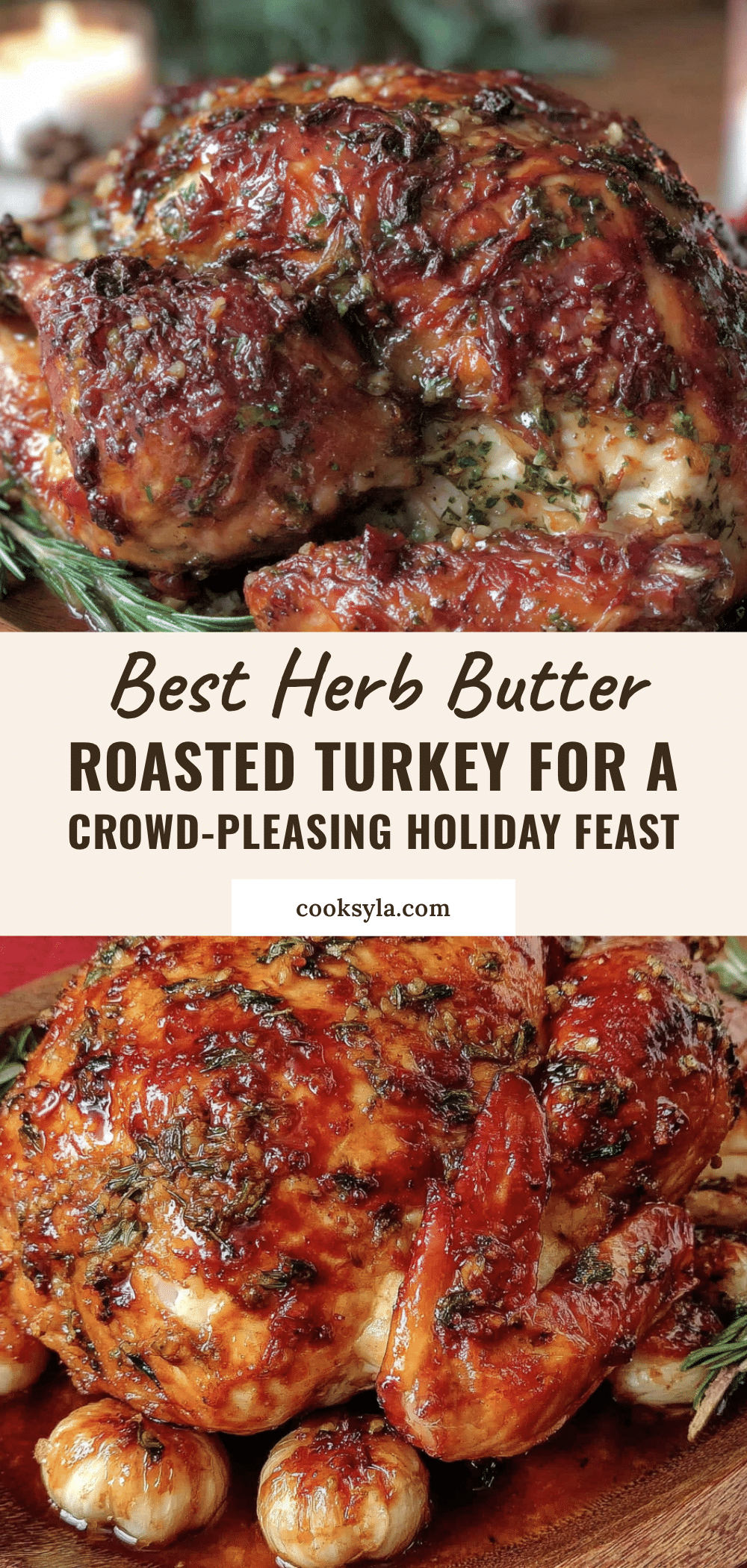
Best Herb Butter Roasted Turkey – Easy Holiday Feast Recipe
This herb butter roasted turkey is the ultimate holiday centerpiece, delivering incredibly moist, flavorful meat with perfectly crispy skin. A simple technique of rubbing herb butter under the skin ensures a stress-free, show-stopping feast every time.
- Prep Time: 30 minutes
- Cook Time: 2 hours 30 minutes
- Total Time: 3 hours 45 minutes
- Yield: 10-12 servings 1x
- Category: Main Course
- Cuisine: American
Ingredients
- 1 cup (2 sticks) unsalted butter, softened
- 4 cloves garlic, minced
- 2 tablespoons fresh rosemary, finely chopped
- 2 tablespoons fresh thyme leaves
- 2 tablespoons fresh sage, finely chopped
- 1 tablespoon fresh parsley, chopped
- 1 teaspoon kosher salt
- 1/2 teaspoon black pepper
- Zest of 1 lemon
- 1 whole turkey (12–14 pounds), thawed if frozen
- 1 large onion, quartered
- 2 carrots, cut into large chunks
- 2 celery stalks, cut into large chunks
- 1 lemon, halved
- 4 sprigs fresh rosemary
- 4 sprigs fresh thyme
- 1 cup low-sodium chicken broth
- 2 tablespoons olive oil
- Salt and pepper for seasoning the outside
Instructions
- Prep the turkey (night before): Remove turkey from packaging, remove giblets and neck, pat completely dry with paper towels. Place on a rimmed baking sheet and refrigerate uncovered overnight.
- Make the herb butter (30 minutes before roasting): In a medium bowl, combine softened butter, minced garlic, chopped rosemary, thyme, sage, parsley, salt, pepper, and lemon zest. Mix until evenly distributed. Set aside at room temperature.
- Apply the herb butter (15 minutes): Using your fingers, gently loosen the skin of the turkey breast starting at the neck cavity. Push about two-thirds of the herb butter under the skin, spreading evenly over both breasts. Massage from the outside. Rub remaining butter all over the outside of the turkey.
- Season and stuff (10 minutes): Season outside generously with salt and pepper. Stuff cavity with quartered onion, carrot chunks, celery, lemon halves, and fresh herb sprigs. Tuck wing tips under turkey. Tie legs together with kitchen twine.
- Set up the pan (5 minutes): Place turkey breast-side up on rack in roasting pan. Pour chicken broth into bottom of pan (not over turkey).
- Roast (2.5 to 3.5 hours): Preheat oven to 425°F. Roast at 425°F for 30 minutes. Reduce temperature to 350°F without opening oven. Continue roasting until internal temperature reaches 165°F in thickest part of thigh (about 13-15 minutes per pound).
- Check for doneness (5 minutes): About 30 minutes before estimated end time, insert meat thermometer into thickest part of thigh (avoiding bone). Target 165°F. Breast should be at least 160°F. Tent with foil if browning too quickly.
- Rest (30-45 minutes): Remove turkey from oven, transfer to cutting board. Let rest uncovered for at least 30 minutes before carving.
Notes
For best results, dry the turkey skin overnight in the refrigerator. Use fresh herbs for maximum flavor. Let butter come to room temperature before mixing. Basting is optional; the herb butter keeps the meat moist. Resting is essential for juicy meat.
Nutrition
- Serving Size: 4 ounces white meat
- Calories: 190
- Sodium: 350
- Fat: 8
- Saturated Fat: 4
- Protein: 29
Keywords: herb butter roasted turkey, holiday turkey recipe, easy turkey, moist turkey, crispy skin turkey, Thanksgiving turkey, Christmas turkey