Love this? Save it for later!
Share the inspiration with your friends
I was standing in line at the hardware store, of all places, holding a bag of soil and a new trowel, when the woman behind me—a retired schoolteacher named Margie with dirt under her fingernails—started talking about salmon. Not the kind of conversation you expect while waiting to pay for gardening supplies, honestly. But there she was, telling me about this maple Dijon glazed salmon she’d made the night before, describing how the glaze caramelized under the broiler and how her husband, who “hates fish,” had asked for seconds. I mean, I’ve made a lot of salmon in my day. I’ve tested honey garlic versions, lemon pepper crusts, and even a weird but tasty miso situation that left my kitchen smelling like a ramen shop for two days. But something about the way Margie described this particular combo—the sweetness of real maple syrup cutting through the sharpness of Dijon mustard—stuck with me. I scribbled the basic idea on the back of my receipt, right next to the price of mulch. Let me tell you, I almost forgot about it. But then spring hit, with its early evening light and that restless energy that makes you want to cook something vibrant. I dug that receipt out of my coat pocket, and honestly? This maple Dijon glazed salmon has become my go-to spring dinner. It’s the kind of recipe that makes you close your eyes after the first bite, wondering why you didn’t try it sooner. Maybe you’ve been there—stuck in a dinner rut, making the same three things on rotation. This is the recipe that breaks the cycle.
Why You’ll Love This Recipe
Let me be real with you—I’ve tested this maple Dijon glazed salmon at least a dozen times to get it just right. I wanted a glaze that didn’t just sit on top of the fish but actually clung to it, creating that sticky-sweet crust that makes every bite feel special. After ruining a few fillets (and one very sad baking sheet), I landed on the perfect balance. Here’s why this recipe works:
- Ready in 20 Minutes : From prep to plate, this comes together faster than you can decide what to watch on Netflix. Perfect for those spring evenings when you’d rather be outside than stuck in the kitchen.
- Pantry-Friendly Ingredients : You probably already have maple syrup and Dijon mustard in your fridge. No fancy grocery runs required—just simple, honest ingredients that do the heavy lifting.
- Perfect for Spring Entertaining : Whether it’s a casual Easter brunch, a Mother’s Day dinner, or just a Tuesday that feels like it deserves something special, this salmon looks impressive without the stress.
- A Total Crowd-Pleaser : Even people who claim they “don’t like fish” have gone back for seconds. The sweet-savory glaze is that good.
- Unbelievably Delicious : The texture—crispy edges, tender flaky center, that glossy caramelized top—is next-level comfort food that somehow feels light and fresh at the same time.
What makes this different from every other glazed salmon recipe out there is the technique. Instead of just brushing the glaze on and hoping for the best, I do a two-step method: a quick sear to get that crispy skin, then a broil to caramelize the glaze into something magical. It’s not complicated, but it makes all the difference. This isn’t just another salmon recipe—it’s the one you’ll keep coming back to, spring after spring.
What Ingredients You Will Need
This maple Dijon glazed salmon uses simple, wholesome ingredients that come together to create something genuinely special. Most of these are pantry staples, which means you’re probably only a grocery run away from making this tonight.
- Salmon Fillets (4 fillets, about 6 ounces each) : Look for center-cut fillets with the skin on—it helps keep the fish moist and gets beautifully crispy. I prefer wild-caught salmon when it’s in season (spring is perfect for it), but farm-raised works great too. If you can, ask your fishmonger for fillets that are roughly the same thickness so they cook evenly.
- Pure Maple Syrup (¼ cup) : Please, for the love of good food, use real maple syrup—not pancake syrup. The flavor is deeper, less cloying, and it caramelizes much better under the broiler. I like Grade A Dark Amber for its robust taste, but any pure maple syrup will work. (I learned this the hard way after a sad, watery glaze situation with the fake stuff.)
- Dijon Mustard (2 tablespoons) : This is the backbone of the glaze. Dijon adds that sharp, tangy kick that balances the sweetness of the maple. I recommend Maille or Grey Poupon for consistent results, but any good-quality Dijon will do. Don’t use yellow mustard here—it’s not the same vibe.
- Whole Grain Mustard (1 tablespoon) : This is my little secret. It adds texture and little pops of mustard seed that make every bite interesting. If you don’t have it, just use an extra tablespoon of regular Dijon.
- Olive Oil (2 tablespoons, plus more for the pan) : Use a good extra virgin olive oil for the marinade and a neutral oil like avocado or canola for searing. The olive oil in the glaze helps it emulsify and keeps the salmon from drying out.
- Garlic (3 cloves, minced) : Fresh garlic is non-negotiable here. It adds a savory depth that keeps the glaze from being one-note sweet. I’ve tried garlic powder in a pinch, and it’s just not the same—trust me on this one.
- Soy Sauce (1 tablespoon) : This adds umami and a touch of saltiness that makes the whole thing sing. Use low-sodium if you’re watching your salt intake. Tamari or coconut aminos work for gluten-free options.
- Salt and Black Pepper : To taste. I use flaky sea salt for finishing and regular kosher salt for seasoning the fish before cooking.
- Fresh Thyme (4-5 sprigs) : Optional but lovely. It adds an earthy, slightly floral note that pairs beautifully with the maple and mustard. You can use dried thyme in a pinch (about ½ teaspoon), but fresh is better.
- Lemon (1, for serving) : A squeeze of fresh lemon juice right before serving brightens everything up and cuts through the richness of the glaze.
For the optional garnish: Fresh parsley or chives, chopped. It adds a pop of color and freshness that makes the dish look restaurant-worthy.
Equipment Needed
You don’t need a fancy kitchen to make this maple Dijon glazed salmon. Here’s what you’ll need:
- Large Oven-Safe Skillet : A 12-inch cast iron skillet is my go-to—it heats evenly, gets screaming hot for a good sear, and goes straight from stovetop to broiler. If you don’t have cast iron, any oven-safe stainless steel or nonstick pan will work. Just make sure the handle can handle high heat.
- Small Mixing Bowl : For whisking together the glaze. Nothing fancy—any bowl you’ve got will do.
- Whisk or Fork : To combine the glaze ingredients. A fork works fine if your whisk is in the dishwasher.
- Fish Spatula : This thin, slotted spatula is perfect for flipping delicate fish fillets without breaking them. If you don’t have one, a regular thin spatula will work—just be gentle.
- Instant-Read Thermometer : Honestly, this is a game-changer for cooking fish. Salmon is perfectly cooked at 125°F to 130°F in the thickest part. No more guessing or overcooking.
- Baking Sheet or Plate : For resting the salmon after cooking. Line it with paper towels to absorb any excess oil.
- Pastry Brush : For brushing the glaze onto the salmon. A spoon works too, but a brush gives you more even coverage.
If you’re on a budget, skip the fish spatula and instant-read thermometer—you can absolutely make this work with what you have. I’ve made this recipe in a tiny apartment kitchen with a warped nonstick pan and a butter knife, and it still turned out amazing.
Preparation Method
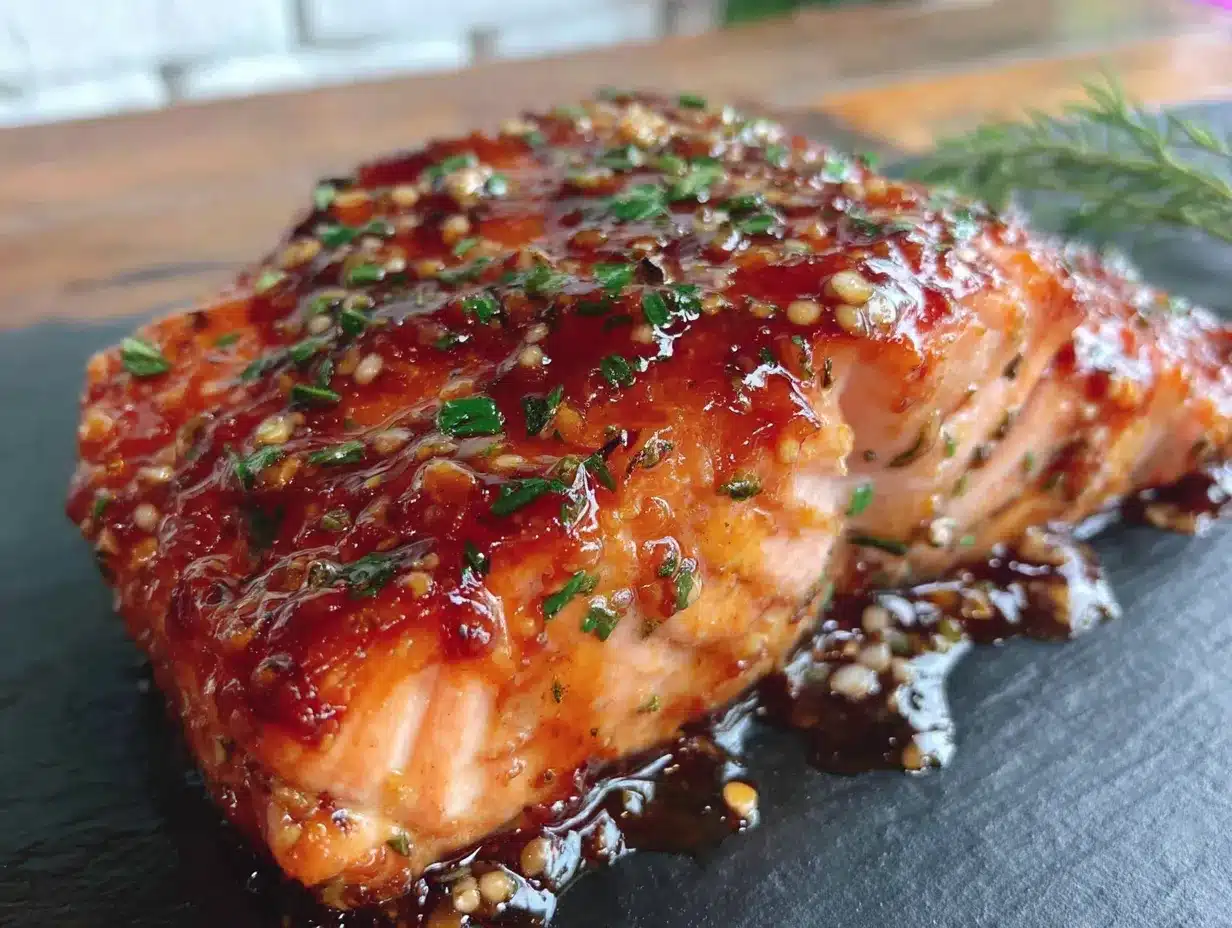
- Prep the Salmon (5 minutes) : Take your salmon fillets out of the fridge about 15 minutes before cooking to take the chill off. Pat them dry with paper towels—this is crucial for getting that crispy skin. Season both sides generously with salt and pepper. Don’t be shy with the salt; it helps the flavor penetrate the fish.
- Make the Glaze (5 minutes) : In a small bowl, whisk together ¼ cup maple syrup, 2 tablespoons Dijon mustard, 1 tablespoon whole grain mustard, 2 tablespoons olive oil, 3 minced garlic cloves, and 1 tablespoon soy sauce. Whisk until smooth and well combined. Taste it—it should be sweet, tangy, and a little savory. If it tastes too sharp, add a tiny splash more maple syrup. If it’s too sweet, add a squeeze of lemon.
- Preheat Your Broiler (2 minutes) : Move your oven rack to the top position, about 4-6 inches from the broiler element. Turn the broiler to high and let it preheat while you cook the salmon on the stovetop.
- Sear the Salmon (4-5 minutes) : Heat 1 tablespoon of olive oil in your oven-safe skillet over medium-high heat. When the oil shimmers (you’ll see tiny ripples), carefully place the salmon fillets skin-side down. Press gently with a spatula to ensure even contact with the pan. Cook without moving for 3-4 minutes, until the skin is golden brown and crispy. The fish should release easily from the pan—if it sticks, it’s not ready yet.
- Flip and Glaze (2 minutes) : Carefully flip the fillets using your fish spatula. Cook for 1 minute on the flesh side, then use your pastry brush to generously coat the tops and sides of the fillets with the maple Dijon glaze. Reserve about 2 tablespoons of glaze for later.
- Broil to Caramelize (3-5 minutes) : Transfer the skillet to the preheated broiler. Broil for 3-5 minutes, watching closely—the glaze can go from perfectly caramelized to burnt in seconds. You’re looking for bubbly, golden-brown spots on the surface of the glaze. The internal temperature should reach 125°F to 130°F in the thickest part of the fillet.
- Rest and Finish (2 minutes) : Remove the skillet from the oven (use oven mitts—that handle is hot!). Transfer the salmon to a plate or baking sheet and let it rest for 2 minutes. This allows the juices to redistribute and keeps the fish tender. While it rests, brush the reserved glaze over the top for an extra glossy finish.
- Serve : Squeeze fresh lemon juice over the salmon and garnish with chopped parsley or chives if you’re feeling fancy. Serve immediately with your favorite spring sides—I love it with roasted asparagus and a simple arugula salad.
Pro tip: If your salmon fillets are different thicknesses, the thinner ones will cook faster. Check them after 3 minutes under the broiler and remove them individually if needed. I’ve definitely ended up with one perfect fillet and one dry one more times than I’d like to admit.
Cooking Tips & Techniques
After making this maple Dijon glazed salmon more times than I can count (and messing it up plenty along the way), I’ve picked up a few tricks that make a real difference.
Pat your salmon dry. This is the most important step, and I mean it. Wet salmon won’t get that beautiful golden crust. Use paper towels and really press them into the skin. I once skipped this step because I was in a hurry, and the skin turned out soggy and sad. Never again.
Don’t overcrowd the pan. If you’re cooking more than four fillets, do it in batches. When the pan is too crowded, the temperature drops, and the salmon steams instead of searing. You want that sizzle when the fish hits the pan—that’s how you know it’s working.
Watch the broiler like a hawk. I cannot stress this enough. The glaze has sugar in it, and sugar burns fast. Set a timer for 3 minutes, then check. If it needs more time, check every 30 seconds after that. I’ve had to scrape burnt glaze off my pan before, and it’s not fun.
Use an instant-read thermometer. This was a game-changer for me. Salmon is perfectly cooked at 125°F to 130°F for medium, which is how most people prefer it. At 140°F, it starts to get dry and flaky in a bad way. Stick the thermometer into the thickest part of the fillet, angling it toward the center.
Let the salmon rest. I know you’re hungry, but those 2 minutes of rest make a huge difference. The carryover cooking will bring the temperature up another 5 degrees, and the juices will settle so the fish stays moist and tender.
Double the glaze. Seriously. Make extra and keep it in the fridge. It’s amazing on chicken, pork chops, or even roasted vegetables. I’ve been known to toss it on roasted Brussels sprouts, and let me tell you—it’s dangerous.
Variations & Adaptations
This recipe is wonderfully flexible, and I’ve tried quite a few variations over the years. Here are some of my favorites:
Spicy Maple Dijon Salmon : Add ½ teaspoon of red pepper flakes or a teaspoon of sriracha to the glaze. The heat cuts through the sweetness beautifully and adds a nice kick. I made this version for a Super Bowl party, and it disappeared in minutes.
Herb-Crusted Version : After brushing on the glaze, press a mixture of fresh chopped dill, parsley, and chives onto the top of the fillets before broiling. The herbs get slightly crispy under the broiler and add a fresh, garden-y flavor that’s perfect for spring.
Lemon-Thyme Variation : Add the zest of one lemon and 4-5 sprigs of fresh thyme to the glaze. The citrus brightens everything up, and the thyme adds an earthy note that pairs beautifully with the maple. This is my go-to for Easter dinner.
Low-Carb/Keto Adaptation : This recipe is already pretty low in carbs (about 8g per serving from the maple syrup), but if you’re strictly keto, you can substitute the maple syrup with a sugar-free maple syrup alternative. Just be aware that the caramelization won’t be quite as dramatic.
Air Fryer Method : Preheat your air fryer to 400°F. Brush the salmon with the glaze and cook for 8-10 minutes, depending on thickness. No need to flip. The glaze gets sticky and caramelized without the mess of broiling. I tried this on a whim during a heatwave when I didn’t want to turn on the oven, and it worked surprisingly well.
Grilled Version : This is a summer favorite. Heat your grill to medium-high. Brush the salmon with the glaze and grill skin-side down for 4-5 minutes. Flip carefully, brush with more glaze, and cook for another 3-4 minutes. The smokiness from the grill adds another dimension to the sweet-savory glaze.
Serving & Storage Suggestions
This maple Dijon glazed salmon is at its best served hot, straight from the broiler, but it’s pretty darn good at room temperature too—which makes it perfect for spring picnics or brunch buffets.
Serving Temperature : Serve immediately after resting. The glaze is at its most glorious when it’s still glossy and warm. If you’re serving a crowd, you can keep the salmon warm in a 200°F oven for up to 20 minutes, but the glaze will lose some of its crunch.
What to Serve With It : Spring is all about fresh, bright sides. I love this salmon with roasted asparagus (tossed in olive oil, salt, and pepper, roasted at 400°F for 12 minutes), a simple arugula salad with lemon vinaigrette, or creamy mashed potatoes to soak up the extra glaze. For a lighter option, try it over a bed of mixed greens with sliced radishes and a drizzle of the leftover glaze as dressing. If you’re looking for another spring-inspired dish, this creamy spring pea risotto would be a lovely companion.
Storage : Leftover salmon keeps in an airtight container in the refrigerator for up to 3 days. The glaze will soften, but the flavor is still fantastic. I’ve been known to flake cold leftover salmon over a salad for lunch the next day—it’s honestly one of my favorite ways to eat it.
Reheating : The best way to reheat is in a low oven (300°F) for about 10 minutes, or in a skillet over medium-low heat with a splash of water to rehydrate the glaze. Avoid the microwave—it makes the fish rubbery and the glaze sad. Trust me, I’ve tried.
Freezing : You can freeze cooked salmon for up to 2 months. Wrap each fillet individually in plastic wrap, then place them in a freezer bag. Thaw in the refrigerator overnight and reheat gently. The texture won’t be quite as perfect as fresh, but it’s still delicious for a quick weeknight dinner.
Flavor Development : Honestly, the flavors actually meld together even more after a day in the fridge. The maple and mustard mellow into each other, creating a deeper, more unified taste. Cold salmon flaked over a grain bowl with avocado and pickled onions? That’s a lunch worth looking forward to. For a heartier meal, try serving it alongside this roasted spring vegetable medley.
Nutritional Information & Benefits
This maple Dijon glazed salmon isn’t just delicious—it’s packed with nutrients that make it a smart choice for spring eating.
Estimated Nutritional Values (per serving, based on 4 servings):
- Calories: 380-420
- Protein: 35-40g
- Fat: 18-22g (mostly healthy omega-3s)
- Carbohydrates: 12-15g
- Fiber: 0g
- Sugar: 10-12g (from maple syrup)
- Sodium: 450-550mg
Health Benefits: Salmon is one of the best sources of omega-3 fatty acids, which support heart health, brain function, and reduce inflammation. It’s also packed with high-quality protein, B vitamins, and selenium. Maple syrup, while still sugar, contains antioxidants and minerals like zinc and manganese. The garlic and mustard add anti-inflammatory properties too.
Dietary Considerations: This recipe is naturally gluten-free (just use tamari instead of soy sauce), dairy-free, and low in carbs. It’s also a great option for those following a Mediterranean diet or a balanced, whole-foods approach to eating. If you’re watching your sodium, use low-sodium soy sauce and go easy on the added salt.
I love that this recipe feels indulgent—that sticky, caramelized glaze is pure comfort—but it’s actually pretty good for you. It’s the kind of meal that leaves you feeling satisfied and energized, not heavy and sluggish. Perfect for those spring evenings when you want something special but still want to wake up feeling good the next morning.
Conclusion
Honestly, this maple Dijon glazed salmon has become my spring dinner hero. It’s the recipe I turn to when I want to impress without the stress, when I want something that feels special but doesn’t require a culinary degree. The combination of sweet maple and sharp Dijon, the crispy skin, the caramelized glaze—it all comes together in a way that feels both familiar and surprising.
I hope you give this recipe a try, and I hope you make it your own. Maybe you’ll add extra garlic, or swap in honey for the maple, or serve it over a bed of spring greens with a lemony dressing. That’s the beauty of a good recipe—it’s a starting point, not a rulebook.
I’d love to hear how it turns out for you. Did you try a variation? Serve it with something unexpected? Burn the glaze and learn the same lesson I did? Drop a comment below and let me know—I read every single one, and your stories make my day. And if you snap a photo, tag me on social media—I’m always looking for inspiration from your kitchens.
Here’s to spring dinners that taste like sunshine and feel like a hug. Happy cooking, friends.
Frequently Asked Questions
Can I use frozen salmon for this recipe?
Yes, absolutely! Just make sure to thaw it completely in the refrigerator overnight (or under cold running water if you’re in a hurry). Pat it very dry with paper towels before cooking—frozen salmon tends to hold more moisture, so drying it well is key to getting that crispy skin.
Can I make the glaze ahead of time?
Definitely. You can whisk together the glaze up to 3 days in advance and store it in an airtight container in the refrigerator. Let it come to room temperature for about 15 minutes before using, as the maple syrup can thicken when cold. Give it a good stir before brushing it onto the salmon.
What if I don’t have an oven-safe skillet?
No problem at all! Sear the salmon in a regular skillet, then transfer the fillets to a baking sheet lined with parchment paper or foil. Brush with the glaze and broil as directed. Just keep an eye on them—the cooking time might be slightly shorter since the pan isn’t retaining heat.
How do I know when the salmon is done without a thermometer?
Look for visual cues: the flesh should be opaque and flake easily with a fork, but still look moist inside. The internal color should be a pale pink, not translucent. If you press gently on the top, it should feel firm but still have a little give. When in doubt, it’s better to undercook slightly—you can always put it back in for a minute.
Can I use skinless salmon fillets?
You can, but you’ll miss out on that crispy skin, which is honestly one of the best parts. If you use skinless fillets, be extra gentle when flipping them, and reduce the searing time to about 2 minutes per side. The glaze will still caramelize beautifully under the broiler. For a complete spring menu, this lemon herb quinoa salad makes a perfect side dish.
Pin This Recipe!
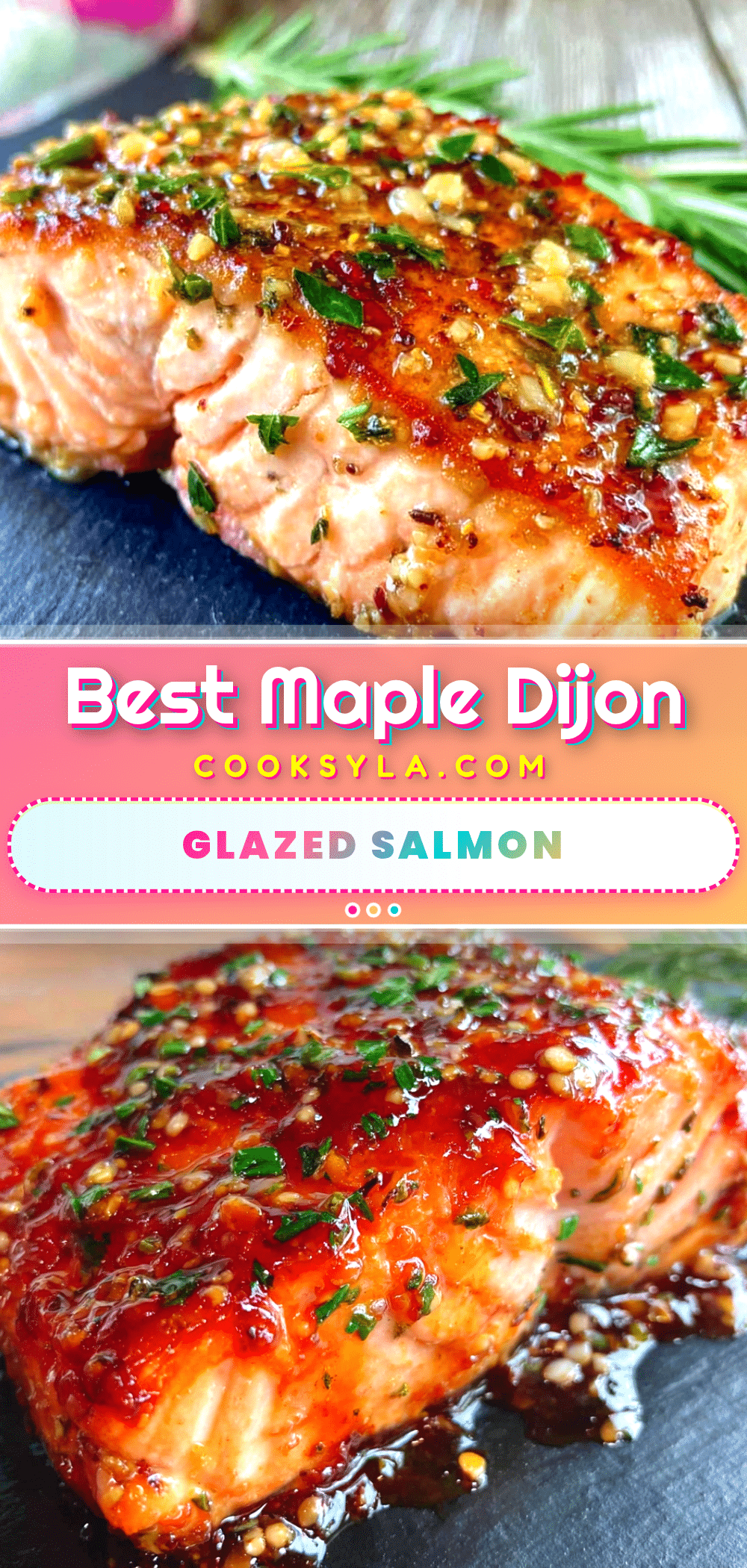
Best Maple Dijon Glazed Salmon for an Easy Spring Dinner
This maple Dijon glazed salmon features a sticky-sweet caramelized crust with tender flaky fish, ready in just 20 minutes. Perfect for spring entertaining or a quick weeknight dinner that feels special.
- Prep Time: 10 minutes
- Cook Time: 10 minutes
- Total Time: 20 minutes
- Yield: 4 servings 1x
- Category: Main Course
- Cuisine: American
Ingredients
- 4 salmon fillets (about 6 ounces each), skin on
- ¼ cup pure maple syrup
- 2 tablespoons Dijon mustard
- 1 tablespoon whole grain mustard
- 2 tablespoons olive oil, plus more for the pan
- 3 cloves garlic, minced
- 1 tablespoon soy sauce (low-sodium if desired)
- Salt and black pepper to taste
- 4–5 sprigs fresh thyme (optional)
- 1 lemon, for serving
- Fresh parsley or chives for garnish (optional)
Instructions
- Take salmon fillets out of the fridge 15 minutes before cooking. Pat dry with paper towels and season both sides generously with salt and pepper.
- In a small bowl, whisk together maple syrup, Dijon mustard, whole grain mustard, olive oil, minced garlic, and soy sauce until smooth. Reserve about 2 tablespoons for later.
- Move oven rack to top position (4-6 inches from broiler) and preheat broiler to high.
- Heat 1 tablespoon olive oil in a large oven-safe skillet over medium-high heat. When oil shimmers, place salmon skin-side down. Cook without moving for 3-4 minutes until skin is golden and crispy.
- Flip fillets carefully and cook for 1 minute on flesh side. Brush generously with the glaze.
- Transfer skillet to broiler and broil for 3-5 minutes, watching closely, until glaze is bubbly and caramelized and internal temperature reaches 125°F to 130°F.
- Remove from oven, transfer salmon to a plate, and let rest for 2 minutes. Brush with reserved glaze.
- Squeeze fresh lemon juice over salmon, garnish with parsley or chives if desired, and serve immediately.
Notes
Pat salmon dry for crispy skin. Watch broiler closely as sugar in glaze burns easily. Let salmon rest 2 minutes before serving. Double the glaze for extra or to use on chicken, pork, or vegetables.
Nutrition
- Serving Size: 1 fillet
- Calories: 400
- Sugar: 11
- Sodium: 500
- Fat: 20
- Saturated Fat: 3
- Carbohydrates: 14
- Protein: 38
Keywords: maple Dijon glazed salmon, easy salmon recipe, spring dinner, 20 minute meal, healthy salmon, gluten-free salmon