Love this? Save it for later!
Share the inspiration with your friends
My brother-in-law Mark had claimed to hate beef stew for fifteen years. Fifteen years. Every family dinner where a steaming bowl of it appeared, he’d make a show of reaching for the sandwich fixings instead, muttering something about “mushy vegetables and gray meat.” Then one blustery November evening, I made this version “just for myself” while he was over helping my husband fix a leaky faucet. I found him standing over the crockpot at hour six, spoon in hand, looking caught. “Just checking the salt level,” he said, with broth literally dripping down his chin.
That’s the thing about this cozy crockpot beef stew with root vegetables. It has a way of converting people without even trying. The beef gets so tender it practically falls apart at the mention of a fork. The carrots, parsnips, and potatoes soak up all that rich, herby broth until they’re sweet and silky. And the smell? Honestly, it’s the kind of aroma that makes your neighbors suddenly remember they need to borrow a cup of sugar. I mean, let’s face it—there’s a reason slow cookers have been a kitchen staple for generations, and recipes like this one are exactly why.
I developed this recipe after a particularly disappointing batch at a diner that shall remain nameless. The meat was dry, the vegetables were waterlogged, and the gravy tasted like it came from a packet. I knew there had to be a better way to get that deep, slow-cooked flavor without babysitting a pot on the stove all day. So I spent a few Sundays testing, tweaking, and yes, eating a lot of stew. What I landed on is this: a set-it-and-forget-it meal that tastes like you spent hours stirring and tending. Maybe you’ve been there—wanting something deeply comforting but not wanting to hover over the stove. This one’s for you.
Why You’ll Love This Recipe
Let me tell you why this cozy crockpot beef stew with root vegetables has earned a permanent spot in my winter meal rotation. It’s not just good—it’s the kind of meal that makes you close your eyes after the first bite.
- Truly Set-It-and-Forget-It : Fifteen minutes of prep in the morning, and dinner takes care of itself. No stirring, no watching, no stress.
- Melt-in-Your-Mouth Beef : The low, slow cooking breaks down the chuck roast until it’s fall-apart tender. I’ve tested this with different cuts, and chuck is non-negotiable for the best texture.
- Perfectly Cooked Vegetables : Here’s the trick I learned through trial and error—adding the root vegetables at the right time so they’re tender but not mushy. No one wants a carrot that disintegrates on the fork.
- Deep, Rich Flavor Without the Work : Searing the beef first makes all the difference. It’s one extra step that builds layers of savory goodness the slow cooker can’t achieve on its own.
- Crowd-Pleasing Comfort : Even my reformed brother-in-law asks for the leftovers now. It’s that good.
- Budget-Friendly : Chuck roast is one of the most affordable cuts of beef, and root vegetables are cheap year-round. This is comfort food that won’t break the bank.
This isn’t just another beef stew recipe. It’s the one I turn to when I need a hug in a bowl, when the weather turns nasty, or when I want to impress guests without breaking a sweat. The secret is in the technique—searing the meat, layering the flavors, and timing the vegetable additions just right.
What Ingredients You Will Need
This recipe uses simple, wholesome ingredients to deliver bold flavor and satisfying texture without the fuss. Most of these are pantry staples or easy to find at any grocery store. I’ve tested this with various brands and substitutions, and I’ll share what works best.
- Beef chuck roast (2 to 2.5 pounds) , cut into 1.5-inch cubes: This is the best cut for stew. It has enough marbling to stay moist and tender during long cooking. I prefer buying a whole roast and cubing it myself—pre-cut stew meat is often inconsistent in size and can dry out.
- All-purpose flour (3 tablespoons) : For coating the beef before searing. This helps thicken the broth later. You can use gluten-free all-purpose flour if needed, but the texture will be slightly different.
- Olive oil (2 tablespoons) : For searing the beef. Avocado oil works too, but olive oil adds a nice flavor.
- Yellow onion (1 large) , diced: Adds sweetness and depth. I’ve tried red onion in a pinch, but yellow gives the mellowest flavor for long cooking.
- Garlic (4 cloves) , minced: Fresh garlic is non-negotiable here. The jarred stuff just doesn’t deliver the same punch.
- Tomato paste (2 tablespoons) : This adds umami and helps deepen the color of the broth. I recommend the tube kind—you can squeeze out just what you need and refrigerate the rest.
- Beef broth (4 cups) , low-sodium: You can control the salt level better this way. I like Kitchen Basics or Swanson’s unsalted versions. If using homemade broth, even better.
- Dry red wine (1 cup) , optional but recommended: A Cabernet or Merlot adds incredible depth. If you don’t cook with wine, use an extra cup of beef broth with a tablespoon of balsamic vinegar.
- Worcestershire sauce (2 tablespoons) : Adds that savory, tangy kick. Lea & Perrins is my go-to.
- Fresh thyme (3 sprigs) : Dried thyme works in a pinch (use 1 teaspoon), but fresh is noticeably better here.
- Bay leaves (2) : For earthy, herbal notes. Remove before serving.
- Carrots (3 large) , peeled and cut into 1-inch chunks: Use regular carrots, not baby carrots, which can get mushy. In summer, I’ve used rainbow carrots for a pretty color variation.
- Parsnips (2 medium) , peeled and cut into 1-inch chunks: These are my secret weapon. They add a subtle sweetness that balances the savory broth. If you can’t find parsnips, use an extra carrot and a small turnip.
- Yukon Gold potatoes (1 pound) , cut into 1.5-inch chunks: These hold their shape better than Russets. Red potatoes work too. I’ve tried sweet potatoes, and they’re delicious but make the stew noticeably sweeter.
- Celery (3 stalks) , sliced: Adds a subtle vegetal note and texture.
- Frozen peas (1 cup) : Stirred in at the end for a pop of color and sweetness. Fresh peas work too, but frozen are more consistent.
- Salt and black pepper : To taste. I use Diamond Crystal kosher salt—about 1.5 teaspoons total, adjusted at the end.
- Fresh parsley (2 tablespoons) , chopped: For garnish. It adds a fresh finish that brightens the whole dish.
Equipment Needed
You don’t need a fancy kitchen to make this cozy crockpot beef stew with root vegetables. Here’s what you’ll need:
- 6-quart or larger slow cooker : This size gives the ingredients room to cook evenly. A 4-quart will work but pack things tightly. I’ve used both a Crock-Pot brand and a cheaper store-brand model, and both worked fine—just know that cheaper models sometimes run hotter.
- Large skillet or Dutch oven : For searing the beef. A cast-iron skillet is ideal for getting a good crust, but any heavy-bottomed pan works.
- Sharp chef’s knife : A dull knife makes cutting beef and root vegetables frustrating and dangerous. I use a 8-inch Wusthof, but any sharp knife will do.
- Cutting board : Preferably large enough to handle all your prep. I keep one for meat and one for vegetables to avoid cross-contamination.
- Tongs : For flipping the beef while searing. Metal tongs with silicone tips are my favorite—they grip well without scratching pans.
- Measuring cups and spoons : For accuracy. I’ve learned the hard way that eyeballing Worcestershire sauce can lead to a too-salty stew.
- Wooden spoon : For scraping up the browned bits from the skillet (that’s pure flavor).
- Mixing bowl : For tossing the beef with flour and seasonings.
- Ladle : For serving. A 4-ounce ladle gives you perfect portions.
If you don’t have a slow cooker, you can make this in a Dutch oven on the stovetop or in a 325°F oven for about 2.5 to 3 hours. Just keep an eye on the liquid level.
Preparation Method
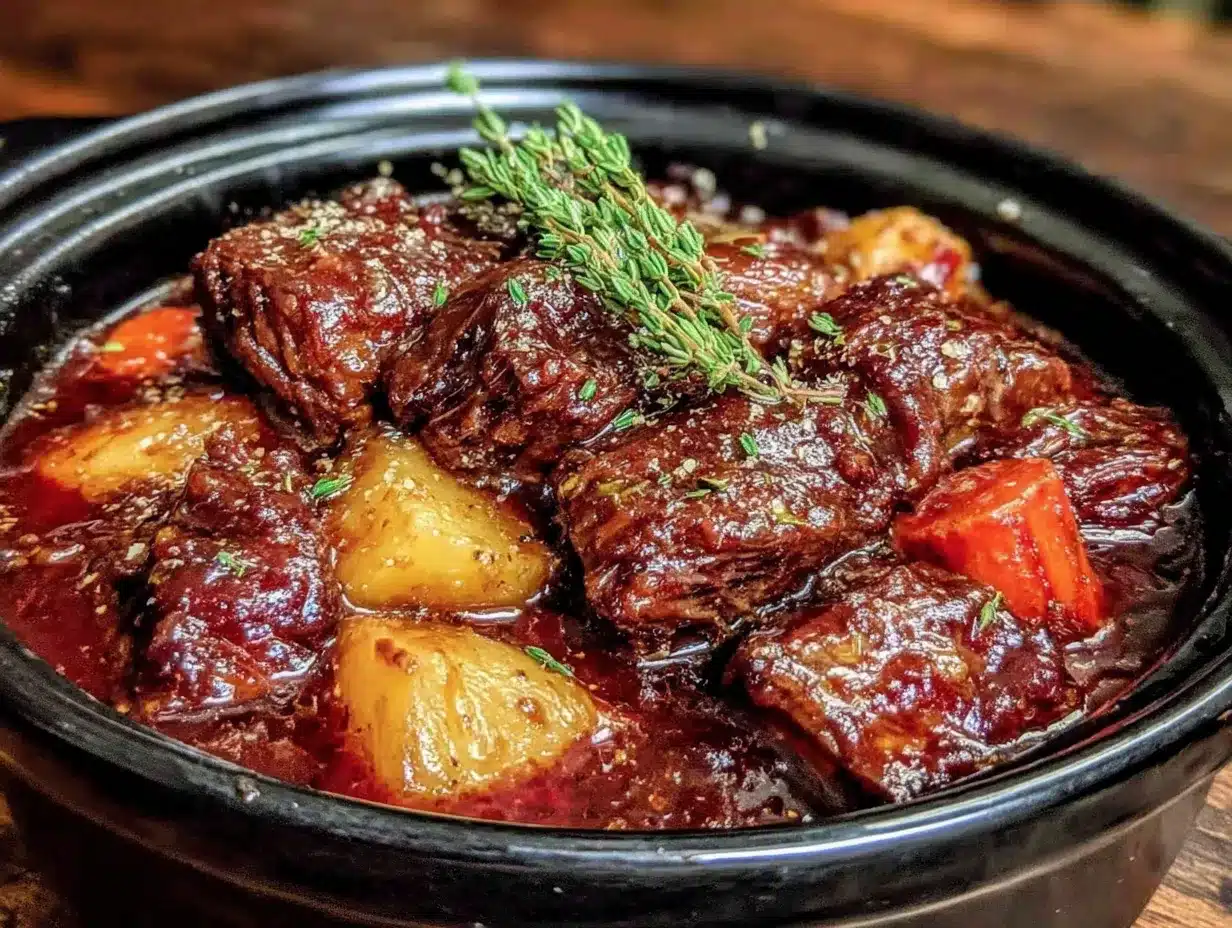
Let me walk you through this step by step. I’ve made this cozy crockpot beef stew with root vegetables more times than I can count, and these are the exact steps that give you the best results every time.
Step 1: Prep the Beef (5 minutes)
Pat the beef chuck cubes dry with paper towels. This is important—wet meat won’t sear properly. In a large mixing bowl, toss the beef with 3 tablespoons of flour, 1 teaspoon of salt, and 1/2 teaspoon of black pepper until evenly coated. Set aside while you heat the oil.
Step 2: Sear the Beef (10-12 minutes)
Heat 1 tablespoon of olive oil in a large skillet over medium-high heat until it shimmers. Working in batches (don’t crowd the pan!), add the beef cubes in a single layer. Sear for 3-4 minutes per side until deeply browned. You’re looking for a dark crust—that’s where the flavor lives. Transfer the seared beef to the slow cooker. Repeat with remaining beef, adding the second tablespoon of oil if needed. Here’s a lesson I learned the hard way: if you crowd the pan, the beef steams instead of sears, and you lose all that beautiful flavor.
Step 3: Sauté the Aromatics (5 minutes)
Reduce the heat to medium. Add the diced onion to the same skillet (don’t wipe it out—those browned bits are gold). Cook for 3-4 minutes, scraping up the browned bits with a wooden spoon, until the onion is translucent. Add the minced garlic and tomato paste, stirring constantly for 1 minute until fragrant and the paste darkens slightly.
Step 4: Deglaze the Pan (2 minutes)
Pour in the red wine (or extra broth with balsamic vinegar). Stir vigorously, scraping up every last bit of fond from the bottom of the skillet. Let it simmer for 1-2 minutes until slightly reduced. This step feels fancy but it’s really just about not wasting any flavor. Pour the mixture over the beef in the slow cooker.
Step 5: Add the Broth and Seasonings (3 minutes)
Pour the beef broth and Worcestershire sauce into the slow cooker. Add the fresh thyme sprigs and bay leaves. Give everything a gentle stir to combine. The liquid should almost cover the beef—if it doesn’t, add a splash more broth or water.
Step 6: First Stage of Cooking (4 hours on high or 7 hours on low)
Cover and cook on low for 7 hours or on high for 4 hours. During this time, the beef is breaking down and becoming tender. Don’t peek too often—every time you lift the lid, you lose heat and add cooking time. I know it’s tempting, but resist.
Step 7: Add the Root Vegetables (5 minutes prep)
After the initial cooking time, add the carrots, parsnips, Yukon Gold potatoes, and celery to the slow cooker. Stir them in gently so they’re submerged in the broth. The timing here is key—adding them earlier would give you mushy vegetables, and adding them later means they won’t be tender enough.
Step 8: Second Stage of Cooking (1.5 to 2 hours on high, or 2 to 3 hours on low)
Continue cooking until the vegetables are fork-tender. The potatoes should offer a little resistance but slide off a fork easily. The carrots should be sweet and soft but not falling apart. If your slow cooker runs hot, start checking at the 1-hour mark.
Step 9: Finish and Serve (5 minutes)
Remove the thyme sprigs and bay leaves (they’re not pleasant to bite into). Stir in the frozen peas—they’ll warm through in about 2 minutes just from the residual heat. Taste the broth and adjust salt and pepper as needed. I usually add another 1/2 teaspoon of salt and a good crack of black pepper at this stage. Ladle into bowls, garnish with fresh parsley, and serve hot.
Cooking Tips & Techniques
Over the years, I’ve made just about every mistake you can make with a slow cooker stew. Here’s what I’ve learned so you don’t have to repeat my failures.
Don’t Skip the Searing
I know it’s tempting to just dump everything in the crockpot and walk away. I’ve done it. And every time, the stew tasted flat and one-dimensional. That 10 minutes of browning the beef is where all the deep, savory flavor comes from. It’s non-negotiable in my book.
Cut Vegetables Uniformly
This is one of those little things that makes a big difference. If your potato chunks are twice the size of your carrot chunks, they won’t cook at the same rate. Aim for 1 to 1.5-inch pieces for everything. I use a ruler the first time I make a new recipe—no shame in that.
Layer Flavors Like a Pro
The order matters. Searing the beef first builds the foundation. Then sautéing the aromatics in the same pan picks up those browned bits. Deglazing with wine lifts everything into the broth. Each step adds a layer of complexity that makes the final dish taste like it simmered all day (which it did, but you get the point).
Watch Your Liquid Level
Slow cookers produce condensation, so you need less liquid than you think. Four cups of broth plus the wine is usually perfect. Too much liquid and you’ll have soup instead of stew. If your stew seems thin at the end, you can mix 2 tablespoons of cornstarch with 2 tablespoons of cold water and stir it in, then cook for 15 more minutes to thicken.
Timing the Vegetables
This was my biggest aha moment. Root vegetables take less time to cook than beef chuck, so adding them at the start turns them into mush. Adding them halfway through gives you tender-but-not-falling-apart vegetables. If you prefer your vegetables firmer, add them even later—about 1 hour before serving.
Let It Rest
If you can, let the stew sit in the slow cooker on warm for 15-20 minutes before serving. The flavors meld together and the broth thickens slightly. This is also a good time to taste and adjust seasonings—the flavors settle and you can really tell if it needs more salt or pepper.
Variations & Adaptations
One of the best things about this cozy crockpot beef stew with root vegetables is how flexible it is. Here are some variations I’ve tried and loved.
Gluten-Free Version
Substitute the all-purpose flour with a 1:1 gluten-free flour blend or cornstarch for coating the beef. Use tamari instead of Worcestershire sauce (traditional Worcestershire contains malt vinegar from barley). The texture will be slightly different, but the flavor is still fantastic.
Low-Carb / Keto Adaptation
Skip the potatoes and add extra turnips, radishes, or cauliflower florets in their place. Radishes lose their peppery bite when cooked and become surprisingly potato-like. I’ve also added chopped celery root for a similar texture without the carbs.
Seasonal Vegetable Swaps
In spring, swap the parsnips for asparagus tips and add fresh peas instead of frozen. In summer, use zucchini and yellow squash (add them in the last 30 minutes so they don’t turn to mush). In fall, throw in some cubed butternut squash or sweet potato for a sweeter twist.
Herb Variations
Not a fan of thyme? Try rosemary (2 sprigs) or a couple of sprigs of oregano. I once made this with a bundle of fresh sage and it was incredible—earthy and almost Thanksgiving-like. Just remember that dried herbs are more potent, so use about 1/3 of the amount.
Make It Spicy
Add a diced jalapeño with the onions, or stir in 1/2 teaspoon of red pepper flakes with the broth. The heat cuts through the richness beautifully. My husband loves this version, though I prefer the classic.
One-Pot Stovetop Method
If you don’t have a slow cooker, use a Dutch oven. After searing the beef and sautéing the aromatics, add all the liquid and bring to a simmer. Cover and cook on low heat for 1.5 hours, then add the vegetables and cook for another 45 minutes to 1 hour until tender. The stovetop version actually develops even deeper flavor, but requires more attention.
Serving & Storage Suggestions
This cozy crockpot beef stew with root vegetables is a meal in itself, but a few thoughtful accompaniments can make it even better.
Serving Temperature and Presentation
Serve the stew piping hot in deep bowls. I like to ladle it over a scoop of creamy mashed potatoes or alongside a hunk of crusty bread for soaking up every last drop of broth. A sprinkle of fresh parsley on top adds a pop of green that makes the dish look as good as it tastes. For a special touch, drizzle a tiny bit of good olive oil over the top just before serving.
Complementary Sides and Beverages
A simple green salad with a lemony vinaigrette cuts through the richness perfectly. Roasted Brussels sprouts or steamed green beans also work well. For drinks, a full-bodied red wine like a Zinfandel or Malbec is a natural pairing. If you’re going non-alcoholic, a tart apple cider or a dark ginger beer complements the savory flavors beautifully.
Storage Instructions
Leftover stew keeps beautifully in the refrigerator for up to 4 days. Let it cool completely before transferring to an airtight container. The flavors actually deepen overnight, so it might taste even better the next day. I’ve been known to make a double batch just for the leftovers.
Freezing and Reheating
This stew freezes exceptionally well for up to 3 months. Portion it into freezer-safe containers or zip-top bags, leaving a little room for expansion. To reheat, thaw overnight in the refrigerator, then warm gently on the stovetop or in the microwave. If the stew seems too thick after reheating, add a splash of beef broth or water. If it’s too thin, let it simmer uncovered for a few minutes to reduce.
How Flavors Develop
Here’s a little secret: this stew is even better the second day. The flavors have time to meld and deepen, and the texture becomes even more velvety. I often make it a day ahead on purpose. Just reheat gently and add the fresh parsley right before serving.
Nutritional Information & Benefits
This cozy crockpot beef stew with root vegetables is not just delicious—it’s also packed with nutrients that make it a smart choice for a satisfying meal.
Estimated Nutritional Values (per serving, based on 6 servings)
| Nutrient | Amount |
|---|---|
| Calories | 385 |
| Protein | 34g |
| Total Fat | 12g |
| Saturated Fat | 4g |
| Carbohydrates | 32g |
| Fiber | 6g |
| Sugar | 8g |
| Sodium | 680mg |
Health Benefits of Key Ingredients
The beef chuck provides high-quality protein, iron, and B vitamins that support energy and muscle health. Carrots are loaded with beta-carotene for eye health, while parsnips add fiber and potassium. Yukon Gold potatoes offer vitamin C and resistant starch that supports gut health when cooled and reheated. The garlic and onions provide anti-inflammatory compounds.
Dietary Considerations
This recipe is dairy-free and nut-free as written. For a gluten-free version, use the substitution mentioned above. It’s also relatively low in added sugars—the sweetness comes naturally from the vegetables. If you’re watching your sodium, use low-sodium broth and go easy on the added salt.
Potential Allergens
Contains wheat (in the flour for coating) and sulfites (in the wine). The Worcestershire sauce typically contains anchovies, so it’s not suitable for a strict vegetarian or vegan diet.
I personally love that this stew feels indulgent but is actually a balanced meal. It’s the kind of dinner that fills you up without weighing you down, and that’s a win in my book.
Conclusion
This cozy crockpot beef stew with root vegetables has become my go-to for cold nights, busy weeks, and any time I need a reminder that good food doesn’t have to be complicated. It’s the recipe that converted my brother-in-law, impressed my in-laws, and made my husband ask for seconds every single time.
What I love most about it is how forgiving it is. You can swap vegetables, adjust the herbs, or double the batch without stressing. It’s a recipe that works with you, not against you. And honestly, isn’t that what comfort food should be?
I’d love to hear how this turns out for you. Did you try any variations? Did you serve it with something unexpected? Drop a comment below and let me know—I read every single one and I’m always looking for new ideas to try. And if you share a photo on Pinterest or Instagram, tag me so I can see your beautiful bowls of stew.
Here’s to warm kitchens, full bellies, and the simple joy of a meal that tastes like home. Happy cooking!
Frequently Asked Questions
Can I make this stew in an Instant Pot or pressure cooker?
Yes! Use the sauté function to sear the beef and cook the aromatics. Then pressure cook on high for 35 minutes with a natural release. Add the vegetables and cook for another 5 minutes under pressure. The timing is tighter, but the results are still delicious.
Why is my beef stew tough?
Tough beef usually means it hasn’t cooked long enough. Chuck roast needs time for the connective tissue to break down. If your stew is tough after the recommended cooking time, let it cook another hour or two on low. Also, make sure you’re cutting the beef against the grain for maximum tenderness.
Can I use frozen beef or vegetables?
I don’t recommend frozen beef for this recipe—it releases too much water and won’t sear properly. Frozen vegetables are fine, but add them later in the cooking process. Frozen peas can go in at the very end, but frozen carrots or potatoes should be added about 30 minutes later than fresh ones.
How do I thicken the stew if it’s too thin?
Mix 2 tablespoons of cornstarch with 2 tablespoons of cold water to make a slurry. Stir it into the stew and cook on high for 15-20 minutes until thickened. Alternatively, you can mash a few of the cooked potatoes against the side of the slow cooker and stir them in—this adds body naturally.
Can I leave the stew cooking all day while I’m at work?
Absolutely. Cook it on low for 8 to 10 hours. The key is to add the root vegetables later. I use a slow cooker with a timer function, or I add the vegetables when I get home and let them cook while I unwind. If your slow cooker doesn’t have a timer, you can add the vegetables before you leave—they’ll be very soft but still tasty.
Pin This Recipe!
Cozy Crockpot Beef Stew with Root Vegetables – Easy Comfort Dinner
This cozy crockpot beef stew with root vegetables features fall-apart tender beef, sweet and silky root vegetables, and a rich, herby broth. It’s a set-it-and-forget-it meal that tastes like you spent hours stirring and tending, perfect for cold nights and busy weeks.
- Prep Time: 15 minutes
- Cook Time: 8 hours 30 minutes
- Total Time: 8 hours 45 minutes
- Yield: 6 servings 1x
- Category: Main Course
- Cuisine: American
Ingredients
- 2 to 2.5 pounds beef chuck roast, cut into 1.5-inch cubes
- 3 tablespoons all-purpose flour
- 2 tablespoons olive oil
- 1 large yellow onion, diced
- 4 cloves garlic, minced
- 2 tablespoons tomato paste
- 4 cups low-sodium beef broth
- 1 cup dry red wine (optional, or use extra broth with 1 tablespoon balsamic vinegar)
- 2 tablespoons Worcestershire sauce
- 3 sprigs fresh thyme
- 2 bay leaves
- 3 large carrots, peeled and cut into 1-inch chunks
- 2 medium parsnips, peeled and cut into 1-inch chunks
- 1 pound Yukon Gold potatoes, cut into 1.5-inch chunks
- 3 stalks celery, sliced
- 1 cup frozen peas
- Salt and black pepper to taste
- 2 tablespoons fresh parsley, chopped for garnish
Instructions
- Pat the beef chuck cubes dry with paper towels. In a large mixing bowl, toss the beef with 3 tablespoons flour, 1 teaspoon salt, and 1/2 teaspoon black pepper until evenly coated.
- Heat 1 tablespoon olive oil in a large skillet over medium-high heat until shimmering. Working in batches, sear the beef cubes for 3-4 minutes per side until deeply browned. Transfer seared beef to the slow cooker. Repeat with remaining beef, adding the second tablespoon of oil if needed.
- Reduce heat to medium. Add diced onion to the same skillet and cook for 3-4 minutes, scraping up browned bits, until translucent. Add minced garlic and tomato paste, stirring constantly for 1 minute until fragrant.
- Pour in the red wine (or extra broth with balsamic vinegar). Stir vigorously, scraping up every last bit of fond from the skillet. Let simmer for 1-2 minutes until slightly reduced. Pour mixture over the beef in the slow cooker.
- Pour beef broth and Worcestershire sauce into the slow cooker. Add fresh thyme sprigs and bay leaves. Stir gently to combine.
- Cover and cook on low for 7 hours or on high for 4 hours.
- After initial cooking time, add carrots, parsnips, Yukon Gold potatoes, and celery to the slow cooker. Stir gently to submerge in broth.
- Continue cooking on high for 1.5 to 2 hours, or on low for 2 to 3 hours, until vegetables are fork-tender.
- Remove thyme sprigs and bay leaves. Stir in frozen peas and let warm through for about 2 minutes. Taste and adjust salt and pepper as needed. Ladle into bowls, garnish with fresh parsley, and serve hot.
Notes
For a gluten-free version, substitute all-purpose flour with a 1:1 gluten-free flour blend or cornstarch. For a low-carb adaptation, skip the potatoes and add extra turnips, radishes, or cauliflower. The stew is even better the next day as flavors meld. If the stew is too thin, mix 2 tablespoons cornstarch with 2 tablespoons cold water and stir in, then cook for 15 more minutes.
Nutrition
- Serving Size: 1 serving
- Calories: 385
- Sugar: 8
- Sodium: 680
- Fat: 12
- Saturated Fat: 4
- Carbohydrates: 32
- Fiber: 6
- Protein: 34
Keywords: beef stew, crockpot, slow cooker, root vegetables, comfort food, winter dinner, easy dinner