Love this? Save it for later!
Share the inspiration with your friends
My brother-in-law Mark claimed he hated stuffing for thirty-seven years. Thirty-seven years of Thanksgiving dinners spent pushing bread cubes around his plate, declaring the whole thing “soggy bread with sad herbs.” I believed him. We all did. Then last November, I made this roasted butternut squash and sausage stuffing “just for myself” because I wanted something heartier than the usual boxed version. I caught him standing at the stove at 10 PM, eating it straight from the baking dish with a serving spoon. He didn’t even bother with a bowl.
That’s the thing about this recipe—it has a way of turning skeptics into converts without you even trying. The roasted squash gets all sweet and caramelized on the edges, the sausage adds this savory richness that makes everything feel substantial, and the bread stays perfectly toasted on top while soaking up all those juices underneath. Honestly, I think what got Mark was the texture. It’s not that sad, mushy stuffing you remember from childhood holiday tables. It’s got crunch and softness and little pockets of roasted garlic that hit you like tiny flavor bombs.
Maybe you’ve got someone in your life who “doesn’t like stuffing.” Maybe you’re that person yourself. I get it. I used to think stuffing was just filler—something to take up space on an already crowded plate. But this version? It’s the main event. It’s the dish people reach for first, the one that gets scraped clean while the turkey sits half-eaten. And the best part? It’s actually easier than traditional stuffing. No fussing with stale bread or complicated herb mixtures. Just good ingredients doing what they do best.
Why You’ll Love This Recipe
Let me tell you why this butternut squash and sausage stuffing has become my most-requested holiday dish. I’ve tested this recipe at least a dozen times across three different kitchens, tweaked the ratios, burned a batch or two (RIP, that one baking dish), and landed on something that works every single time.
- Perfect for Thanksgiving and Beyond : This isn’t just a holiday recipe. I make it for Sunday dinners, potlucks, and even lazy Saturday afternoons when I want something that feels special without much effort.
- Simple Ingredients, Big Flavor : You probably have most of these ingredients in your pantry right now. No weird specialty items or expensive truffle oils needed here.
- Make-Ahead Friendly : Assemble it the night before, pop it in the fridge, and bake it when you’re ready. It actually gets better as the flavors meld together overnight.
- Crowd-Pleaser Status : I’ve served this to picky eaters, vegetarian cousins (just use veggie sausage), and stuffing purists. It wins every time.
- That Perfect Texture Contrast : The crispy top, the tender squash, the juicy sausage—every bite is different from the last.
What makes this recipe different from all the other stuffing recipes out there? It’s the roasting step. Most stuffings just throw everything in a dish and hope for the best. But roasting the squash and sausage first—getting that caramelization, rendering out the fat, letting those edges crisp up—that’s where the magic happens. It’s a small extra step that makes a massive difference. And honestly, once you try it this way, you’ll never go back to the old method.
This is the kind of recipe that makes you close your eyes after the first bite. It’s comfort food reimagined—faster than traditional stuffing, but with the same soul-soothing satisfaction that makes you feel like everything’s going to be okay.
What Ingredients You Will Need
This recipe uses simple, wholesome ingredients to deliver bold flavor and satisfying texture without the fuss. Most of these are pantry staples or easy to find at any grocery store, especially during fall and winter when squash is at its peak.
For the Roasted Vegetables and Sausage
- 1 medium butternut squash (about 2-3 pounds), peeled, seeded, and cut into ½-inch cubes (look for one that feels heavy for its size with firm, unblemished skin)
- 1 large yellow onion, diced (sweet onions work great here too)
- 3 celery stalks, chopped (the leaves are fine to include—they add extra flavor)
- 4 cloves garlic, minced (I use a garlic press because I’m lazy, but chopping works too)
- 1 pound mild Italian sausage, casings removed (I prefer Johnsonville or your local butcher’s fresh sausage for the best flavor)
- 3 tablespoons olive oil, divided (use a good quality one for roasting)
- 1 teaspoon salt, plus more to taste
- ½ teaspoon black pepper
For the Stuffing Base
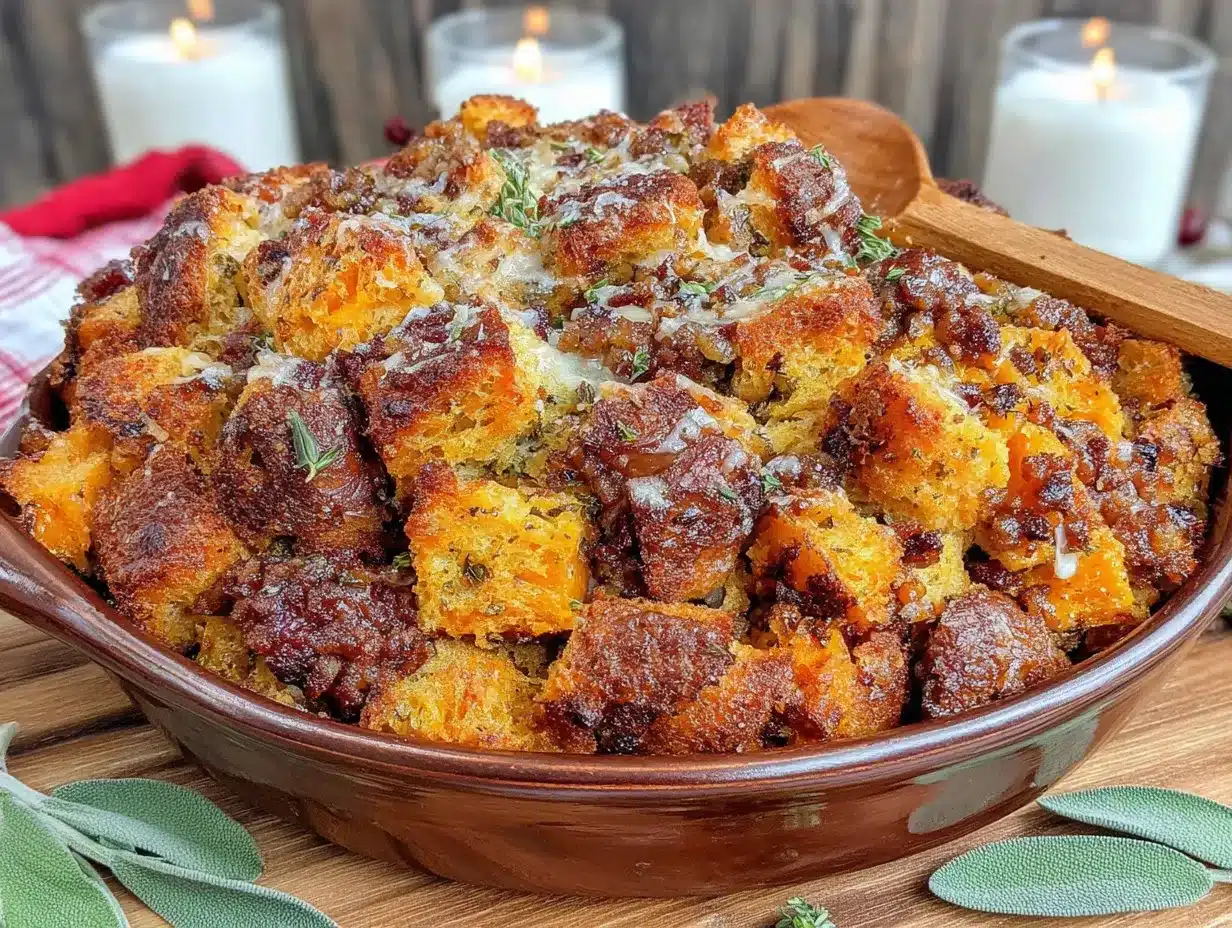
- 1 loaf sturdy bread (about 12-14 ounces), cut into 1-inch cubes (sourdough, ciabatta, or French bread work best—avoid soft sandwich bread, it gets too mushy)
- ½ cup unsalted butter (1 stick), melted (I like Kerrygold for its richness)
- 2 cups low-sodium chicken broth (vegetable broth works for a vegetarian version)
- 2 large eggs, lightly beaten (this helps bind everything together)
- 1 tablespoon fresh sage, chopped (dried sage works in a pinch—use 1 teaspoon)
- 1 tablespoon fresh rosemary, chopped (or 1 teaspoon dried)
- 1 tablespoon fresh thyme leaves (or 1 teaspoon dried)
- ½ cup dried cranberries (optional but highly recommended—adds a pop of sweetness)
- ¼ cup fresh parsley, chopped (for garnish)
Ingredient Tips from My Kitchen: If you can’t find fresh herbs, dried ones work fine—just use about a third of the amount. For the bread, day-old or slightly stale bread is actually ideal because it absorbs the liquid without turning into paste. If your bread is fresh, toast the cubes in a 300°F oven for 10 minutes before using. And here’s a trick I learned from my friend Maria: add a splash of apple cider to the broth mixture for a subtle sweetness that pairs beautifully with the squash.
Substitution Guidance: Use gluten-free bread for a gluten-free version. Swap turkey sausage for a lighter option. For a vegetarian version, use plant-based sausage and vegetable broth. If butternut squash isn’t available, try acorn squash or sweet potatoes—they work beautifully with the same cooking time.
Equipment Needed
You don’t need a fancy kitchen to make this stuffing. Here’s what I use every time:
- Large baking sheet (half-sheet pan works perfectly—I’ve had my Nordic Ware one for years and it still looks new)
- 9×13-inch baking dish (glass or ceramic works best for even heating)
- Large skillet or sauté pan (for cooking the sausage and aromatics)
- Chef’s knife (a sharp one makes squash prep so much easier—trust me on this)
- Cutting board (get a big one if you can, it makes a difference)
- Large mixing bowl (for combining everything)
- Wooden spoon or spatula
- Measuring cups and spoons
Budget-Friendly Tips: If you don’t have a 9×13 dish, use a large cast-iron skillet or two smaller baking dishes. No baking sheet? A rimmed cookie sheet works fine—just don’t crowd the squash too much. And honestly, I’ve made this with a cheap knife and it was fine, just took a little longer. A good peeler for the squash is worth the $5 investment though.
Preparation Method
Let me walk you through this step by step. I’ve made this so many times that I’ve got the rhythm down, and I’ll share all the little tricks I’ve learned along the way.
Step 1: Roast the Squash and Sausage
Preheat your oven to 400°F (200°C). Line your baking sheet with parchment paper if you want easier cleanup—I forget to do this half the time and regret it every time.
Toss the cubed butternut squash with 2 tablespoons of olive oil, salt, and pepper. Spread it in a single layer on the baking sheet. Don’t overcrowd—if the pieces are touching too much, they’ll steam instead of roast. Give them some breathing room.
Roast for 20 minutes, then flip the pieces with a spatula. Add the sausage in crumbles to the same pan (I just break it up with my hands right onto the sheet). Roast for another 15-20 minutes until the squash is tender and golden on the edges, and the sausage is cooked through and starting to brown. The squash should be easily pierced with a fork but not falling apart.
Pro tip from my first failed attempt: I once tried to rush this step by cranking the oven to 450°F. The squash burned on the outside and stayed raw in the middle. Patience, my friend. 400°F is the sweet spot.
Step 2: Prepare the Bread
While the squash and sausage roast, spread your bread cubes on another baking sheet. Toast them in the oven for about 8-10 minutes, just until they’re lightly golden and dry to the touch. You want them crisp but not hard—think of it as giving them a head start so they don’t turn into mush later.
If your bread is already stale, you can skip this step. I’ve used both fresh and stale, and honestly, the toasting step makes even stale bread better.
Step 3: Cook the Aromatics
In your large skillet, heat the remaining tablespoon of olive oil over medium heat. Add the diced onion and celery, and cook for about 5-7 minutes until they’re soft and translucent. The smell at this point is incredible—it’s like the kitchen is getting ready for a holiday party.
Add the minced garlic and cook for another minute until fragrant. Be careful not to burn the garlic—it turns bitter fast. I learned this the hard way when I got distracted by a phone call and ended up with garlic that tasted like regret.
Step 4: Combine Everything
In your large mixing bowl, combine the toasted bread cubes, roasted squash and sausage, cooked vegetables, dried cranberries (if using), fresh sage, rosemary, and thyme. Toss gently to distribute everything evenly.
In a separate small bowl or measuring cup, whisk together the melted butter, chicken broth, and beaten eggs. Pour this mixture over the bread mixture and fold gently with a spatula until everything is evenly moistened. Don’t overmix—you want some texture, not a paste.
Sensory cue: The bread should look moist but not swimming in liquid. If it looks soupy, add a few more bread cubes. If it looks dry, add a splash more broth. Trust your eyes here.
Step 5: Bake
Transfer the mixture to your greased 9×13-inch baking dish and spread it into an even layer. Cover with foil and bake at 375°F (190°C) for 25 minutes. Then remove the foil and bake for another 20-25 minutes until the top is golden brown and crispy.
The hardest part is waiting for it to cool for 5-10 minutes before serving. I know, I know—it smells amazing and you want to dig in right away. But letting it rest helps it set so it doesn’t fall apart when you serve it.
Cooking Tips & Techniques
After making this recipe more times than I can count (and messing it up plenty along the way), here are the things I wish someone had told me from the start:
Don’t skip the roasting step. I know it’s tempting to just throw everything in the dish and bake it once. But roasting the squash and sausage first is what gives this dish its depth of flavor. The caramelization adds a sweetness and complexity that you just can’t get from baking alone. Trust the process.
Watch your liquid ratio. The first time I made this, I dumped in the entire carton of broth because I thought “more liquid = more moist.” Wrong. The bread can only absorb so much, and I ended up with stuffing soup. Start with 2 cups and add more only if it looks dry after mixing.
Toast your bread even if it’s stale. I once thought I could skip this step because my bread was already a few days old. Big mistake. The toasting step isn’t just about drying the bread—it’s about creating structure so the bread holds up during baking. Untoasted bread turns into glue.
Use a meat thermometer for the sausage. If you’re unsure whether the sausage is cooked through, temp it. It should read 160°F (71°C). I’ve gotten better at eyeballing it over time, but when I started, I either undercooked or overcooked it every time.
Make extra for leftovers. Seriously. This stuffing reheats beautifully and might even be better the next day. I always double the recipe so I have enough for breakfast the next morning—fried eggs on top of leftover stuffing is my secret guilty pleasure.
Multitasking tip: While the squash and sausage are roasting, toast your bread and chop your herbs. While the aromatics cook, whisk your wet ingredients. This recipe comes together in about an hour total, and most of that is hands-off oven time.
Variations & Adaptations
One of the things I love about this recipe is how flexible it is. Here are some variations I’ve tried and loved:
Vegetarian Version: Swap the Italian sausage for a plant-based version (I like Beyond or Impossible brands for this) and use vegetable broth instead of chicken broth. The flavor profile stays remarkably similar—the herbs and roasted squash do most of the heavy lifting.
Gluten-Free Adaptation: Use your favorite gluten-free bread. I’ve had good results with Schar brand sourdough-style bread. Just make sure to toast it a little longer since gluten-free bread tends to be more delicate and can get mushy faster.
Add Some Heat: If you like a little kick, use hot Italian sausage instead of mild, or add a pinch of red pepper flakes with the aromatics. My brother-in-law Mark actually prefers it this way now—he says it “wakes up the stuffing.”
Seasonal Twist: In the spring, swap the butternut squash for asparagus and leeks. In the summer, try zucchini and bell peppers. The technique stays the same—just adjust roasting times based on the vegetable you choose.
Nutty Addition: Toasted pecans or walnuts add a lovely crunch. I add about ½ cup of chopped pecans to the mix before baking. Just make sure to toast them first in a dry pan for a few minutes until they’re fragrant.
Cheese Lovers: Sprinkle ½ cup of grated Parmesan or crumbled goat cheese over the top during the last 10 minutes of baking. It creates this gorgeous golden crust that’s absolutely irresistible.
My personal favorite variation? I add diced apple (Granny Smith or Honeycrisp) to the squash during the last 10 minutes of roasting. The sweetness of the roasted apple pairs beautifully with the savory sausage and herbs. It’s a small tweak that makes the dish feel extra special.
Serving & Storage Suggestions
This stuffing is best served warm, straight from the oven. I like to let it rest for about 5-10 minutes before serving so it holds its shape when you scoop it out. Garnish with fresh parsley for a pop of color and freshness.
What to Serve With It: This stuffing is hearty enough to be a main dish, but it also pairs beautifully with roast chicken, turkey, or pork chops. For a complete holiday meal, serve it alongside roasted Brussels sprouts, mashed potatoes, and cranberry sauce. A crisp white wine like Sauvignon Blanc or a light Pinot Noir complements the flavors perfectly.
Storage Instructions: Leftover stuffing keeps in an airtight container in the refrigerator for up to 4 days. The flavors actually meld and deepen overnight, so don’t be surprised if it tastes even better the next day.
Freezing: You can freeze this stuffing for up to 3 months. Let it cool completely, then transfer to a freezer-safe container or zip-top bag. To reheat, thaw overnight in the refrigerator, then warm in a 350°F oven covered with foil for about 20 minutes, removing the foil for the last 5 minutes to crisp up the top.
Reheating Tips: The microwave works in a pinch, but the oven gives you much better results—the top gets crispy again instead of turning sad and soggy. If you’re reheating a single serving, a toaster oven is perfect. Add a splash of broth if it seems dry after reheating.
Flavor Development: Here’s something interesting—the stuffing actually gets better after a day or two in the fridge. The herbs have time to meld, the squash absorbs more of the savory flavors, and everything just comes together. I sometimes make this recipe specifically for the leftovers.
Nutritional Information & Benefits
Here’s the approximate nutritional breakdown per serving (based on 8 servings):
| Nutrient | Amount Per Serving |
|---|---|
| Calories | 385 |
| Total Fat | 22g |
| Saturated Fat | 9g |
| Cholesterol | 85mg |
| Sodium | 720mg |
| Total Carbohydrates | 35g |
| Dietary Fiber | 4g |
| Sugars | 8g |
| Protein | 14g |
| Vitamin A | 180% DV |
| Vitamin C | 25% DV |
| Calcium | 8% DV |
| Iron | 12% DV |
Health Benefits: Butternut squash is packed with vitamin A (great for eye health and immune function) and fiber (keeps you full and happy). The sage and rosemary aren’t just for flavor—they’re anti-inflammatory and full of antioxidants. And yes, this is a comfort food, but it’s comfort food with actual nutritional value. I feel good about serving this to my family because I know they’re getting real, whole ingredients that nourish them.
Dietary Considerations: This recipe contains gluten (from the bread), dairy (from the butter), and eggs. For gluten-free, use GF bread. For dairy-free, substitute the butter with olive oil or a plant-based butter. The eggs help with binding, but you can omit them if needed—the stuffing will just be a bit more crumbly.
Allergen Note: Contains wheat, dairy, and eggs. The sausage may contain additional allergens depending on the brand—always check labels if cooking for someone with allergies.
Conclusion
This roasted butternut squash and sausage stuffing has become my go-to recipe for every holiday gathering, and honestly, for plenty of non-holiday gatherings too. It’s the dish that converted my brother-in-law after thirty-seven years of stuffing skepticism. It’s the dish that gets scraped clean while everything else sits half-eaten. And it’s the dish that makes me feel like a kitchen genius, even on days when I’m just throwing things together.
But here’s the thing—this recipe is yours now. Add more sage if you love it. Skip the cranberries if that’s not your thing. Use hot sausage if you want some heat. The beauty of a recipe like this is that it’s forgiving and flexible. It wants to be customized to your taste.
I’d love to hear how it turns out for you. Did you try a variation I haven’t thought of? Did it convert a stuffing skeptic in your life? Drop a comment below and let me know. And if you share it on social media, tag me—I want to see your beautiful creations. Happy cooking, friends. This one’s a keeper.
Frequently Asked Questions
Can I make this stuffing ahead of time?
Absolutely! You can assemble the entire dish (without baking) up to 24 hours in advance. Cover and refrigerate, then bake as directed when you’re ready. You may need to add 5-10 minutes to the baking time since you’re starting from cold.
Can I use dried herbs instead of fresh?
Yes, dried herbs work perfectly. Use about 1 teaspoon of dried sage, 1 teaspoon of dried rosemary, and 1 teaspoon of dried thyme. Just remember that dried herbs are more concentrated, so you need less. I’ve used dried many times when fresh wasn’t available, and the recipe still turns out great.
What if I can’t find butternut squash?
No problem at all! Acorn squash, delicata squash, or even sweet potatoes work beautifully in this recipe. The cooking time might vary slightly—sweet potatoes might need 5 extra minutes, while delicata (which is more tender) might need 5 fewer. Just check for fork-tenderness.
Why did my stuffing turn out soggy?
This usually happens for one of three reasons: too much liquid, bread that wasn’t toasted enough, or the dish was covered for too long. Next time, start with less broth (2 cups instead of 2½), make sure your bread is well-toasted, and don’t skip the uncovered baking time at the end. That final uncovered bake is what creates the perfect texture.
Can I cook this in a slow cooker?
You can! Prepare the recipe as directed through step 4, then transfer to a greased slow cooker. Cook on low for 3-4 hours or on high for 1½-2 hours. For a crispy top, transfer to a baking dish and broil for 2-3 minutes before serving. The slow cooker version is perfect for potlucks or when your oven is occupied with other dishes.
Pin This Recipe!
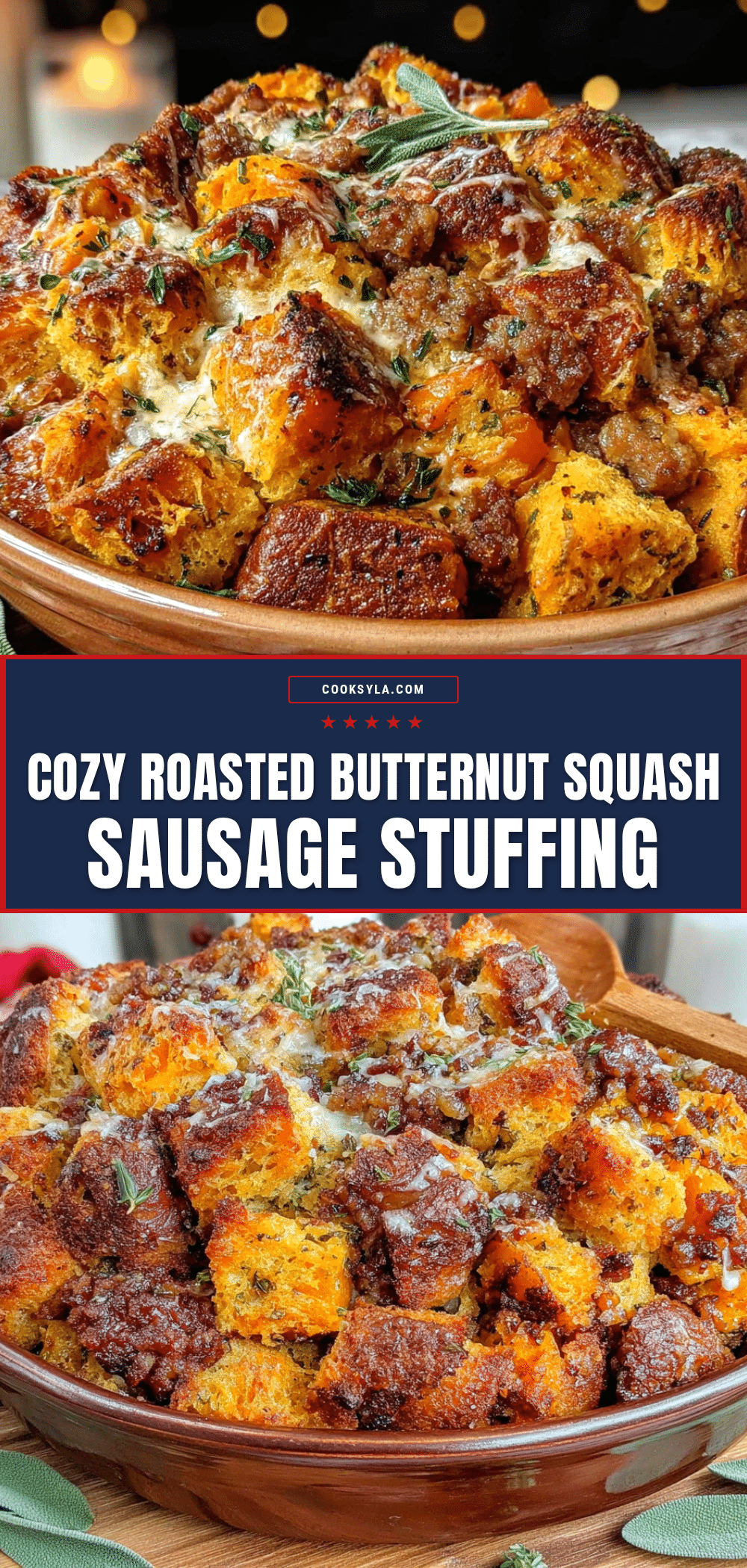
Cozy Roasted Butternut Squash and Sausage Stuffing – Easy Holiday Recipe

This roasted butternut squash and sausage stuffing turns skeptics into converts with its sweet caramelized squash, savory sausage, and perfectly toasted bread. It’s a hearty, crowd-pleasing dish that’s easier than traditional stuffing and perfect for holidays or any occasion.
- Prep Time: 20 minutes
- Cook Time: 1 hour 10 minutes
- Total Time: 1 hour 30 minutes
- Yield: 8 servings 1x
- Category: Side Dish
- Cuisine: American
Ingredients
- 1 medium butternut squash (about 2–3 pounds), peeled, seeded, and cut into ½-inch cubes
- 1 large yellow onion, diced
- 3 celery stalks, chopped
- 4 cloves garlic, minced
- 1 pound mild Italian sausage, casings removed
- 3 tablespoons olive oil, divided
- 1 teaspoon salt, plus more to taste
- ½ teaspoon black pepper
- 1 loaf sturdy bread (about 12–14 ounces), cut into 1-inch cubes (sourdough, ciabatta, or French bread)
- ½ cup unsalted butter (1 stick), melted
- 2 cups low-sodium chicken broth
- 2 large eggs, lightly beaten
- 1 tablespoon fresh sage, chopped (or 1 teaspoon dried)
- 1 tablespoon fresh rosemary, chopped (or 1 teaspoon dried)
- 1 tablespoon fresh thyme leaves (or 1 teaspoon dried)
- ½ cup dried cranberries (optional)
- ¼ cup fresh parsley, chopped (for garnish)
Instructions
- Preheat oven to 400°F (200°C). Line a baking sheet with parchment paper.
- Toss cubed butternut squash with 2 tablespoons olive oil, salt, and pepper. Spread in a single layer on the baking sheet. Roast for 20 minutes.
- Flip squash pieces with a spatula. Add sausage in crumbles to the same pan. Roast for another 15-20 minutes until squash is tender and golden, and sausage is cooked through.
- While squash and sausage roast, spread bread cubes on another baking sheet. Toast in the oven for 8-10 minutes until lightly golden and dry.
- In a large skillet, heat remaining 1 tablespoon olive oil over medium heat. Cook onion and celery for 5-7 minutes until soft and translucent. Add garlic and cook for 1 minute until fragrant.
- In a large mixing bowl, combine toasted bread cubes, roasted squash and sausage, cooked vegetables, dried cranberries (if using), sage, rosemary, and thyme. Toss gently.
- In a small bowl, whisk together melted butter, chicken broth, and beaten eggs. Pour over bread mixture and fold gently until evenly moistened.
- Transfer mixture to a greased 9×13-inch baking dish. Cover with foil and bake at 375°F (190°C) for 25 minutes. Remove foil and bake for another 20-25 minutes until top is golden brown and crispy.
- Let rest for 5-10 minutes before serving. Garnish with fresh parsley.
Notes
For make-ahead: assemble without baking up to 24 hours in advance, cover and refrigerate, then bake as directed (add 5-10 minutes). For gluten-free: use gluten-free bread. For vegetarian: use plant-based sausage and vegetable broth. For dairy-free: substitute butter with olive oil or plant-based butter. Toasting the bread is crucial to avoid sogginess. Start with 2 cups broth and add more only if mixture looks dry.
Nutrition
- Serving Size: 1 serving (about 1 c
- Calories: 385
- Sugar: 8
- Sodium: 720
- Fat: 22
- Saturated Fat: 9
- Carbohydrates: 35
- Fiber: 4
- Protein: 14
Keywords: butternut squash stuffing, sausage stuffing, holiday stuffing, Thanksgiving stuffing, roasted squash stuffing, easy stuffing recipe