Love this? Save it for later!
Share the inspiration with your friends
This was supposed to be a simple glazed pork loin. A quiet Sunday dinner, nothing fancy. I’d grabbed a small ham by accident—distracted, honestly, by a phone call about a cracked birdbath my neighbor had knocked over with his lawnmower. The ham was huge, way too big for two people, and I was already annoyed at myself. The glaze I’d planned was thin, meant for a quick sear, and I just stood there staring at this massive thing thinking, well, now what?
I threw together a brown sugar paste, kind of panicking, added some mustard because it was there, and slathered it on. The oven was too hot because I’d preheated for the pork loin, and I just left it in there, convinced I’d ruined dinner. What came out was nothing like the plan. The sugar had caramelized into this crackly, almost candied shell, the meat was so tender it barely needed a knife, and the smell—honestly, it filled the whole house with this sweet, smoky warmth that made my neighbor knock on the door again, asking what on earth I was cooking.
It was a happy accident, but not in the way you’d think. It wasn’t just that it worked—it was that the mistake taught me something. You don’t need a perfect plan. Sometimes you just need brown sugar, a hot oven, and the willingness to let things go a little wrong. Maybe you’ve been there, staring at a kitchen disaster that turns into the best thing you’ve ever made. This brown sugar glazed ham for Easter dinner is that recipe for me. I keep making it because it reminds me that good food doesn’t come from getting it right the first time. It comes from messing up and discovering something better.
Why You’ll Love This Recipe
This brown sugar glazed ham for Easter dinner is the kind of recipe that makes you look like a hero without the stress. I’ve tested it half a dozen times, tweaking the glaze ratio, adjusting the oven temp, and even trying it with different ham cuts. It’s foolproof now—trust me, I’ve made all the mistakes so you don’t have to.
- Quick & Easy: Comes together in under 2 hours, most of which is hands-off oven time. Perfect for a busy Easter morning when you’re juggling side dishes and guests.
- Simple Ingredients: You probably have brown sugar, Dijon mustard, and apple cider vinegar in your pantry right now. No fancy grocery trips needed.
- Perfect for Easter Dinner: This is the showstopper centerpiece that feeds a crowd, slices beautifully, and pairs with everything from mashed potatoes to roasted asparagus.
- Crowd-Pleaser: Kids love the sweet caramelized crust, adults appreciate the subtle tang, and everyone goes back for seconds. I’ve never had leftovers.
- Unbelievably Delicious: The texture is next-level—crispy, sticky outside, tender and juicy inside. It’s comfort food reimagined for a holiday table.
What makes this different from other glazed ham recipes? It’s the technique. Most recipes tell you to baste every 15 minutes, which dries out the meat and makes a mess. I use a low-and-slow approach with a final high-heat blast to caramelize the sugar perfectly. The result is a glaze that’s thick, glossy, and never burnt. Plus, I add a splash of apple cider vinegar to cut the sweetness—a trick I learned from a chef friend who swears by it. This isn’t just another version; it’s the best version, tested and approved by everyone who’s tried it.
This recipe is the kind that makes you close your eyes after the first bite. It’s Easter dinner made easy, but it feels like you spent all day in the kitchen. Perfect for impressing your in-laws without the stress, or turning a simple family meal into something memorable.
What Ingredients You Will Need
This brown sugar glazed ham for Easter dinner uses simple, wholesome ingredients to deliver bold flavor and satisfying texture without the fuss. Most are pantry staples, but I’ve included notes on where to find the best options and how to swap things out if needed.
- 1 (8-10 lb) bone-in, fully cooked ham (spiral-cut or whole; I prefer a shank portion for easier carving. Look for one with minimal water added—check the label. Brands like Smithfield or Hormel work well)
- 1 cup packed light brown sugar (dark brown sugar works too, but it has a deeper molasses flavor. Pack it firmly into the measuring cup for the right sweetness)
- 1/4 cup Dijon mustard (smooth, not grainy. I use Grey Poupon for its balanced tang. If you only have yellow mustard, it’ll work but the flavor is sharper)
- 2 tablespoons apple cider vinegar (cuts the sweetness and adds a subtle tang. White vinegar works in a pinch, but apple cider is milder)
- 2 tablespoons honey (helps the glaze stick and adds shine. Maple syrup is a great substitute, though it’s thinner)
- 1 teaspoon ground cloves (optional, but adds that classic holiday spice. If you don’t have cloves, use a pinch of allspice or nutmeg)
- 1/2 teaspoon black pepper (freshly ground is best, but pre-ground is fine)
- 1 cup pineapple juice or apple juice (for basting. The acidity keeps the ham moist. If you’re out of juice, use chicken broth or even water)
Ingredient Notes: For the best texture, choose a ham that’s not pre-glazed—those often have artificial flavors and can be overly sweet. If you’re using a spiral-cut ham, the glaze will seep into the slices beautifully. For a bone-in ham, the bone adds flavor and helps the meat stay juicy. If you’re feeding a smaller crowd, a 5-6 pound ham works too; just reduce the glaze by half and adjust cooking time.
Substitution Guidance: For a gluten-free option, ensure your mustard and ham are certified gluten-free (most are, but check labels). For a lower-sugar version, use a sugar substitute like Swerve Brown, though the caramelization won’t be as deep. If you’re out of honey, agave nectar or corn syrup works, but the flavor changes slightly.
Equipment Needed
You don’t need much fancy gear for this brown sugar glazed ham for Easter dinner, but a few tools make the process smoother.
- Large roasting pan with a rack (a disposable aluminum pan works in a pinch, but a heavy-duty pan conducts heat better. I use a Calphalon roaster that’s lasted years)
- Aluminum foil (for tenting the ham while it cooks to prevent drying out)
- Small saucepan (for making the glaze. A non-stick one is easier to clean)
- Basting brush or spoon (a silicone brush is ideal for even application. If you don’t have one, a regular spoon works—just drizzle carefully)
- Meat thermometer (instant-read is best. I’ve ruined a ham by guessing the temperature, so don’t skip this. A $10 digital thermometer is worth it)
- Sharp carving knife and fork (a long, thin knife makes clean slices. A serrated knife can tear the glaze)
- Measuring cups and spoons (for accuracy, especially with the brown sugar)
Budget-friendly options: If you don’t have a roasting pan, use a deep baking dish lined with foil. No rack? Place the ham on a few thick carrot or onion slices to lift it off the bottom. A meat thermometer is non-negotiable, but even a cheap one from the grocery store works.
Preparation Method
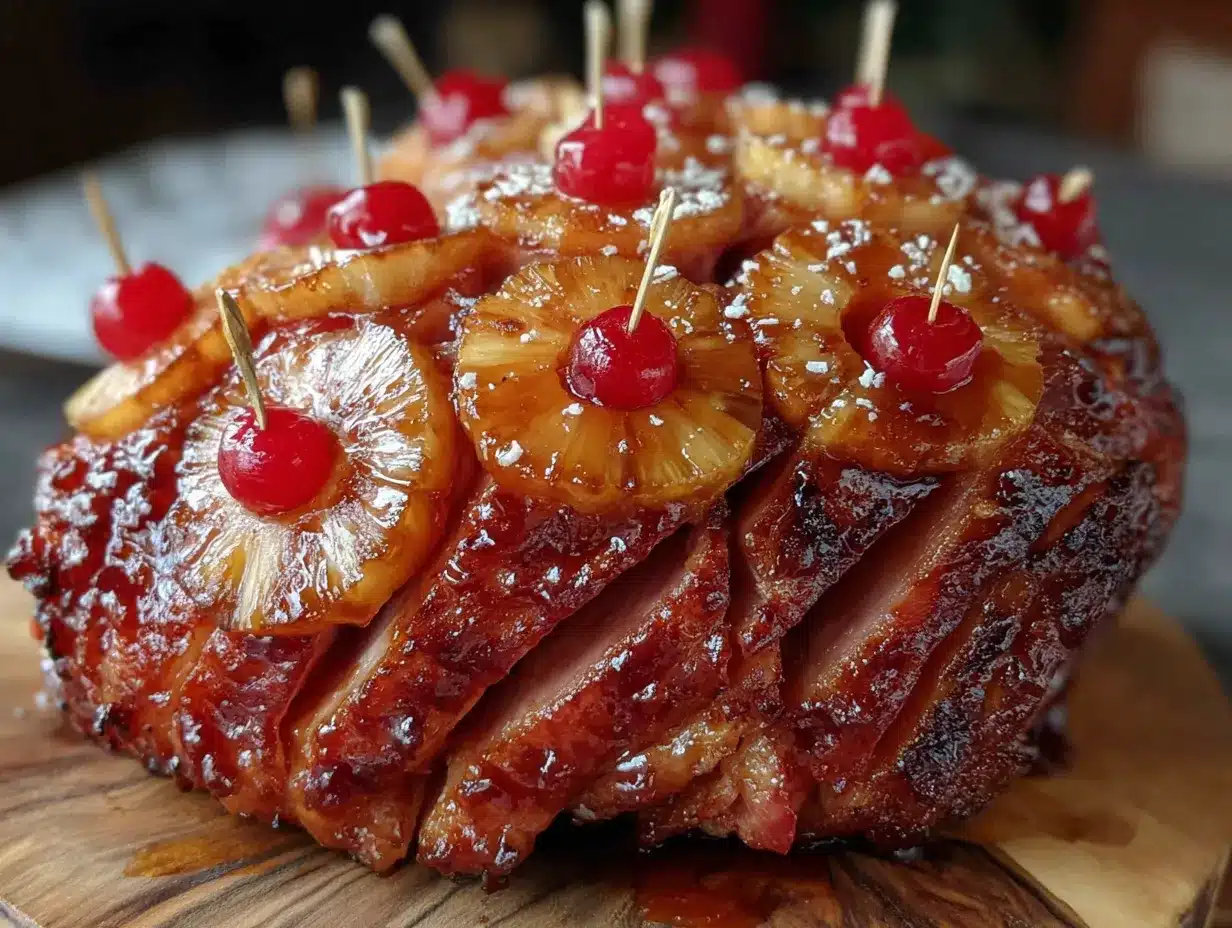
This brown sugar glazed ham for Easter dinner is straightforward, but each step matters. Follow these instructions carefully, and you’ll get a perfect result every time.
- Preheat your oven to 325°F (163°C). Position the rack in the lower third of the oven so the ham cooks evenly. While it heats, take the ham out of the fridge and let it sit at room temperature for 30 minutes—this helps it cook more uniformly.
- Prepare the ham. If your ham has a thick layer of skin or rind, use a sharp knife to score the surface in a diamond pattern, about 1/4 inch deep. This helps the glaze penetrate. Place the ham cut-side down on the rack in your roasting pan. Pour 1 cup of pineapple or apple juice into the bottom of the pan—don’t pour it over the ham, or it’ll wash off the glaze later.
- Make the glaze. In a small saucepan over medium heat, combine the brown sugar, Dijon mustard, apple cider vinegar, honey, ground cloves, and black pepper. Stir constantly with a whisk until the sugar dissolves and the mixture is smooth and bubbly, about 3-4 minutes. Remove from heat and let it cool for 5 minutes. It should be thick but pourable—if it’s too thick, add a tablespoon of water.
- Apply the first glaze coat. Using a basting brush, spread half the glaze evenly over the entire surface of the ham. Don’t be shy—get into the scored lines and any spiral cuts. Reserve the remaining glaze for later.
- Roast the ham. Cover the ham loosely with aluminum foil, tenting it so the foil doesn’t touch the glaze. Place it in the oven and roast for 1 hour 15 minutes. The foil prevents the sugar from burning while the ham heats through. After 45 minutes, baste the ham with the juices from the bottom of the pan using a spoon or brush.
- Apply the second glaze coat. After 1 hour 15 minutes, remove the foil carefully (steam will escape). Brush the remaining glaze over the ham, making sure to cover any bare spots. Increase the oven temperature to 425°F (218°C).
- Caramelize the glaze. Return the ham to the oven, uncovered, and roast for 15-20 minutes more. Watch it closely—the sugar can burn quickly. You want the glaze to be bubbling, dark golden, and slightly sticky. If it starts to blacken, remove it immediately.
- Check the temperature. Insert a meat thermometer into the thickest part of the ham, avoiding the bone. It should read 140°F (60°C) for a fully cooked ham. If it’s not there yet, return it to the oven for 5-10 minute intervals. Don’t overcook or the meat will dry out.
- Rest and carve. Remove the ham from the oven and let it rest on a cutting board for 15-20 minutes. This allows the juices to redistribute. Tent it loosely with foil to keep warm. Carve against the grain into thin slices, and spoon any pan juices over the top before serving.
Sensory cues: During the first roasting stage, you should smell a sweet, savory aroma filling the kitchen. The glaze should look glossy and thick when you apply it. When caramelizing, listen for a gentle sizzle—that’s the sugar bubbling. The ham should feel firm but give slightly when pressed. If the glaze is sticky to the touch (careful, it’s hot), it’s perfect.
Personal tip: I always set a timer for 10 minutes during the final caramelization step. It’s easy to get distracted by side dishes, and burnt sugar is a nightmare to clean off a pan. Trust me, I’ve learned the hard way.
Cooking Tips & Techniques
Over the years, I’ve made every mistake possible with this brown sugar glazed ham for Easter dinner. Here’s what I’ve learned so you don’t have to repeat my failures.
Don’t skip the scoring. I once forgot to score the ham, and the glaze just slid off like water on wax paper. Scoring creates little pockets for the sugar to cling to, giving you that beautiful caramelized crust. Use a sharp knife and cut about 1/4 inch deep—not too deep or you’ll hit the meat.
Low and slow is your friend. I used to crank the oven to 400°F thinking it would speed things up. Big mistake. The sugar burned before the ham was even warm in the center. Stick to 325°F for the initial roast, then blast it at the end. This gives you a perfectly heated ham with a crackly glaze.
Baste with pan juices, not just the glaze. The glaze is thick and sweet, but the pan juices have that savory ham flavor. Basting with the juices keeps the meat moist and adds depth. I use a silicone brush to scoop up the juices and paint them over the ham every 30 minutes during the first stage.
Watch the sugar like a hawk. During the final caramelization, the glaze can go from perfect to burnt in under 2 minutes. I once walked away to mash potatoes and came back to a smoking ham. Set a timer for 10 minutes, check it, and add more time in 5-minute increments if needed.
Let it rest. I know it’s tempting to carve immediately, especially when guests are hungry. But resting for 15-20 minutes makes a huge difference. The juices settle, the glaze sets, and the meat slices cleanly instead of falling apart. Use this time to warm your sides or make gravy from the pan drippings.
Timing strategy: Start the ham about 2.5 hours before you plan to serve. The first hour is hands-off, so you can prep sides. The final 30 minutes are active, so focus on the ham then. This way, everything comes together at the same time.
Variations & Adaptations
This brown sugar glazed ham for Easter dinner is flexible. Here are some variations I’ve tried and loved.
Spicy Brown Sugar Glaze: Add 1 teaspoon of cayenne pepper or 2 tablespoons of sriracha to the glaze for a sweet-heat combo. I made this for a friend who loves spicy food, and it was a hit. The heat balances the sugar perfectly without overpowering the ham.
Honey-Mustard Twist: Replace the brown sugar with 1/2 cup honey and increase the Dijon mustard to 1/3 cup. This creates a thinner, tangier glaze that’s less sweet but still sticky. I’ve used this for a lighter Easter brunch, and it pairs beautifully with fresh fruit.
Pineapple-Ginger Glaze: Add 1/2 cup crushed pineapple (drained) and 1 tablespoon grated fresh ginger to the glaze. The pineapple adds tropical sweetness, and the ginger gives a warm kick. This is my go-to for spring gatherings when I want something brighter.
Dietary Adaptations: For a gluten-free version, ensure your mustard and ham are certified gluten-free (most are, but check labels). For a lower-sugar option, use a sugar substitute like Swerve Brown, though the caramelization won’t be as deep. If you’re dairy-free, the recipe is already dairy-free—just skip any butter in the glaze.
Different Cooking Methods: You can cook this ham in a slow cooker on low for 4-5 hours, but you’ll miss the caramelized crust. For a smoker, cook at 250°F for 3-4 hours, basting every 30 minutes with the glaze. The smoky flavor is incredible, but watch the sugar—it can burn faster in a smoker.
Personal variation: Last year, I added a tablespoon of bourbon to the glaze for a holiday party. The alcohol cooks off, but the smoky vanilla flavor lingers. It was so good, I now make it for New Year’s Eve too.
Serving & Storage Suggestions
This brown sugar glazed ham for Easter dinner is best served warm, right after resting. The glaze is at its stickiest and most delicious when fresh.
Serving Temperature: Serve the ham at around 140°F, warm but not piping hot. Slice it thinly against the grain and arrange on a platter. Spoon some of the pan juices over the slices for extra moisture. I like to garnish with fresh parsley or rosemary sprigs for a pop of green.
Complementary Dishes: This ham pairs beautifully with classic Easter sides. Try it with creamy mashed potatoes, roasted asparagus, honey-glazed carrots, or a simple green salad. For bread, warm dinner rolls or cornbread are perfect for sopping up the glaze. A crisp white wine like Riesling or a light Pinot Noir complements the sweetness.
Storage Instructions: Store leftover ham in an airtight container in the refrigerator for up to 5 days. The glaze will soften, but the flavor remains. For longer storage, wrap the ham tightly in plastic wrap and foil, then freeze for up to 3 months. Thaw in the refrigerator overnight before reheating.
Reheating Methods: To reheat, place slices in a baking dish with a splash of apple juice or broth, cover with foil, and warm in a 300°F oven for 10-15 minutes. This prevents drying out. For individual servings, microwave on medium power for 30-60 seconds, but the glaze won’t be as crispy. Avoid boiling the ham—it toughens the meat.
Flavor Development: Honestly, the ham tastes even better the next day. The flavors meld overnight, and the glaze soaks into the meat. I love making sandwiches with leftover ham, a smear of Dijon mustard, and some arugula on crusty bread. It’s my secret lunch the day after Easter.
Nutritional Information & Benefits
This brown sugar glazed ham for Easter dinner is a treat, but it also offers some nutritional benefits worth noting.
Estimated Nutritional Values (per 4-ounce serving):
- Calories: 280
- Protein: 22g
- Fat: 10g
- Carbohydrates: 18g
- Sugar: 16g
- Sodium: 1100mg
Health Benefits: Ham is a good source of high-quality protein, which supports muscle repair and keeps you full. It also provides B vitamins like B12 and B6, which are important for energy metabolism. The brown sugar glaze adds quick energy, but the apple cider vinegar helps moderate blood sugar spikes. Pineapple juice contains bromelain, an enzyme that aids digestion.
Dietary Considerations: This recipe is naturally gluten-free and dairy-free, making it suitable for many dietary needs. However, it’s high in sodium, so those watching their salt intake should enjoy it in moderation. For a lower-sodium option, look for a ham labeled “low-sodium” or “no salt added.”
Potential Allergens: Ham itself is allergen-free, but check your mustard and honey for any additives. Some commercial hams may contain sulfites or nitrates, which can trigger sensitivities in some people. Always read labels if you have allergies.
Personal wellness perspective: I believe in balance. This ham is a celebration food, not an everyday meal. Enjoy it with plenty of vegetables and a sensible portion. The joy of sharing a beautiful meal with loved ones is its own kind of nourishment.
Conclusion
This brown sugar glazed ham for Easter dinner is more than a recipe—it’s a reminder that the best things often come from happy accidents. What started as a distracted mistake became my go-to holiday centerpiece, and I hope it becomes yours too. The caramelized crust, the tender meat, the way it fills your home with warmth—it’s everything you want from an Easter meal.
Don’t be afraid to make it your own. Try the spicy variation, add a splash of bourbon, or serve it with your favorite family sides. The beauty of this recipe is its flexibility. It’s forgiving, delicious, and guaranteed to impress. If you make it, let me know how it turns out. Share your tweaks in the comments, tag me in your photos, or tell me about your own kitchen disasters that turned into triumphs. I’d love to hear your stories.
Go ahead, grab that ham, and trust the process. Even if it starts as a mistake, it might just become your new tradition. Happy Easter, and happy cooking!
FAQs
Can I use a spiral-cut ham for this recipe?
Absolutely! Spiral-cut hams work beautifully because the glaze seeps into the slices. Just be careful not to overcook them, as the slices can dry out faster. Follow the same cooking times and temperature instructions.
How do I prevent the glaze from burning?
Watch the ham closely during the final caramelization step at 425°F. Set a timer for 10 minutes, then check it. If the glaze is bubbling but not darkening, add 5-minute increments. If it starts to blacken, remove it immediately. Tenting with foil during the first roast also prevents early burning.
Can I make the glaze ahead of time?
Yes! You can prepare the glaze up to 3 days in advance. Store it in an airtight container in the refrigerator. When you’re ready to use it, warm it gently on the stove or in the microwave, stirring until smooth. It may thicken when cold, so add a splash of water to thin it if needed.
What size ham should I buy for a crowd?
For Easter dinner, plan on about 1/2 pound per person for a bone-in ham (the bone adds weight). An 8-10 pound ham serves 12-16 people comfortably. If you want leftovers, go for a 10-12 pound ham. For a smaller gathering, a 5-6 pound ham works well with half the glaze recipe.
Can I use a different type of sugar?
You can substitute brown sugar with coconut sugar, turbinado sugar, or even white sugar mixed with a tablespoon of molasses. The flavor and caramelization will vary slightly. Coconut sugar is less sweet, while turbinado gives a crunchier texture. Avoid using liquid sweeteners alone, as they won’t caramelize the same way.
Pin This Recipe!
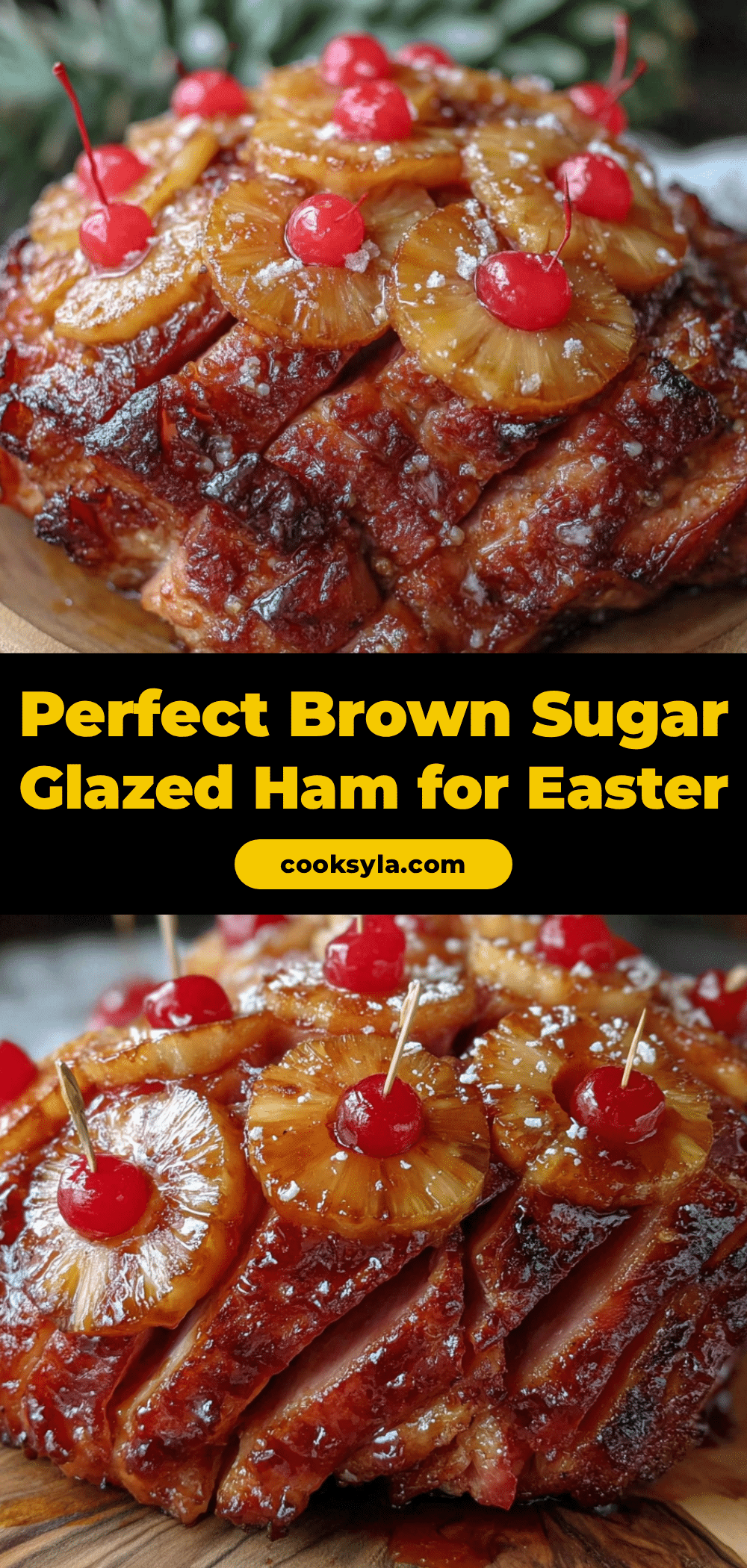
Perfect Brown Sugar Glazed Ham Easy Easter Dinner Recipe

This brown sugar glazed ham for Easter dinner is a happy accident turned into a foolproof showstopper. With a caramelized crust and tender, juicy meat, it’s the perfect centerpiece for your holiday table.
- Prep Time: 15 minutes
- Cook Time: 1 hour 45 minutes
- Total Time: 2 hours
- Yield: 12-16 servings 1x
- Category: Main Course
- Cuisine: American
Ingredients
- 1 (8-10 lb) bone-in, fully cooked ham (spiral-cut or whole)
- 1 cup packed light brown sugar
- 1/4 cup Dijon mustard
- 2 tablespoons apple cider vinegar
- 2 tablespoons honey
- 1 teaspoon ground cloves (optional)
- 1/2 teaspoon black pepper
- 1 cup pineapple juice or apple juice
Instructions
- Preheat your oven to 325°F (163°C). Position the rack in the lower third of the oven. Take the ham out of the fridge and let it sit at room temperature for 30 minutes.
- If your ham has a thick layer of skin or rind, score the surface in a diamond pattern about 1/4 inch deep. Place the ham cut-side down on a rack in a large roasting pan. Pour 1 cup of pineapple or apple juice into the bottom of the pan.
- In a small saucepan over medium heat, combine the brown sugar, Dijon mustard, apple cider vinegar, honey, ground cloves, and black pepper. Stir constantly until the sugar dissolves and the mixture is smooth and bubbly, about 3-4 minutes. Remove from heat and let cool for 5 minutes.
- Using a basting brush, spread half the glaze evenly over the entire surface of the ham. Reserve the remaining glaze.
- Cover the ham loosely with aluminum foil, tenting it so the foil doesn’t touch the glaze. Roast for 1 hour 15 minutes. After 45 minutes, baste the ham with the juices from the bottom of the pan.
- After 1 hour 15 minutes, remove the foil. Brush the remaining glaze over the ham. Increase the oven temperature to 425°F (218°C).
- Return the ham to the oven, uncovered, and roast for 15-20 minutes more, watching closely to prevent burning. The glaze should be bubbling, dark golden, and slightly sticky.
- Insert a meat thermometer into the thickest part of the ham, avoiding the bone. It should read 140°F (60°C) for a fully cooked ham. If not, return to the oven for 5-10 minute intervals.
- Remove the ham from the oven and let it rest on a cutting board for 15-20 minutes, tented loosely with foil. Carve against the grain into thin slices and spoon pan juices over the top before serving.
Notes
For best results, choose a ham that is not pre-glazed. If using a spiral-cut ham, the glaze will seep into the slices beautifully. Let the ham rest before carving to allow juices to redistribute. Watch the sugar closely during the final caramelization step to prevent burning.
Nutrition
- Serving Size: 4 ounces
- Calories: 280
- Sugar: 16
- Sodium: 1100
- Fat: 10
- Saturated Fat: 3.5
- Carbohydrates: 18
- Protein: 22
Keywords: brown sugar glazed ham, Easter dinner, ham recipe, holiday ham, glazed ham