Love this? Save it for later!
Share the inspiration with your friends
Introduction
“I never thought a broken toaster could lead me to the best duck legs I’ve ever tasted,” I confessed to my friend over coffee one chilly Saturday morning. You see, the power flickered out just as I was prepping to whip up my usual dinner, leaving me staring at a fridge full of duck legs and no oven to roast them. Desperate and a bit amused, I rummaged through my cookbooks and stumbled upon an old note scribbled by a chef at a local food festival — a simple confit duck leg recipe paired with a port wine cherry sauce. It sounded fancy, but honestly, I was intrigued enough to give it a try.
What followed was a kitchen experiment that felt more like a cozy ritual than a recipe test. The rich aroma of duck slowly cooking in its own fat filled the room, and the deep, luscious cherry sauce added a surprising hint of sweetness balanced by the wine’s warmth. Honestly, it wasn’t just a meal; it was a moment — the kind that makes you close your eyes and sigh after the first bite.
Maybe you’ve been there, stuck with ingredients and a stubborn appliance, wondering if you’ll just have to order takeout. But let me tell you, this confit duck leg recipe with port wine cherry sauce became my go-to for those nights when I want to impress without the stress. It’s rustic, elegant, and somehow comforting all at once — perfect for when you want to treat yourself or wow guests without hours in the kitchen.
Why You’ll Love This Recipe
After testing this recipe countless times (including that fateful power outage night), I can say it’s truly a keeper. Here’s why you’ll want to make the perfect confit duck legs with port wine cherry sauce your next special meal:
- Slow-Cooked Luxury: The confit method gently cooks the duck legs to insanely tender perfection, locking in flavor and moisture.
- Simple Ingredients: You don’t need an exotic pantry. Most ingredients are easy to find, and the sauce uses pantry staples with a touch of elegance from port wine.
- Impress Without Stress: While confit might sound intimidating, the hands-off cooking style means you can prep and relax — perfect for dinner parties or date nights.
- Flavor Harmony: The port wine cherry sauce adds a beautifully balanced sweet and savory kick that complements the richness of the duck.
- Make-Ahead Friendly: You can prepare the duck legs in advance, making dinner day smooth and stress-free.
This recipe isn’t just another duck dish — it’s the version that’s been refined through trial, error, and frankly, some happy accidents. The combination of tender duck leg meat with that rich, silky cherry sauce has made it a favorite among my friends, and I’m confident it’ll be yours too.
What Ingredients You Will Need
This recipe uses simple, wholesome ingredients that deliver bold flavor and satisfying texture without fuss. Most items are pantry staples, with fresh duck legs and a few specialty touches for the sauce.
- For the Duck Legs:
- 4 duck legs (about 1.5 to 2 pounds / 700-900 grams), skin-on and trimmed
- 4 cups (950 ml) duck fat or enough to submerge legs fully (rendered or store-bought; I prefer FatWorks brand for quality)
- 4 garlic cloves, smashed
- 2 sprigs fresh thyme
- 1 bay leaf
- 1 teaspoon kosher salt
- ½ teaspoon freshly ground black pepper
- For the Port Wine Cherry Sauce:
- 1 cup (240 ml) port wine (Ruby or Tawny both work; I usually keep Graham’s Ruby on hand)
- 1 cup (150 grams) fresh or frozen pitted cherries (fresh in summer, frozen in off-season)
- 2 tablespoons sugar (adjust to taste)
- 1 tablespoon balsamic vinegar (adds brightness)
- 1 small shallot, finely chopped
- 1 tablespoon unsalted butter (for finishing)
- Salt and pepper to taste
If you want to switch things up, you can substitute duck fat with goose fat or even a neutral oil, but duck fat gives that authentic confit richness. For a dairy-free option, swap the butter in the sauce with a splash of olive oil.
Equipment Needed
- Heavy-bottomed ovenproof dish or Dutch oven for slow cooking the duck legs
- Small saucepan for preparing the port wine cherry sauce
- Slotted spoon or tongs for handling the duck legs
- Meat thermometer (optional but handy to check internal temperature)
- Fine mesh strainer (to strain the sauce if you prefer a smooth finish)
- Storage container with lid (for making ahead and storing leftovers)
If you don’t have a Dutch oven, a deep baking dish covered tightly with foil works just as well. I learned the hard way that a thinner pan can cause the fat to burn if left unattended, so make sure your vessel is sturdy and even-heats.
Preparation Method
- Season the Duck Legs: Pat the duck legs dry with paper towels (this helps crisp the skin later). Sprinkle salt and pepper evenly over each leg. Place them in a single layer in your cooking vessel.
- Add Aromatics and Fat: Nestle the smashed garlic cloves, thyme sprigs, and bay leaf among the duck legs. Pour the duck fat over the legs until fully submerged (about 4 cups / 950 ml). If needed, add a bit more fat to cover completely.
- Slow Cook the Duck: Preheat your oven to 225°F (110°C). Cover the dish tightly with a lid or foil and place it in the oven. Let the duck legs cook for 2.5 to 3 hours, until the meat is tender and pulls away easily from the bone. The fat should gently bubble but not boil.
- Cool and Store: Once cooked, remove the duck legs from the fat using a slotted spoon. If you’re not serving immediately, cool the legs and store them in the fat in an airtight container in the fridge for up to 1 week. This also deepens the flavor.
- Prepare the Sauce: In a small saucepan over medium heat, sauté the chopped shallot in a splash of duck fat or butter until translucent (about 3 minutes). Add the port wine, cherries, sugar, and balsamic vinegar. Simmer gently for 15-20 minutes, stirring occasionally, until the sauce thickens and the cherries soften.
- Finish the Sauce: Remove from heat and stir in the tablespoon of butter for shine and richness. Season with salt and pepper to taste. If you prefer a smooth sauce, strain through a fine mesh sieve, pressing gently to extract flavor.
- Crisp the Duck Skin: Just before serving, heat a non-stick skillet over medium-high heat. Place the duck legs skin-side down without any added fat. Cook for 3-5 minutes or until the skin is golden and crisp. Flip briefly to warm the meat through.
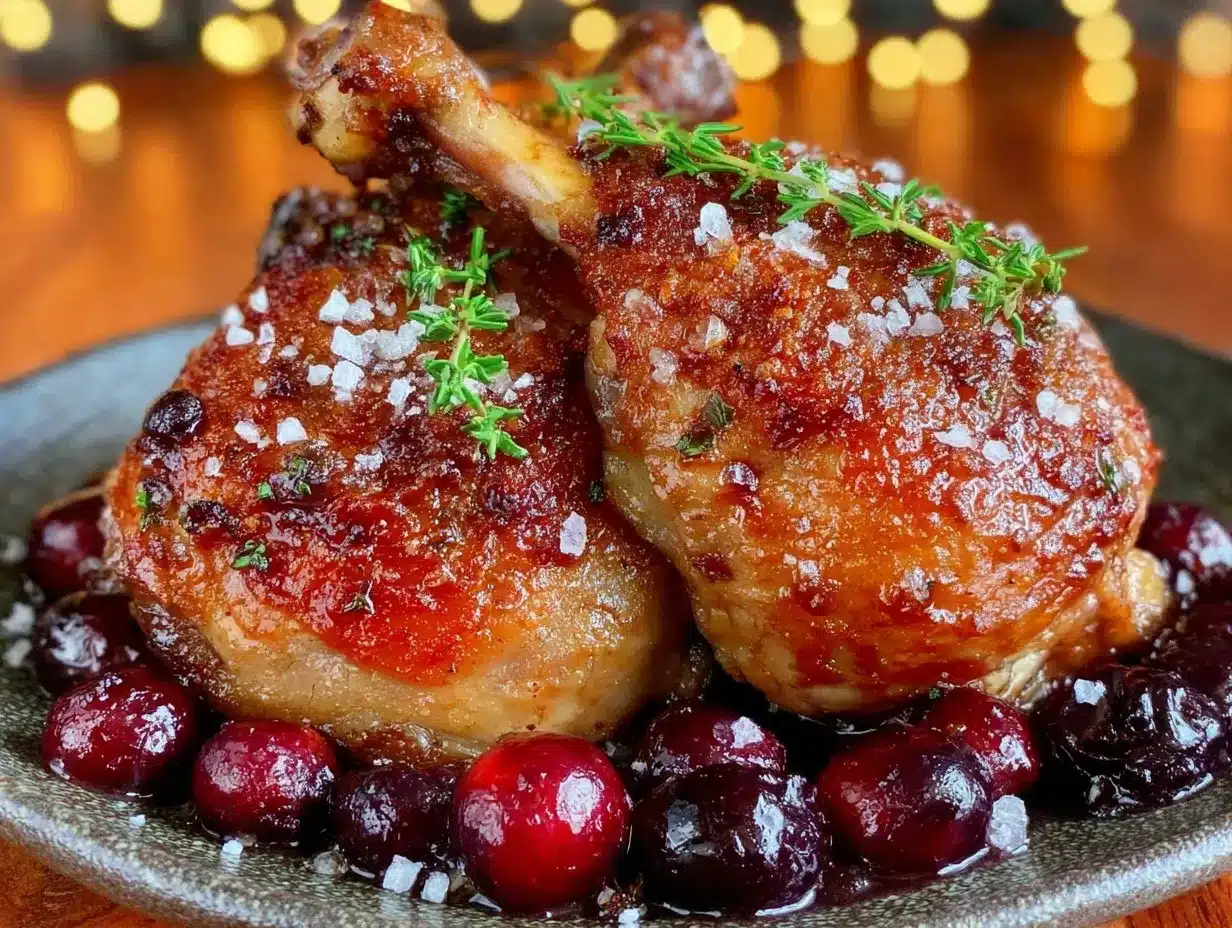
- Plate and Serve: Serve the duck legs with a generous spoonful of port wine cherry sauce drizzled over. This pairs beautifully with creamy mashed potatoes or a simple green salad.
Pro tip: Keep an eye on the confit fat during cooking; if you see it starting to smoke or bubble vigorously, lower the oven temperature. You want a gentle, slow cook to achieve that meltingly tender texture.
Cooking Tips & Techniques
Let me tell you, confit duck legs may sound fancy, but the secret is really patience and gentle heat. Here are some tips I’ve picked up along the way:
- Dry the Skin Thoroughly: Before cooking, make sure the duck legs are thoroughly patted dry — this helps the skin crisp up beautifully after slow cooking.
- Low and Slow is Key: Cooking at a low temperature (around 225°F / 110°C) for several hours renders the fat perfectly and breaks down connective tissue without drying meat out.
- Don’t Rush the Sauce: Let the port wine and cherries reduce slowly to concentrate flavors. Rushing this step can leave the sauce watery and thin.
- Use Fresh or Frozen Cherries: Frozen cherries work just fine and are a great alternative when fresh are out of season — just thaw before cooking.
- Be Careful Not to Burn the Fat: Duck fat can burn if overheated, so keep your oven temperature steady and avoid direct high heat during confit.
- Make Ahead for Best Flavor: Confit duck can be cooked a day or two ahead. The resting time deepens the flavor, and you can crisp the skin just before serving.
Honestly, the first time I tried crisping the skin in a cold pan, I ended up with half the skin stuck to the pan. Lesson learned: always preheat your skillet well to get that perfect golden crust.
Variations & Adaptations
Feel free to customize this confit duck leg recipe with port wine cherry sauce to make it your own:
- Fruit Variations: Swap cherries for blackberries, blueberries, or even figs for a different fruity note in the sauce.
- Herb Twists: Add rosemary or sage to the confit for an earthy aroma that complements the rich duck.
- Spicy Kick: Stir in a pinch of red pepper flakes or a dash of cayenne to the sauce if you like a little heat.
- Cooking Method: If you don’t want to use duck fat, try slow-cooking the legs in olive oil or baking them covered tightly — just note the flavor will be less rich.
- Allergen-Friendly: For dairy-free, replace butter in the sauce with coconut oil or omit entirely; for low-sodium, reduce added salt when seasoning the duck.
One time, I tried adding a splash of brandy to the cherry sauce — it added a lovely depth, though I usually keep it simple to let the port wine shine.
Serving & Storage Suggestions
Serve the confit duck legs warm with the port wine cherry sauce spooned generously over the top. The crispy skin and tender meat pair beautifully with creamy sides like mashed potatoes, roasted root vegetables, or even a simple arugula salad with lemon vinaigrette.
Leftovers keep well in the fridge for up to 4 days when stored in an airtight container. The duck legs taste just as good cold or reheated gently in a skillet to crisp the skin again. You can also freeze cooked legs wrapped tightly for up to 2 months.
Reheat slowly in a low oven (about 300°F / 150°C) covered with foil to keep meat moist, then finish skin-side down in a hot pan for crispness. The port wine cherry sauce can be refrigerated separately and warmed gently before serving.
Interestingly, the flavors actually deepen after a day or two — so if you have time, make this a day ahead and enjoy the next-day magic.
Nutritional Information & Benefits
One serving (1 duck leg with sauce) provides approximately:
| Calories | 550 kcal |
|---|---|
| Protein | 30 grams |
| Fat | 45 grams (mostly from duck fat) |
| Carbohydrates | 10 grams (mainly from cherries and sugar) |
Duck meat is a great source of iron and zinc, important for energy and immune health. The cherries add antioxidants and vitamin C, while the port wine contains polyphenols with heart health benefits — though, of course, moderation is key.
This recipe is naturally gluten-free and can be adapted to be dairy-free by adjusting the sauce finishing touch. It offers a satisfying balance of protein and fat, making it a hearty yet nourishing option for special occasions.
Conclusion
Perfect confit duck legs with port wine cherry sauce is one of those recipes that feels fancy but is surprisingly approachable. Whether you’re looking to impress guests or treat yourself to a comforting, rich meal, this dish delivers every time. I love how the slow cooking makes the duck melt in your mouth, while the sauce adds just the right touch of sweetness and depth.
Don’t be afraid to tweak the sauce or try different fruit pairings — it’s your kitchen, after all! I’d love to hear how you make it your own, so please leave a comment or share your favorite variations.
Give this recipe a try soon; trust me, the reward is well worth the wait. Happy cooking!
FAQs
How long can I store confit duck legs in the fridge?
You can store duck legs submerged in duck fat in an airtight container in the fridge for up to one week. Make sure the legs remain covered by the fat to preserve freshness.
Can I make the port wine cherry sauce ahead of time?
Absolutely! The sauce can be made a day or two in advance and stored in the refrigerator. Warm gently before serving.
Is confit duck legs cooking difficult for beginners?
Not at all! The slow and low cooking method is very forgiving. Just keep the temperature steady and don’t rush the process.
What’s the best way to crisp the duck skin after confit?
Heat a skillet over medium-high heat and cook the duck legs skin-side down without added fat until the skin is golden and crispy, about 3-5 minutes.
Can I use frozen duck legs for this recipe?
Yes, just thaw the duck legs completely before cooking. Pat dry thoroughly to ensure crispy skin later.
Pin This Recipe!

Perfect Confit Duck Legs Recipe with Easy Port Wine Cherry Sauce

Slow-cooked duck legs in their own fat paired with a rich port wine cherry sauce, delivering tender meat and a beautifully balanced sweet and savory flavor.
- Prep Time: 15 minutes
- Cook Time: 3 hours
- Total Time: 3 hours 15 minutes
- Yield: 4 servings 1x
- Category: Main Course
- Cuisine: French
Ingredients
- 4 duck legs (about 1.5 to 2 pounds / 700–900 grams), skin-on and trimmed
- 4 cups (950 ml) duck fat or enough to submerge legs fully (rendered or store-bought)
- 4 garlic cloves, smashed
- 2 sprigs fresh thyme
- 1 bay leaf
- 1 teaspoon kosher salt
- ½ teaspoon freshly ground black pepper
- 1 cup (240 ml) port wine (Ruby or Tawny)
- 1 cup (150 grams) fresh or frozen pitted cherries
- 2 tablespoons sugar (adjust to taste)
- 1 tablespoon balsamic vinegar
- 1 small shallot, finely chopped
- 1 tablespoon unsalted butter (for finishing)
- Salt and pepper to taste
Instructions
- Pat the duck legs dry with paper towels. Sprinkle salt and pepper evenly over each leg. Place them in a single layer in your cooking vessel.
- Nestle the smashed garlic cloves, thyme sprigs, and bay leaf among the duck legs. Pour the duck fat over the legs until fully submerged (about 4 cups). Add more fat if needed to cover completely.
- Preheat oven to 225°F (110°C). Cover the dish tightly with a lid or foil and place in the oven. Cook for 2.5 to 3 hours until meat is tender and pulls away easily from the bone. The fat should gently bubble but not boil.
- Remove duck legs from fat using a slotted spoon. Cool and store in fat in an airtight container in the fridge for up to 1 week if not serving immediately.
- In a small saucepan over medium heat, sauté chopped shallot in a splash of duck fat or butter until translucent (about 3 minutes). Add port wine, cherries, sugar, and balsamic vinegar. Simmer gently for 15-20 minutes until sauce thickens and cherries soften.
- Remove from heat and stir in butter for shine and richness. Season with salt and pepper to taste. Strain through a fine mesh sieve if a smooth sauce is preferred.
- Just before serving, heat a non-stick skillet over medium-high heat. Place duck legs skin-side down without added fat. Cook for 3-5 minutes until skin is golden and crisp. Flip briefly to warm meat through.
- Serve duck legs with a generous spoonful of port wine cherry sauce drizzled over. Pair with creamy mashed potatoes or a simple green salad.
Notes
Keep oven temperature steady at 225°F to avoid burning the fat. Pat duck legs dry before cooking to ensure crispy skin. Sauce can be strained for smoothness. Make ahead for deeper flavor. For dairy-free, substitute butter with olive oil or coconut oil. Frozen cherries can be used after thawing.
Nutrition
- Serving Size: 1 duck leg with sauc
- Calories: 550
- Fat: 45
- Carbohydrates: 10
- Protein: 30
Keywords: confit duck legs, duck recipe, port wine cherry sauce, slow cooked duck, elegant dinner, easy duck recipe, duck with cherry sauce