Love this? Save it for later!
Share the inspiration with your friends
“You’ve got to trust the sizzle,” my friend Jake said, flipping a steak with the confidence of a seasoned chef. It was a random Thursday evening, and I was standing in his kitchen, arms crossed, trying to figure out how he made his filet mignon look like it belonged in a fancy restaurant rather than a quick weeknight dinner. You know that feeling when the kitchen suddenly fills with that mouthwatering aroma that stops you mid-conversation? That’s exactly what happened — the sizzling sound of the cast iron pan meeting the steak was like music. Honestly, I wasn’t expecting much; I thought filet mignon was one of those intimidating dishes reserved for special occasions or fancy dinners.
But Jake, who usually swears by simple burgers, had cracked the code on what he called a “perfect medium-rare filet mignon with cast iron searing.” The secret wasn’t just the cut of meat; it was the timing, the heat, and a few little tricks that made all the difference. I jotted down the steps on a crumpled napkin, trying not to lose the details as he talked me through it.
Maybe you’ve been there — staring down a pricey steak, unsure if you’ll ruin it or nail it. This recipe stuck with me because it’s straightforward, rewarding, and turns that intimidating cut into a tender, juicy masterpiece you can whip up anytime. Let me tell you, after a few tries (and a couple of charred steaks!), this method became my go-to for impressing guests and satisfying my own craving for perfectly cooked beef.
Why You’ll Love This Recipe
This perfect medium-rare filet mignon recipe with cast iron searing is one of those dishes that feels fancy but comes together without the fuss. As someone who’s tested countless steak recipes, I can say this one hits all the right notes — juicy, tender, and boasting that irresistible crust.
- Quick & Easy: Ready in about 20 minutes — ideal for busy weeknights or when you want a special dinner without the wait.
- Simple Ingredients: Just quality steak, butter, garlic, and herbs — no complicated sauces or obscure spices needed.
- Perfect for Date Night or Dinner Parties: This recipe impresses without stress, making it great for when you want to show off your cooking skills.
- Crowd-Pleaser: Even steak skeptics tend to fall for this tender, buttery bite.
- Unbelievably Delicious: The cast iron sear locks in flavor and creates a perfect crust that contrasts beautifully with the medium-rare center.
What sets this recipe apart? It’s the timing and the searing technique that makes the steak juicy and tender every time. I’ve tried recipes that call for reverse searing or sous vide, but this is a straightforward, classic approach with a few little tweaks — like resting the steak under foil to let the juices redistribute — that make all the difference. Honestly, once you get this down, your steak nights will never be the same.
What Ingredients You Will Need
This recipe uses simple, wholesome ingredients to bring out the rich flavor of the filet mignon without complicated steps. Most are pantry staples or easy to find at your local butcher or grocery store.
- Filet Mignon Steaks: 2 steaks, about 6 ounces (170g) each, 1.5 to 2 inches thick (look for USDA Choice or Prime for best quality)
- Salt: Kosher salt or sea salt (season generously to develop crust)
- Freshly Ground Black Pepper: Adds a little heat and depth
- Unsalted Butter: 2 tablespoons, for basting (I prefer Kerrygold for its rich flavor)
- Garlic Cloves: 2, smashed but left whole (adds aromatic depth)
- Fresh Thyme or Rosemary: A few sprigs to infuse flavor during cooking (optional but recommended)
- High-Smoke Point Oil: 1 tablespoon (such as avocado oil or grapeseed oil, essential for a good sear without burning)
If you want to switch things up, you can use ghee or clarified butter for a slightly nuttier flavor, or swap thyme for fresh oregano. If your local market doesn’t have thick-cut filet mignon, tenderloin steaks of similar thickness work well too. Just make sure to bring the steaks to room temperature before cooking — it really helps with even cooking.
Equipment Needed
- Cast Iron Skillet: This is key for getting that perfect sear. A 10-inch skillet works best; I’ve tried stainless steel, but cast iron holds heat better for an even crust.
- Tongs: For flipping the steak without piercing it (which would let precious juices escape).
- Instant-Read Meat Thermometer: Helps nail the medium-rare doneness (aim for 130°F/54°C internal temperature).
- Aluminum Foil: For resting the steaks post-cooking to lock in juices.
- Small Spoon: For basting butter over the steaks during cooking.
If you don’t have a cast iron skillet, a heavy stainless steel pan can work, but the sear might not be as deep. For budget-friendly options, Lodge makes great pre-seasoned cast iron skillets that last forever if you care for them properly. Just avoid non-stick pans for this recipe — they don’t get hot enough for a good crust.
Preparation Method
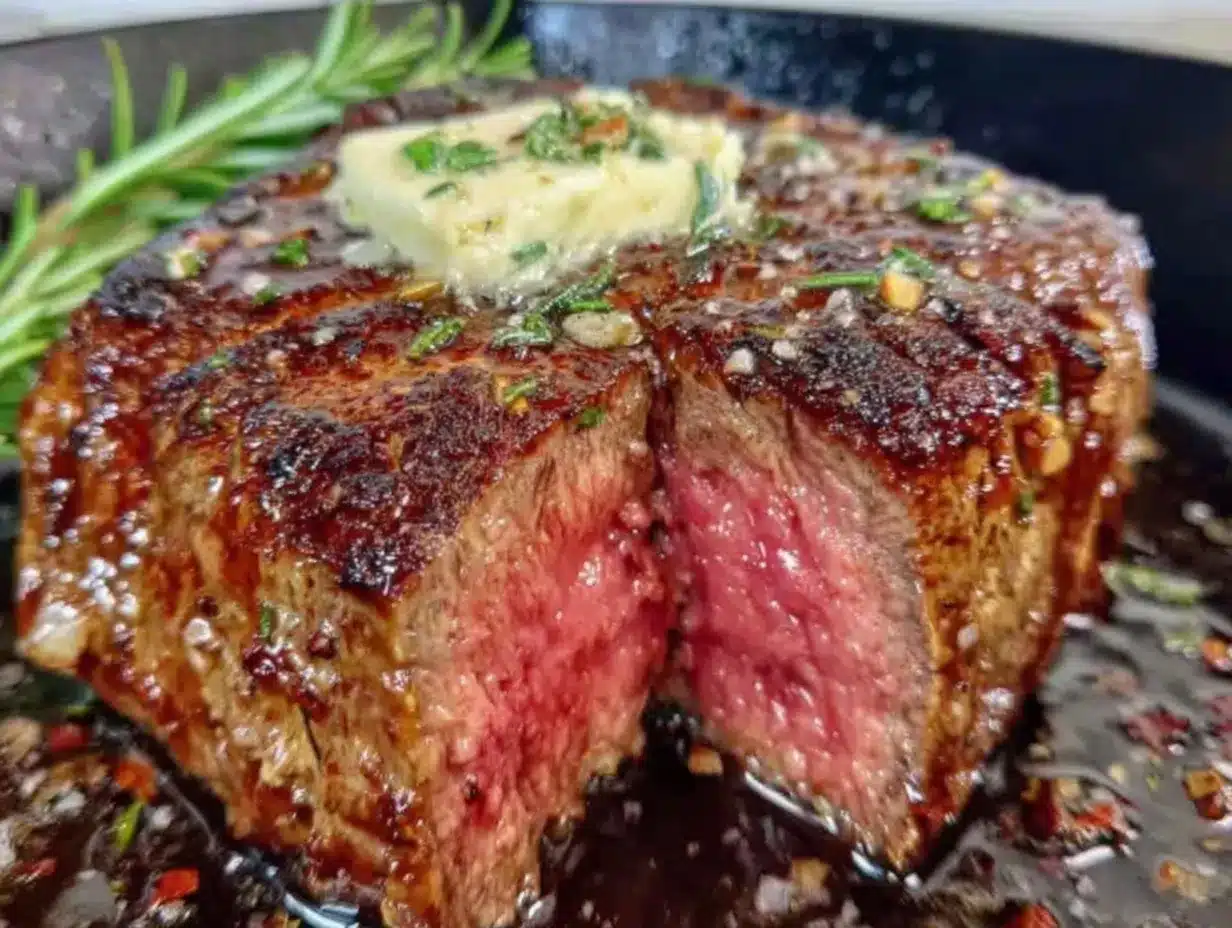
- Bring the Steaks to Room Temperature (20-30 minutes): Remove the filet mignons from the fridge and let them sit on the counter. This step helps the steaks cook evenly — I once skipped this, and the center was cold while the outside was overdone.
- Preheat Your Cast Iron Skillet: Place the skillet over medium-high heat for at least 5 minutes until it’s smoking hot. You want the pan to be screaming hot for that perfect sear.
- Season the Steaks Generously: Pat the steaks dry with paper towels. Sprinkle kosher salt and freshly ground black pepper on all sides — don’t be shy here; the seasoning forms the crust.
- Add Oil to the Skillet: Pour 1 tablespoon of high-smoke point oil into the pan and swirl to coat.
- Sear the Steaks (3-4 minutes per side): Place the steaks in the pan, laying them away from you to avoid splatters. Don’t move them around; let the crust form. Flip after 3-4 minutes when a deep brown crust forms.
- Add Butter, Garlic, and Herbs: After flipping, add butter, smashed garlic cloves, and thyme or rosemary sprigs to the pan. Tilt the pan slightly and use a spoon to baste the steaks with the melted butter continuously for 1-2 minutes. This step adds richness and flavor — trust me, it’s worth the extra effort.
- Check Internal Temperature: Use an instant-read thermometer inserted into the thickest part of the steak. For medium-rare, aim for 130°F (54°C). Remember, the steak will continue to cook slightly while resting.
- Rest the Steaks (5-7 minutes): Transfer the steaks to a plate or cutting board, cover loosely with foil. Resting lets the juices redistribute, so your filet mignon stays juicy and tender.
- Serve: Slice against the grain if desired, or serve whole with your favorite sides.
Pro tip: If your steak is thicker than 2 inches, after searing, you can finish it in a 400°F (204°C) oven for 3-5 minutes to reach medium-rare without burning the crust. I learned this the hard way after burning a thicker cut on the stovetop!
Cooking Tips & Techniques
Getting the perfect medium-rare filet mignon is all about timing, temperature, and paying attention to the steak. Here are some tips I’ve picked up along the way:
- Don’t Skip the Drying Step: Patting the steak dry before seasoning helps the crust form better. Moisture is the enemy of a good sear.
- Use a Hot Pan: If the pan isn’t hot enough, the steak will steam instead of sear. Wait for a visible smoke before adding oil and steak.
- Avoid Overcrowding: Cook steaks in batches if needed. Crowding lowers the pan temperature and prevents a good crust.
- Use a Thermometer: Don’t rely on guesswork. A quick poke won’t do — an instant-read thermometer is the best way to ensure medium-rare.
- Resting is Crucial: I used to slice steaks right off the pan and regretted it. Resting keeps the steak juicy and tender.
- Basting Adds Flavor: Basting with butter, garlic, and herbs infuses the steak with savory richness — it’s a game-changer.
- Multitasking: While the steak rests, use the downtime to quickly whip up a sauce or side dish. Efficiency is key in the kitchen!
Variations & Adaptations
If you want to customize your filet mignon experience, here are some tasty variations to consider:
- Garlic Herb Butter: Mix softened butter with minced garlic, parsley, and chives. Dollop on the steak after resting for extra indulgence.
- Different Herbs: Swap thyme or rosemary for sage or tarragon to change the flavor profile.
- Blue Cheese Crust: After searing, top the steak with a mix of blue cheese and breadcrumbs, then broil for 2-3 minutes for a crispy, tangy crust.
- Grilled Version: If you prefer grilling, use the same seasoning and butter basting technique, cooking over high heat for 3-4 minutes per side.
- Allergen-Friendly: Use olive oil instead of butter for a dairy-free option. The sear won’t change, just the basting flavor.
One time, I tried finishing the steak with a splash of red wine in the pan after searing — it made a quick pan sauce that was surprisingly delicious and easy.
Serving & Storage Suggestions
Serve your perfect medium-rare filet mignon immediately after resting for the best experience. It pairs beautifully with classic sides like garlic mashed potatoes, roasted asparagus, or a simple arugula salad with lemon vinaigrette.
If you have leftovers (though rare!), store them in an airtight container in the refrigerator for up to 2 days. Reheat gently in a low oven (around 250°F/120°C) or in a skillet with a splash of beef broth to keep the steak moist. Avoid microwaving, as it can toughen the meat.
Flavors actually deepen a bit after resting and reheating, so don’t hesitate to make extra for a delicious steak sandwich or salad topping the next day.
Nutritional Information & Benefits
This filet mignon recipe is rich in protein, essential nutrients like iron, zinc, and B vitamins, making it a satisfying and nourishing meal. A 6-ounce (170g) serving typically contains around 400 calories, 35g of protein, and 28g of fat, mostly from the steak and butter.
Choosing a lean cut like filet mignon means less saturated fat compared to other steak cuts. Using fresh herbs and minimal seasoning keeps it clean and flavorful. It’s a great option for low-carb or keto diets, and naturally gluten-free. Just be mindful if you’re watching sodium intake — adjust salt to taste.
Conclusion
This perfect medium-rare filet mignon recipe with cast iron searing brings together simplicity and technique to create a steak that’s tender, juicy, and full of flavor. I love how approachable it is — no fancy gadgets, just good ingredients and a little patience. Whether you’re cooking for a special occasion or just want to treat yourself on a weeknight, this method delivers every time.
Feel free to tweak the seasoning or try different herbs to make it your own. And trust me, once you nail this, you’ll want to make it again and again. If you try this recipe, drop a comment sharing your experience or any fun variations you came up with — I always love hearing how you make it yours!
So grab your cast iron skillet, a couple of quality steaks, and get ready for some serious steak night magic.
FAQs
How do I know when my filet mignon is medium-rare?
The best way is to use an instant-read thermometer. Medium-rare is around 130°F (54°C) internal temperature. The steak will continue to cook slightly after you take it off the heat.
Can I use a different pan if I don’t have cast iron?
A heavy stainless steel pan can work, but cast iron holds heat better for a more consistent sear. Avoid non-stick pans, as they don’t get hot enough for a good crust.
Why do I need to rest the steak after cooking?
Resting lets the juices redistribute throughout the meat, so they don’t all run out when you cut into it. This keeps the steak juicy and tender.
What if my steak is thicker than 2 inches?
After searing, you can finish cooking it in a preheated 400°F (204°C) oven for 3-5 minutes to reach the desired doneness without burning the crust.
Can I prepare this recipe ahead of time?
You can season the steak ahead and keep it covered in the fridge for a few hours, but bring it to room temperature before cooking. Cooked steak is best enjoyed fresh but can be reheated gently as described above.
Pin This Recipe!
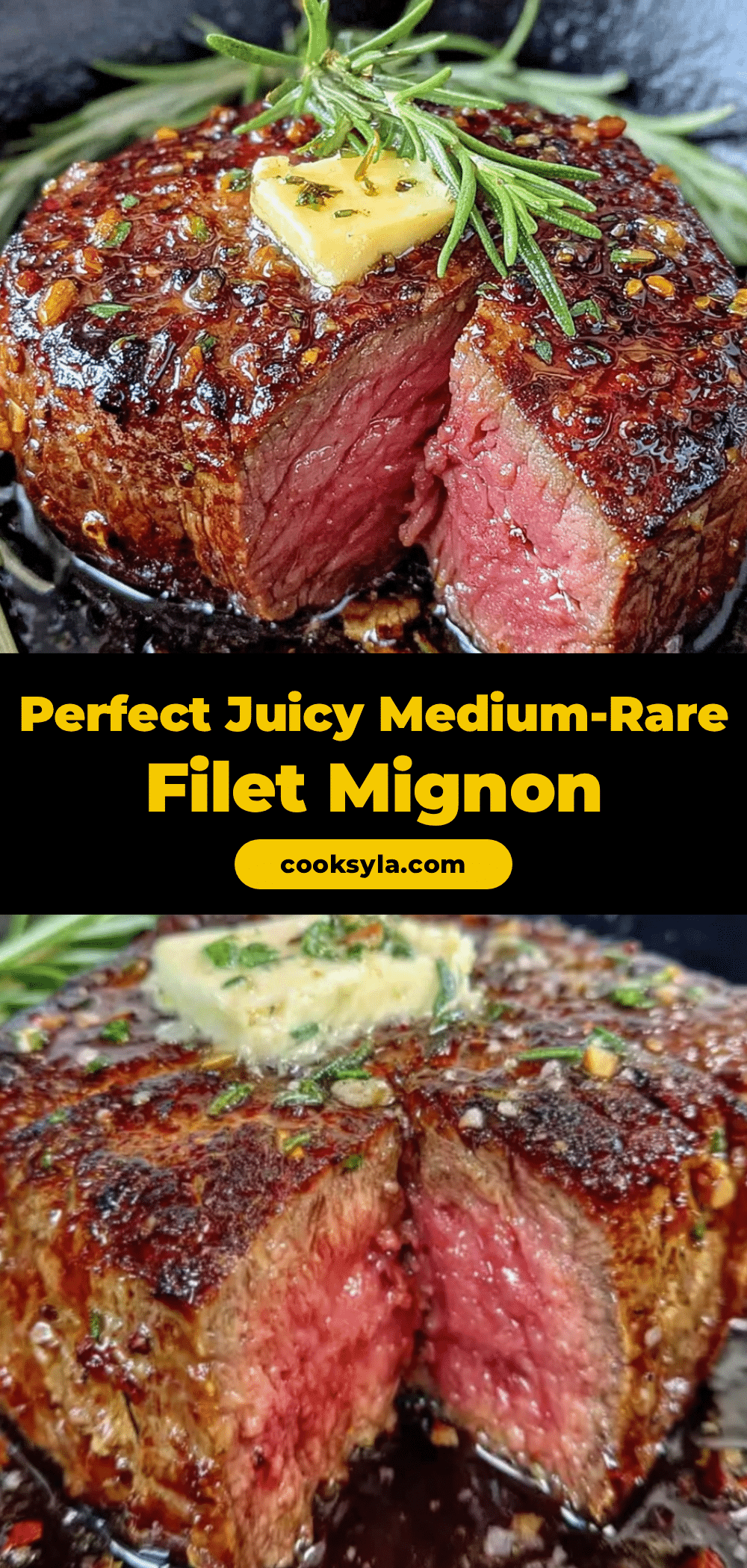
Perfect Medium-Rare Filet Mignon Recipe Easy Cast Iron Searing Tips
A straightforward and rewarding recipe for perfectly cooked medium-rare filet mignon using cast iron searing, delivering a juicy, tender steak with a delicious crust.
- Prep Time: 25 minutes
- Cook Time: 10 minutes
- Total Time: 35 minutes
- Yield: 2 servings 1x
- Category: Main Course
- Cuisine: American
Ingredients
- 2 filet mignon steaks, about 6 ounces (170g) each, 1.5 to 2 inches thick
- Kosher salt or sea salt, to season generously
- Freshly ground black pepper, to taste
- 2 tablespoons unsalted butter
- 2 garlic cloves, smashed but left whole
- A few sprigs fresh thyme or rosemary (optional)
- 1 tablespoon high-smoke point oil (such as avocado oil or grapeseed oil)
Instructions
- Bring the steaks to room temperature by removing them from the fridge and letting them sit on the counter for 20-30 minutes.
- Preheat your cast iron skillet over medium-high heat for at least 5 minutes until it is smoking hot.
- Pat the steaks dry with paper towels. Season generously with kosher salt and freshly ground black pepper on all sides.
- Add 1 tablespoon of high-smoke point oil to the skillet and swirl to coat.
- Place the steaks in the pan, laying them away from you to avoid splatters. Sear without moving for 3-4 minutes until a deep brown crust forms.
- Flip the steaks and add butter, smashed garlic cloves, and thyme or rosemary sprigs to the pan.
- Tilt the pan slightly and baste the steaks continuously with melted butter for 1-2 minutes.
- Check the internal temperature with an instant-read thermometer; aim for 130°F (54°C) for medium-rare.
- Transfer the steaks to a plate or cutting board and cover loosely with foil. Rest for 5-7 minutes to let juices redistribute.
- Serve whole or sliced against the grain with your favorite sides.
Notes
Bring steaks to room temperature before cooking for even doneness. Use a hot cast iron skillet for a perfect crust. Rest steaks after cooking to keep them juicy. For steaks thicker than 2 inches, finish in a 400°F oven for 3-5 minutes after searing. Avoid non-stick pans as they don’t get hot enough for a good sear.
Nutrition
- Serving Size: 1 steak (6 ounces)
- Calories: 400
- Sodium: 400
- Fat: 28
- Saturated Fat: 12
- Protein: 35
Keywords: filet mignon, medium-rare steak, cast iron searing, easy steak recipe, steak dinner, quick steak, tender steak