Love this? Save it for later!
Share the inspiration with your friends
“You won’t believe this duck breast is as simple as it looks,” my friend Marco said one chilly Friday evening, flipping the pan like a seasoned pro while we chatted over glasses of red wine. I was honestly a little skeptical—duck always felt like one of those fancy restaurant dishes you never quite nail at home. But as the aroma of crisping skin and simmering cherries filled the kitchen, I realized this pan-seared duck breast recipe was something special.
It all started with a spur-of-the-moment dinner party. I’d grabbed duck breasts on a whim at the local farmers market, inspired by the rich, silky texture I’d tasted during my last trip to Paris. Marco, who’s more of a pasta guy, was tasked with helping me figure out the sauce. A quick rummage through the pantry led us to a bottle of port wine and a bag of frozen cherries. We threw together what felt like an experiment—and what came out was a cherry port wine reduction so luscious, it practically stole the spotlight.
Maybe you’ve been there—standing in your kitchen, wondering if you can pull off a dish that looks intimidating but tastes divine. This duck breast recipe is exactly that kind of win. The skin crisps up to a golden perfection, the meat stays juicy and tender, and the cherry port wine sauce adds that perfect blend of sweet and tart that makes you close your eyes with the first bite. I still laugh thinking about the mess we made that night (Marco forgot the timer, so the sauce nearly boiled dry!), but this recipe stuck with me ever since.
Whether you’re making this for a special occasion or just a cozy night in, it’s approachable, impressive, and honestly, one of my favorite ways to make duck breast at home. Let me tell you—once you try this, you’ll want to keep it in your cooking rotation too.
Why You’ll Love This Recipe
After countless trials and happy accidents, this pan-seared duck breast with cherry port wine reduction has become a standout in my kitchen. Here’s why you’ll want to make it again and again:
- Quick & Easy: Ready in about 30 minutes, it’s perfect for busy weeknights or last-minute guests.
- Simple Ingredients: No obscure items here—just pantry staples and fresh basics like duck breasts, cherries, and port wine.
- Perfect for Special Occasions: Whether it’s a date night or holiday dinner, this dish brings a touch of elegance without the stress.
- Crowd-Pleaser: Even duck skeptics have been converted by the crispy skin and that irresistible sauce.
- Unbelievably Delicious: The rich, savory duck paired with the sweet-tart cherry port wine reduction is next-level comfort food.
This isn’t just another duck recipe—it’s the one where the skin gets perfectly crisp without burning, and the sauce balances richness with brightness. I prefer using fresh cherries when in season, but frozen works beautifully too. The sauce’s depth comes from the port wine, which I recommend picking up from Fonseca or Taylor Fladgate for that authentic flavor punch. Honestly, the first time I nailed this sauce, I closed my eyes and felt like I was dining at a cozy bistro in Bordeaux.
For a twist, try serving it with creamy mashed potatoes or a side of sautéed greens to round out the meal. Ready to impress without the fuss? Let’s get started.
What Ingredients You Will Need
This recipe uses straightforward ingredients that work together to create bold flavors and satisfying textures without fuss. Most are pantry staples, but a few fresh items make all the difference.
- Duck Breasts: 2 skin-on duck breasts (about 6-7 ounces / 170-200 g each) – look for firm, fresh meat with a nice layer of fat.
- Salt and Freshly Ground Black Pepper: For seasoning the duck.
- Olive Oil: 1 tablespoon (for searing) – I prefer extra virgin for flavor.
- Fresh or Frozen Cherries: 1 cup, pitted (fresh when in season; frozen works well too).
- Port Wine: ½ cup (120 ml) – a good quality ruby port like Fonseca or Taylor Fladgate adds richness.
- Shallot: 1 small, finely chopped – adds subtle sweetness and depth.
- Garlic: 1 clove, minced – for aromatic warmth.
- Chicken or Vegetable Stock: ½ cup (120 ml) – homemade or low-sodium store-bought.
- Balsamic Vinegar: 1 tablespoon – balances the sweetness with acidity.
- Butter: 1 tablespoon, cold – to finish the sauce with a silky texture.
- Fresh Thyme: A few sprigs (optional) – adds an earthy note to the sauce.
Ingredient Tips: If you can’t find fresh cherries, frozen are a fantastic substitute—just thaw before using. For a dairy-free version, swap the butter with a tablespoon of olive oil or coconut oil. If you’re looking to keep this gluten-free, double-check your stock labels.
Equipment Needed
- Heavy Skillet or Cast Iron Pan: Essential for getting that crispy, golden skin on the duck breast. I use a well-seasoned cast iron pan that holds heat evenly, but a stainless steel skillet works fine too.
- Tongs: For flipping the duck without piercing the meat, which keeps it juicy.
- Saucepan or Small Sauté Pan: To make the cherry port wine reduction.
- Sharp Knife and Cutting Board: For prepping the duck and chopping shallots and garlic.
- Instant-Read Thermometer (Optional): Helps check the duck’s internal temperature for perfect doneness. I rely on it for confidence but have nailed this recipe without it plenty of times.
If you don’t have a cast iron pan, a heavy-bottomed non-stick skillet will do, but keep an eye on the heat to avoid burning the skin. For those on a budget, a good-quality stainless steel pan offers great heat distribution and durability.
Preparation Method
- Score the Duck Skin: Using a sharp knife, lightly score the skin of the duck breasts in a crisscross pattern, being careful not to cut into the meat. This helps render the fat and crisps the skin beautifully. (5 minutes)
- Season Generously: Pat the duck breasts dry with paper towels. Season both sides with salt and freshly ground black pepper. I like to season just before cooking to keep the skin dry. (2 minutes)
- Preheat the Pan: Place your skillet over medium heat and let it warm up for 2-3 minutes. Add 1 tablespoon of olive oil and swirl to coat. The pan should be hot but not smoking. (3 minutes)
- Start Searing the Duck: Place the duck breasts skin-side down in the pan. You should hear a gentle sizzle. Don’t move them around—let the skin render and crisp for about 6-8 minutes. You’ll see fat beginning to melt and the skin turning golden brown. Use tongs to lift a corner and check. (6-8 minutes)
- Flip and Finish Cooking: Turn the duck breasts over and cook the meat side for 3-5 minutes, depending on thickness and preferred doneness. For medium-rare, aim for an internal temperature of 135°F (57°C). Remove from the pan and let rest on a plate tented with foil for 5-7 minutes. (5 minutes cooking + 5 minutes resting)
- Make the Cherry Port Wine Reduction: While the duck rests, wipe out the skillet and add a small drizzle of olive oil if needed. Heat a saucepan over medium heat, add the chopped shallot and garlic, and sauté until softened and fragrant, about 2 minutes. Add the cherries and cook for 3 minutes until they start to release their juices.
- Add the port wine, chicken stock, and balsamic vinegar to the pan. Toss in fresh thyme if using. Bring to a simmer and reduce the liquid by half, stirring occasionally, about 8-10 minutes. The sauce should thicken and coat the back of a spoon.
- Remove the thyme sprigs, turn off the heat, and whisk in the cold butter until the sauce is glossy and smooth. Season with salt and pepper to taste. (10-15 minutes)
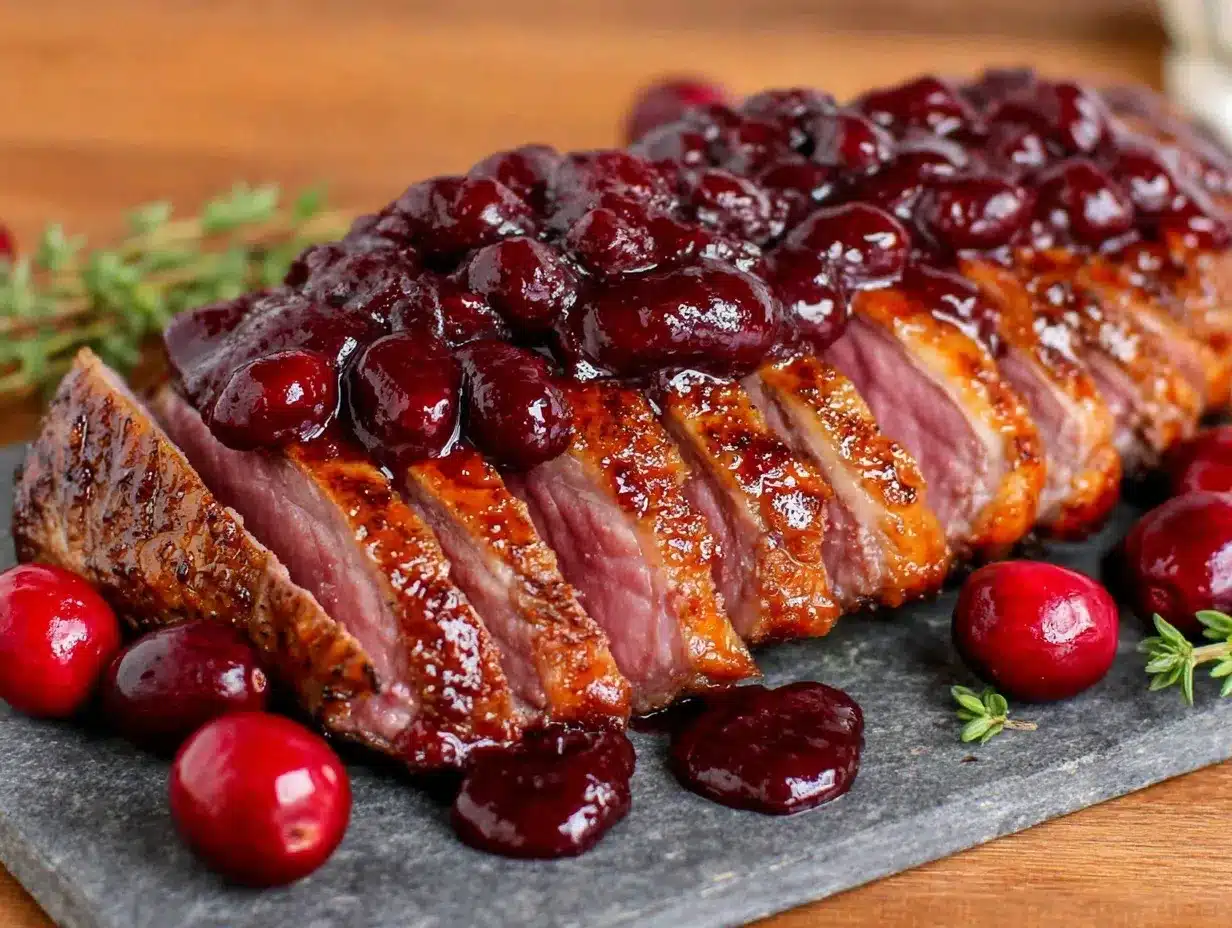
- Slice and Serve: Slice the duck breasts thinly against the grain. Arrange on plates and spoon the cherry port wine reduction over the top. Serve immediately for best flavor and texture.
Pro Tip: If your sauce thickens too much, stir in a splash of stock or water to loosen it. And don’t skip resting the duck—it keeps the meat juicy and tender.
Cooking Tips & Techniques
Crisping duck skin can be tricky, but a few tricks have saved me countless times. First, always start with dry skin—pat it down well before seasoning. Scoring the skin helps the fat render out evenly, preventing chewy sections. Keep the heat moderate; too high and the skin burns before the inside cooks, too low and you end up with soggy skin.
Another lesson I learned was not flipping the duck too early. Let the skin develop that deep golden color before turning it over. The fat that renders out can also be saved for roasting potatoes or veggies later—never waste that gold.
When making the cherry port wine sauce, don’t rush the reduction. Letting it simmer slowly concentrates the flavors and thickens the sauce naturally. Adding cold butter at the end creates a silky finish that you just can’t get otherwise.
Timing is key here. Start the sauce once the duck is searing so everything comes together just as the meat rests. Multitasking in the kitchen feels fancy but really just means planning steps to save time and keep everything fresh.
Variations & Adaptations
This recipe is versatile, and you can tweak it to suit different tastes or dietary needs.
- Fruit Variations: Swap cherries for fresh or frozen blackberries, raspberries, or even figs for a seasonal twist.
- Alcohol-Free Sauce: Replace port wine with grape juice or pomegranate juice and add a splash of balsamic vinegar to keep the tangy balance.
- Spice It Up: Add a pinch of crushed red pepper flakes or a dash of cinnamon to the sauce for a warm, spicy note.
- Cooking Method: For a hands-off approach, sear on the stove then finish in a 400°F (200°C) oven for 5-7 minutes to reach desired doneness.
- Personal Favorite: I once tried adding a teaspoon of Dijon mustard to the sauce for a subtle sharpness that paired beautifully with the duck’s richness.
Serving & Storage Suggestions
Serve the sliced duck breast warm, drizzled generously with the cherry port wine reduction. This pairs wonderfully with creamy mashed potatoes, roasted root vegetables, or sautéed garlic green beans. A side of crusty bread is great for soaking up extra sauce.
Store any leftovers in an airtight container in the refrigerator for up to 2 days. Keep the duck and sauce separate to avoid sogginess. Reheat gently in a skillet over low heat or in the oven at 300°F (150°C) until just warmed through—overheating dries the meat out.
If you want to freeze, wrap the duck tightly in plastic wrap and place in a freezer-safe container for up to 1 month. Thaw overnight in the fridge before reheating.
Flavors develop beautifully after resting, so if making ahead, the sauce may taste even richer the next day. Just reheat gently and enjoy!
Nutritional Information & Benefits
Each serving of pan-seared duck breast with cherry port wine reduction offers approximately:
| Calories | 450-500 kcal |
|---|---|
| Protein | 30-35 grams |
| Fat | 30 grams (mostly from duck fat and butter) |
| Carbohydrates | 10-15 grams (mainly from cherries and port wine) |
Duck breast is a fantastic source of high-quality protein and iron. The cherry port wine sauce adds antioxidants from the cherries, plus the port wine provides beneficial polyphenols, though alcohol content should be considered. This dish suits low-carb diets well, especially when paired with non-starchy sides.
Those with allergies to sulfites should note that port wine contains them. For dairy-free diets, simply omit the butter or substitute with a plant-based alternative.
Conclusion
This perfect pan-seared duck breast with cherry port wine reduction is one of those recipes that makes you feel like you’ve put serious effort into a meal without actually spending hours in the kitchen. The crispy skin, juicy meat, and that sauce—honestly, it’s a combo that wins every time.
Feel free to make it your own, whether by swapping fruits, adjusting seasoning, or pairing it with your favorite sides. I love this recipe because it brings a touch of elegance to my everyday cooking and impresses guests without stress.
If you try it, I’d love to hear how it went—leave a comment below with your own twists or questions. Happy cooking!
FAQs
How do I know when the duck breast is cooked perfectly?
Use an instant-read thermometer aiming for 135°F (57°C) for medium-rare. The skin should be crispy and golden, and the meat slightly pink inside.
Can I use frozen duck breast for this recipe?
Yes, but thaw it completely in the fridge before cooking. Pat the skin very dry for the best crispiness.
What can I substitute for port wine in the sauce?
Grape juice or pomegranate juice with a splash of balsamic vinegar works well for an alcohol-free version.
How do I get the duck skin extra crispy?
Score the skin, keep it dry, cook skin-side down over medium heat without moving it until golden, and don’t overcrowd the pan.
Can I prepare the sauce in advance?
Yes, make the sauce ahead and gently reheat before serving. Store in the fridge for up to 2 days.
Pin This Recipe!

Perfect Pan-Seared Duck Breast Recipe with Easy Cherry Port Wine Sauce

A simple yet elegant pan-seared duck breast recipe featuring crispy skin and a luscious cherry port wine reduction sauce, perfect for special occasions or cozy nights in.
- Prep Time: 10 minutes
- Cook Time: 20 minutes
- Total Time: 30 minutes
- Yield: 2 servings 1x
- Category: Main Course
- Cuisine: French
Ingredients
- 2 skin-on duck breasts (6–7 ounces / 170–200 g each)
- Salt and freshly ground black pepper, to taste
- 1 tablespoon olive oil (extra virgin preferred)
- 1 cup fresh or frozen cherries, pitted
- ½ cup (120 ml) port wine (ruby port recommended)
- 1 small shallot, finely chopped
- 1 clove garlic, minced
- ½ cup (120 ml) chicken or vegetable stock (low-sodium preferred)
- 1 tablespoon balsamic vinegar
- 1 tablespoon cold butter (or olive oil/coconut oil for dairy-free)
- A few sprigs fresh thyme (optional)
Instructions
- Score the duck skin in a crisscross pattern without cutting into the meat (about 5 minutes).
- Pat the duck breasts dry and season both sides with salt and freshly ground black pepper (2 minutes).
- Preheat a heavy skillet or cast iron pan over medium heat for 2-3 minutes. Add 1 tablespoon olive oil and swirl to coat (3 minutes).
- Place duck breasts skin-side down in the pan. Let the skin render and crisp without moving for 6-8 minutes until golden brown.
- Flip the duck breasts and cook the meat side for 3-5 minutes until desired doneness (135°F/57°C for medium-rare). Remove and rest under foil for 5-7 minutes.
- While the duck rests, heat a saucepan over medium heat. Sauté shallot and garlic until softened, about 2 minutes.
- Add cherries and cook for 3 minutes until juices release.
- Add port wine, chicken stock, balsamic vinegar, and thyme sprigs if using. Simmer and reduce by half, about 8-10 minutes, until sauce thickens.
- Remove thyme, turn off heat, and whisk in cold butter until sauce is glossy. Season with salt and pepper to taste.
- Slice duck breasts thinly against the grain, plate, and spoon cherry port wine sauce over the top. Serve immediately.
Notes
Pat duck skin dry before seasoning to ensure crispiness. Score skin to render fat evenly. Do not move duck while searing skin-side down. Rest duck after cooking to keep meat juicy. If sauce thickens too much, loosen with stock or water. Butter can be substituted with olive or coconut oil for dairy-free version. Use fresh cherries when in season or thaw frozen cherries before use.
Nutrition
- Serving Size: 1 duck breast with s
- Calories: 475
- Sugar: 10
- Sodium: 350
- Fat: 30
- Saturated Fat: 10
- Carbohydrates: 12
- Fiber: 1
- Protein: 32
Keywords: duck breast, pan-seared duck, cherry port wine sauce, easy duck recipe, elegant dinner, quick duck recipe, fruit sauce, seared duck