Love this? Save it for later!
Share the inspiration with your friends
There used to be a tiny, dimly lit bistro in the old quarter of Seattle that made the most incredible garlic butter salmon. It sat right next to a vintage record shop, and the smell of melting butter and searing fish would drift out onto the cobblestones every evening. When the lease wasn’t renewed and the place shut down for good, I felt a genuine pang of loss. I spent months trying to find something similar, but nothing came close to that specific, rich, garlicky perfection.
After about twelve tries — some involving burnt garlic, some with rubbery fish — I finally got it right. Honestly, it wasn’t until I stopped trying to overcomplicate the sauce that it clicked. The secret wasn’t fancy techniques; it was just getting the heat right and letting the butter do its job. This recipe is my tribute to that lost bistro, but simplified for a Tuesday night when you’re tired and hungry.
I remember the first time I recreated it, I was so focused on the timing that I forgot to chop the parsley until the pan was already cooling down. It tasted amazing, but the presentation was a mess. You know that feeling when you’re so eager to share something delicious that you mess up the basics? Yeah, that was me. But the flavor? Unmatched.
This quick one-pan garlic butter salmon with asparagus has stayed with me because it solves a real problem: wanting restaurant-quality food without the restaurant effort. It’s rich, it’s fast, and it makes your kitchen smell like a high-end dining room. I mean, who doesn’t want that? Let me tell you, once you make this, you’ll understand why I kept chasing that ghost of a bistro. Maybe you’ve been there, staring into your fridge, hoping for a miracle dinner. This is your miracle.
Why You’ll Love This Recipe
This isn’t just another fish recipe; it’s a lesson in efficiency and flavor. I’ve tested this method dozens of times, adjusting the butter-to-garlic ratio until it hit that sweet spot where the garlic is aromatic but not bitter. Here is why this quick one-pan garlic butter salmon with asparagus deserves a permanent spot in your weekly rotation.
- Quick & Easy: From fridge to table in under 20 minutes. This is perfect for those weeknights when you’re exhausted after work and the last thing you want to do is stand over a stove for an hour.
- Simple Ingredients: You likely have everything you need already. Salmon, asparagus, butter, garlic, lemon, and a few herbs. No obscure sauces or hard-to-find spices required.
- Minimal Cleanup: Let’s face it, washing a mountain of dishes is the worst part of cooking. With this method, you only use one large skillet. That’s it. One pan. You’re welcome.
- Crowd-Pleaser: Kids who usually pick at their food will eat this without complaint. The rich butter sauce masks any “fishy” taste, and the asparagus becomes sweet and tender.
- Unbelievably Delicious: The combination of the flaky, hot salmon and the crisp-tender asparagus, all coated in a glossy garlic butter sauce, is pure comfort. It’s sophisticated enough for guests but casual enough for a solo meal.
What makes this version different is the technique. Instead of boiling the asparagus separately and then searing the fish, we roast them together. The asparagus releases moisture that helps steam the fish gently while the butter browns slightly at the edges. It’s a balance of textures that I’ve found only works when everything is in the same pan. It’s the kind of meal that makes you close your eyes after the first bite, just savoring the warmth. It’s healthy, sure, but it doesn’t feel like “diet food.” It feels like a treat.
What Ingredients You Will Need
This recipe relies on high-quality, fresh ingredients because there are no heavy sauces to hide behind. The simplicity is the point. Each component plays a specific role in creating that signature garlic butter flavor profile.
- Salmon Fillets (1.5 lbs): Look for wild-caught Atlantic or sockeye if you can find it. They have a firmer texture that holds up better in the pan. Ensure the fillets are about the same thickness so they cook evenly. If you need a gluten-free option, this is naturally it.
- Fresh Asparagus (1 bunch): Choose spears that are firm and have tight tips. Medium thickness is ideal; too thin and they’ll burn, too thick and they’ll be woody. Snap off the woody ends before you start.
- Unsalted Butter (4 tbsp): This is the star of the sauce. Using unsalted allows you to control the sodium level. I recommend a high-quality European-style butter for that rich, creamy flavor. Salted butter works, but reduce added salt later.
- Garlic (4-5 cloves): Fresh garlic is non-negotiable here. Pre-minced jarred garlic tastes metallic and won’t give you that fresh, pungent kick. Mince it finely so it distributes evenly in the butter.
- Extra Virgin Olive Oil (2 tbsp): Butter has a low smoke point, so we use olive oil to help prevent burning. It also adds a fruity undertone that complements the fish nicely.
- Lemon (1 large): You’ll need juice and zest. The acid cuts through the richness of the butter, brightening up the entire dish. Don’t skip the zest; that’s where the aromatic oils are.
- Red Pepper Flakes (1/2 tsp): Optional, but highly recommended. A little heat balances the fat and garlic perfectly. It adds a subtle warmth that keeps the palate interested.
- Fresh Parsley (1/4 cup, chopped): Adds color and a fresh, grassy note at the end. Flat-leaf parsley is best for its clean flavor.
- Salt and Black Pepper: Use kosher salt for even distribution. Season generously, but taste before adding more since the butter and any added sauces can be salty.
If you are watching your dairy intake, you can substitute half the butter with olive oil, though the sauce won’t be as luxurious. For a lower-calorie version, you can use ghee instead of regular butter.
Equipment Needed
You don’t need a fancy kitchen to make this. Here is what you actually need:
- Large Skillet (12-inch): A cast-iron skillet is ideal because it holds heat well and creates a nice sear. Stainless steel works too, but watch the heat closely. Non-stick is fine if you are careful with utensils.
- Spatula: A thin, flexible metal spatula is best for getting under the fish without breaking it. A silicone one works if you are gentle.
- Sharp Knife and Cutting Board: For prepping the asparagus and mincing garlic.
- Zester or Microplane: For getting that fine lemon zest. A regular grater might work, but it can get bitter if you hit the white pith.
If you don’t have a 12-inch skillet, you can use two smaller pans, but you’ll need to cook in batches, which defeats the “one-pan” convenience. A cast-iron pan is durable and lasts forever if you season it properly. Avoid using non-stick pans with high heat, as they can degrade and release fumes.
Preparation Method
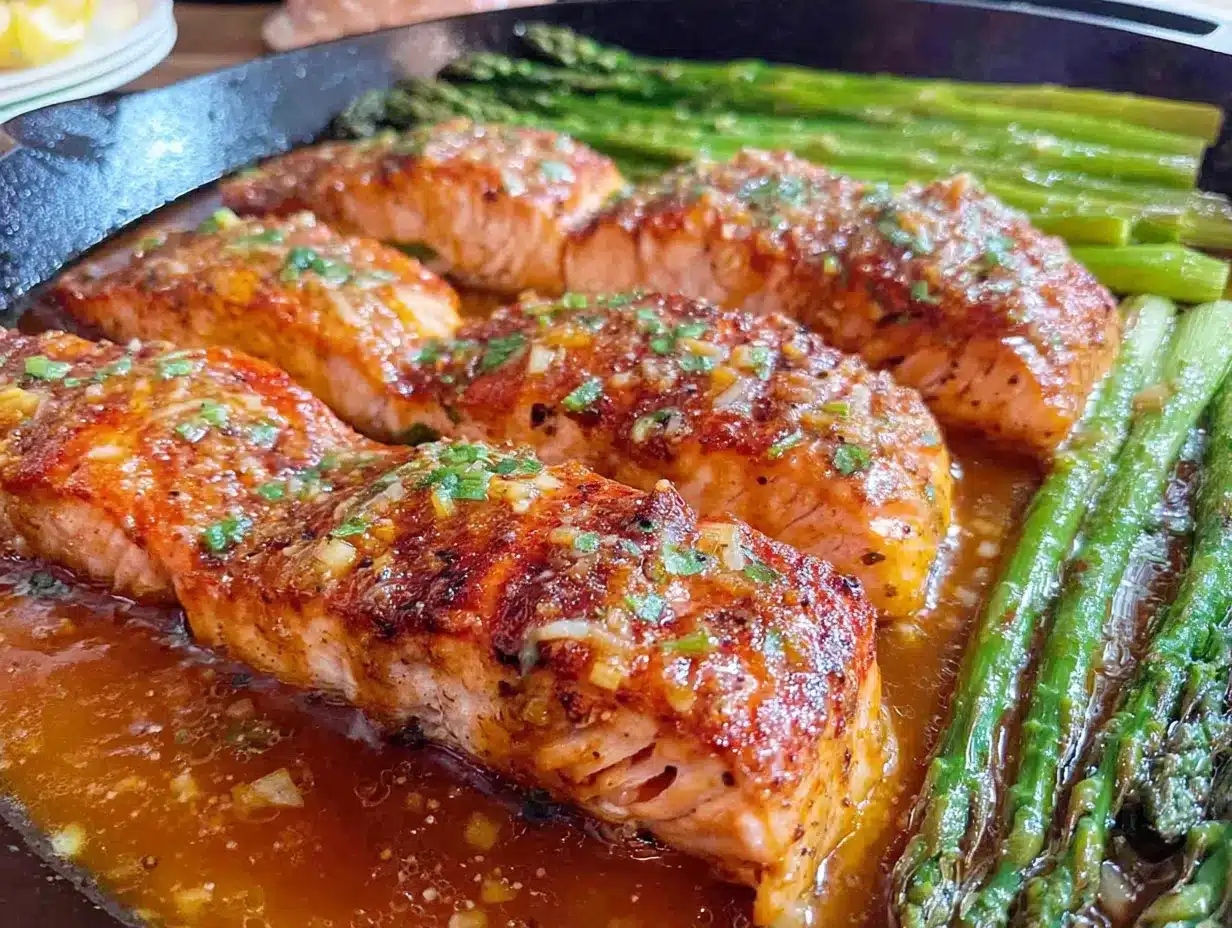
Follow these steps carefully to ensure your salmon is moist and your asparagus is perfectly cooked.
- Prep the Ingredients (5 minutes): Pat the salmon fillets dry with paper towels. This is crucial for getting a good sear. If the fish is wet, it will steam instead of sear. Season both sides with salt and pepper. Snap the woody ends off the asparagus bunch by bending a spear; the end that snaps is your guide for the rest. Toss the asparagus in a bowl with olive oil, salt, and pepper.
- Heat the Pan (2 minutes): Place your large skillet over medium-high heat. Add the olive oil and let it heat until it shimmers but doesn’t smoke. This should take about two minutes. If you see smoke, turn the heat down.
- Sear the Salmon (4-5 minutes per side): Place the salmon fillets in the pan, skin-side down if they have skin. Press down gently for a few seconds to prevent curling. Cook undisturbed for 4-5 minutes until the bottom is golden and the fish releases easily from the pan. Flip carefully and cook for another 3-4 minutes until the internal temperature reaches 145°F (63°C). Remove salmon to a plate and tent with foil.
- Cook the Asparagus (5-7 minutes): Reduce heat to medium. Add the asparagus to the same pan. Sauté for 5-7 minutes, tossing occasionally, until tender-crisp. They should be bright green and fork-tender but still have a bit of bite.
- Make the Garlic Butter Sauce (2 minutes): Push the asparagus to the side of the pan. Add the butter to the center. Once melted, add the minced garlic and red pepper flakes. Stir constantly for about 60 seconds until the garlic is fragrant and lightly golden. Do not let the garlic burn, or it will taste bitter.
- Combine and Finish (1 minute): Toss the asparagus into the garlic butter mixture. Squeeze the fresh lemon juice over everything and add the lemon zest. Stir gently to coat. Return the salmon to the pan, spooning the sauce over the top. Garnish with fresh parsley.
The total active time is about 15 minutes. The resting time for the fish is minimal but helps the juices redistribute.
Cooking Tips & Techniques
Getting the heat right is the most important part of this recipe. Many people make the mistake of using too high heat, which burns the garlic before the fish is cooked. Medium-high is the sweet spot.
Another common error is overcrowding the pan. If your fillets are too thick or your pan is too small, the fish will steam in its own juices. Give each fillet some space. If you are cooking for four people with a 10-inch pan, cook in two batches.
I once tried to save time by skipping the drying step, and the result was pale, soggy salmon. It looked unappetizing and tasted bland. Always dry your protein. Also, when adding the garlic, keep it moving. Garlic burns in seconds. If you see it turning brown, take the pan off the heat immediately and let it cool for a moment.
Multitasking is key here. While the salmon is searing, get your garlic minced and your lemon cut. Have your parsley ready to go. This recipe moves fast, and you want to be prepared.
Consistency comes with practice. The first time might not be perfect, and that’s okay. The second time, you’ll adjust the heat or timing based on what you learned. Trust your senses. If it smells like burning, lower the heat. If the fish looks translucent in the middle, give it more time.
Variations & Adaptations
This recipe is a framework, not a rigid rulebook. Here are some ways to make it your own.
- Dairy-Free Option: Swap the butter for a high-quality olive oil or a plant-based butter alternative. The flavor will be slightly different, but still delicious.
- Spicy Kick: Double the red pepper flakes or add a dash of cayenne pepper. This pairs well with a chilled glass of Riesling.
- Herb Swap: If you don’t like parsley, try cilantro or dill. Dill is a classic pairing with salmon and adds a fresh, anise-like flavor.
- Vegetable Swap: If you can’t find asparagus, green beans or broccolini work well. Zucchini noodles are too watery, but asparagus holds up beautifully.
- Gluten-Free: Serve over cauliflower rice or quinoa instead of pasta or bread to keep it gluten-free.
I once made this with lemon thyme instead of parsley, and it was a lovely spring variation. The thyme adds an earthy note that contrasts nicely with the bright lemon. Feel free to experiment with what you have on hand.
Serving & Storage Suggestions
Serve this dish immediately while the butter sauce is warm and glossy. It pairs well with a simple green salad or roasted potatoes. A light white wine, like a Pinot Grigio, cuts through the richness nicely.
Leftovers can be stored in an airtight container in the refrigerator for up to two days. Reheat gently in a pan over low heat to avoid drying out the fish. Microwaving can make the salmon rubbery, so avoid it if possible. The flavors actually meld together nicely overnight, making it a great option for meal prep.
The asparagus will soften further upon reheating, so it might not have the same crisp texture. If you want to save the asparagus for a fresh side, you can remove it before storing the fish. The sauce can be saved and reheated to drizzle over the fish or even used as a dip for crusty bread.
Nutritional Information & Benefits
This quick one-pan garlic butter salmon with asparagus is not only tasty but also nutritious. Salmon is an excellent source of omega-3 fatty acids, which are great for heart and brain health. Asparagus is rich in fiber, vitamins A, C, and K, and folate.
One serving (one fillet with asparagus) contains approximately 450 calories, 35g of protein, 25g of fat, and 10g of carbohydrates. It is naturally gluten-free and low-carb. If you are watching your sodium, use low-sodium butter and skip added salt.
I love this recipe because it feels indulgent but supports my wellness goals. The healthy fats keep me full for hours, and the vegetables provide essential micronutrients. It’s a balanced meal that doesn’t feel like a compromise.
Conclusion
This recipe is worth trying because it delivers restaurant-quality flavor with minimal effort. It’s a testament to the idea that good cooking doesn’t have to be complicated. I love this dish because it brings back those memories of that lost Seattle bistro, but it’s also entirely my own creation now. It’s reliable, delicious, and always a hit.
I encourage you to try this and customize it to your taste. Maybe add more lemon, or swap the herbs. Share your adaptations with me in the comments. I love hearing how others make these recipes their own. And if you make this, please tag me on social media or share a photo. There is nothing better than knowing this recipe helped someone have a great dinner.
So, grab your skillet, chop some garlic, and enjoy this simple, satisfying meal. You deserve it.
Frequently Asked Questions
Can I use frozen salmon for this recipe?
Yes, but you must thaw it completely and pat it very dry first. Excess water from frozen fish will prevent searing. Fresh salmon is preferred for the best texture.
How do I know when the salmon is done?
The easiest way is to use a meat thermometer. Insert it into the thickest part of the fillet. It should read 145°F (63°C). Alternatively, the fish should flake easily with a fork.
Can I make this in the oven?
Yes, you can bake it at 400°F (200°C) for 12-15 minutes. Place the salmon and asparagus on a lined baking sheet. However, the one-pan stovetop method gives you better control over the garlic butter sauce.
What side dishes go well with this?
This pairs well with quinoa, brown rice, crusty bread, or a simple arugula salad. The garlic butter sauce is great for soaking up with bread.
Is the garlic butter sauce too heavy?
The lemon juice and zest cut through the richness of the butter, balancing the flavors. If you prefer a lighter sauce, use less butter or add more lemon juice.
Pin This Recipe!
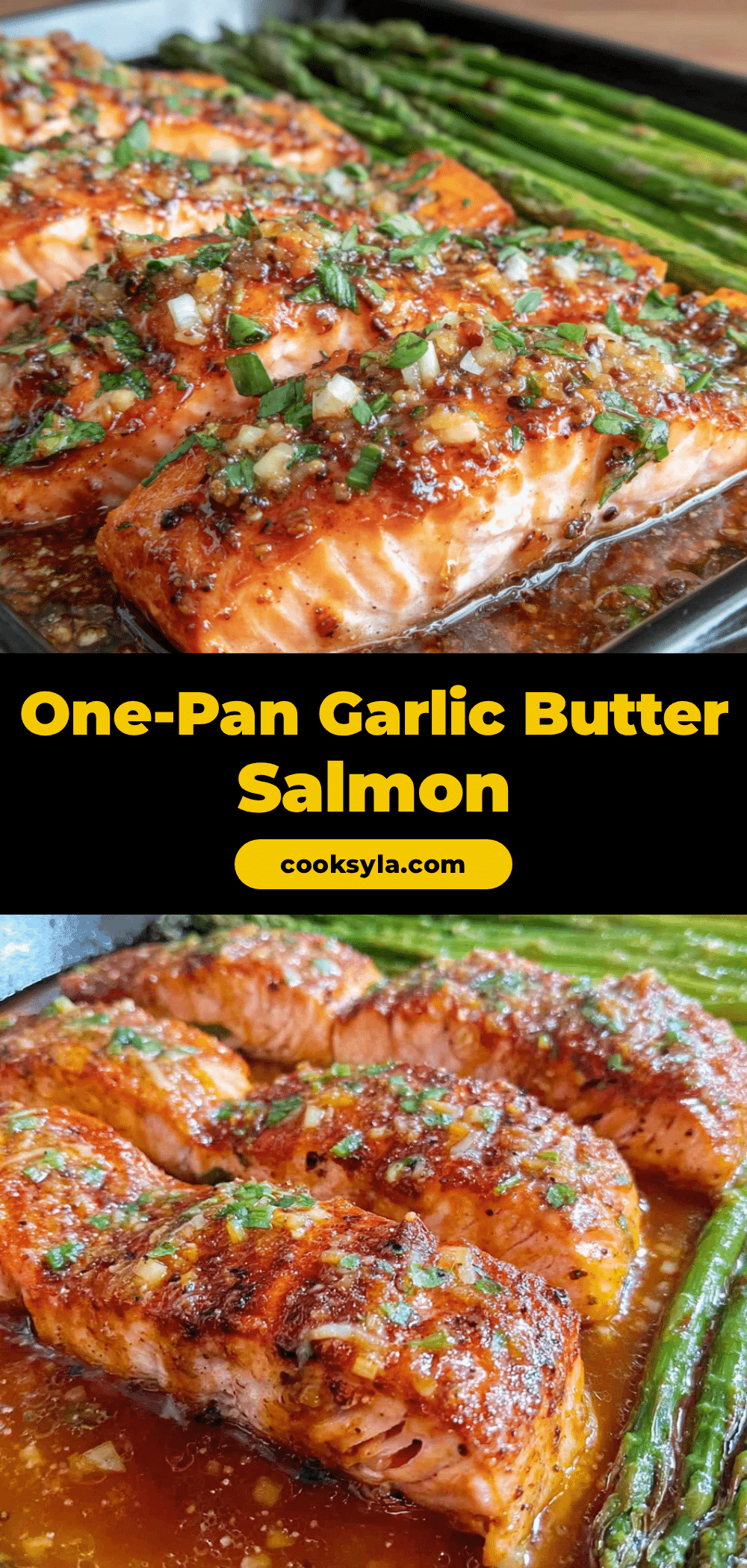
Quick One-Pan Garlic Butter Salmon with Asparagus
A restaurant-quality, one-pan dinner featuring seared salmon and crisp-tender asparagus in a rich garlic butter sauce, ready in under 20 minutes.
- Prep Time: 5 minutes
- Cook Time: 15 minutes
- Total Time: 20 minutes
- Yield: 4 servings 1x
- Category: Main Course
- Cuisine: American
Ingredients
- 1.5 lbs Salmon Fillets (wild-caught Atlantic or sockeye preferred)
- 1 bunch Fresh Asparagus (medium thickness)
- 4 tbsp Unsalted Butter
- 4–5 cloves Fresh Garlic (minced)
- 2 tbsp Extra Virgin Olive Oil
- 1 large Lemon (juice and zest)
- 1/2 tsp Red Pepper Flakes (optional)
- 1/4 cup Fresh Parsley (chopped, flat-leaf)
- Kosher Salt and Black Pepper
Instructions
- Pat salmon fillets dry with paper towels and season both sides with salt and pepper. Snap off woody ends of asparagus and toss with olive oil, salt, and pepper.
- Heat a large 12-inch skillet over medium-high heat. Add olive oil and heat until shimmering but not smoking.
- Place salmon in the pan skin-side down. Press gently to prevent curling. Cook undisturbed for 4-5 minutes until golden and releasing easily. Flip and cook 3-4 more minutes until internal temperature reaches 145°F (63°C). Remove to a plate and tent with foil.
- Reduce heat to medium. Add asparagus to the same pan and sauté for 5-7 minutes, tossing occasionally, until tender-crisp.
- Push asparagus to the side. Add butter to the center of the pan. Once melted, add minced garlic and red pepper flakes. Stir constantly for 60 seconds until fragrant and lightly golden, being careful not to burn.
- Toss asparagus into the garlic butter mixture. Squeeze lemon juice over everything and add lemon zest. Stir to coat.
- Return salmon to the pan, spooning sauce over the top. Garnish with fresh parsley and serve immediately.
Notes
Ensure salmon is completely dry before searing to prevent steaming. Do not overcrowd the pan; cook in batches if necessary. Garlic burns quickly, so keep it moving and reduce heat if it starts to brown too fast. For a dairy-free version, substitute butter with olive oil or plant-based butter.
Nutrition
- Serving Size: 1 fillet with aspara
- Calories: 450
- Sugar: 2
- Fat: 25
- Saturated Fat: 12
- Carbohydrates: 10
- Fiber: 3
- Protein: 35
Keywords: salmon, asparagus, garlic butter, one-pan dinner, quick meals, healthy dinner, gluten-free, omega-3, weeknight dinner